Is a Better School District Worth Paying More For?
Families understandably want their children to attend good schools, and school assignments can be reflected in home values.
Research from the National Bureau of Economic Research has shown that house prices can be influenced by school assignment boundaries and changes in school assignments.
Imagine two similar houses.
One costs $600,000 and is in the school district you want.
The other costs $520,000 and is in a district you consider acceptable, but not your first choice.
That is an $80,000 decision.
If you finance the extra $80,000 for 30 years at a hypothetical 6.5% interest rate, it adds about $506 a month in principal and interest.
If that portion of the loan remained outstanding for the full term, it would generate roughly $102,000 in interest, before any difference in property taxes, insurance, or maintenance.
The more expensive house may still be right for your family and may be desirable for future buyers.
But compare the real alternatives where you live, including another public-school district, private school, magnet or choice programs, or moving later.
Eligibility and costs vary, so there is no universal cheaper answer.
Also remember that a school premium is tied to something outside the house itself: Staff, ratings, programs, and attendance boundaries, which can change over time.
And the purchase price is only part of the premium: a more expensive home can also mean higher property taxes, which we examine in our guide to rising property taxes.
Is a Shorter Commute Worth a Higher House Price?
The average one-way U.S. commute was 27.2 minutes in 2024, according to the U.S. Census Bureau.
That makes commute time a real part of the cost of where you live.
A home 15 minutes from your office may cost considerably more than one 40 minutes away.
The benefits are tangible: less fuel, less wear on the car, less time in traffic, and more time for everything else.
That 25-minute difference each way is 50 minutes a day. If you commute five days a week for 48 weeks a year, that is about 200 hours annually, or roughly 25 eight-hour workdays.
The risk is paying a large premium for an advantage that may disappear.
Jobs change, companies relocate, and remote-work policies change.
If you pay $70,000 more mainly to live close to your office and change jobs two years later, the location may still support resale value, but the reason you personally paid extra is gone.
When comparing two homes, include the time cost of the commute alongside the mortgage. MoveAdvisor’s Life Cost Calculator can help put that trade-off into perspective.
“We need four bedrooms.”
Maybe you do.
Or perhaps you have two children and the fourth bedroom is mainly for guests who visit a few weekends a year.
If the four-bedroom house costs $60,000 more than a comparable three-bedroom house, financing that extra amount for 30 years at the same hypothetical 6.5% rate would add about $379 a month in principal and interest.
Could a home office double as a guest room?
Even ten hotel nights a year at $200 a night would be $2,000 annually, far less than the $60,000 purchase-price premium in this example.
Of course, the real comparison will vary by market, financing, and how long you own the home.
Spare space can be wonderful. Just separate “I want it” from “I financially need it.”
In How Much House Do You Actually Need, we looked at what the unused space in your home is actually costing you.
Is a Large Backyard Worth Paying More For?
A big backyard sells an appealing future: barbecues, children playing, a dog running around, and summer evenings outside.
Then come the grass, pruning, fence repairs, sprinklers, leaves, and the time and expense required to maintain it.
If you love gardening or spend much of the summer outdoors, a large yard may be one of the best things you buy.
But if you mostly just like the idea of a big yard, ask whether a smaller yard near a good park would give your family most of the same benefit with a lower purchase price and less maintenance.
Is Buying a House With a Pool Worth It?
On a hot day during a house viewing, a pool can look like the greatest feature you have ever seen.
You imagine morning swims, pool parties, and children outside all summer.
But ownership also brings cleaning, chemicals, electricity, repairs, safety responsibilities, and insurance considerations.
The Insurance Information Institute notes that a pool increases liability risk and may justify higher liability coverage.
If you live somewhere warm and your family swims constantly, the lifestyle value may be enormous.
Not every home-buying decision has to produce a financial return.
But if you expect to use the pool only occasionally, compare the price premium and ongoing costs with a community pool, club membership, or paying to swim when you actually want to.
Is a Prestigious Neighborhood Worth the Premium?
Sometimes the premium is for the ZIP code people recognize, the street everybody wants, or the neighborhood name that carries status.
If two neighborhoods ten minutes apart are both safe, both have homes you like, and both fit your lifestyle, ask what the extra $100,000 actually buys.
Good schools, better parks, walkability, amenities you use, and strong buyer demand can all be legitimate reasons to pay more.
But do not confuse prestige with durable demand.
They sometimes overlap, but they are not the same thing.
If the premium is mostly about status, take a serious look at the neighborhood next door.
Are New-Build Homes Worth Paying More For?
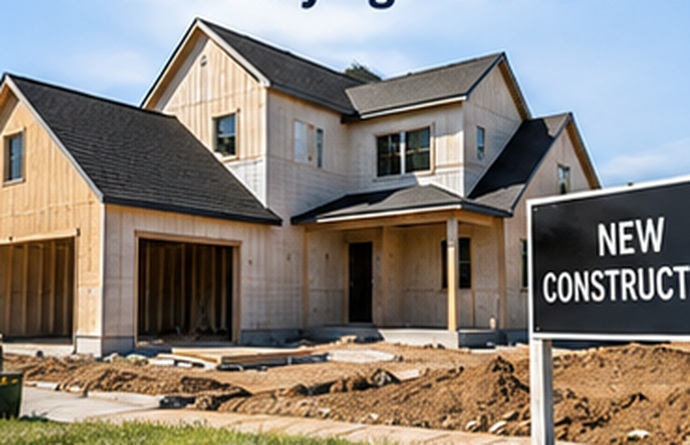
There is something very appealing about a brand-new home.
Nobody has scratched the floors. Nobody has painted a bedroom a color that is best described as radioactive peach. The kitchen, bathrooms, appliances, and finishes all feel fresh.
But “new” does not automatically mean a better investment.
The price gap between new and existing homes changes with location, incentives, inventory, market conditions, and the types of homes being compared.
Recent NAHB data has even shown periods when the national median price of an existing home was higher than that of a new home.
But those national medians are not a like-for-like comparison: they can reflect different locations, home sizes, buyer incentives, and the mix of properties sold.
They should not be read as proof that a particular new home is cheaper than a comparable existing one.
New homes may be more energy efficient, need fewer immediate repairs, include warranties, and offer more modern layouts.
Ask: What am I paying for newness, and what am I actually getting for it?
If an older house costs substantially less, could the difference pay for the updates and repairs you would realistically make while still leaving money in the bank?
How Much Should You Pay for a View?
Water, mountains, skyline, or open countryside: views sell homes.
If looking out of your kitchen window every morning makes you happy, that has real value.
But decide what the view is worth to you, rather than assuming a future buyer will repay every dollar of the premium.
Before paying a lot for an unobstructed view, also check zoning, development plans, easements, and what can legally be built in front of it.
An expensive view can become a very ordinary one surprisingly quickly.
Living with mountain views, by the water, or in open countryside can also mean greater exposure to severe weather. With that often comes higher insurance costs. In Should You Move Before Your Home Becomes Uninsurable, we look at the effect of weather on the rising costs of insuring homes.
Is a Fully Renovated Home Worth the Premium?
A turnkey home can be attractive because somebody else has already dealt with the dust, contractors, delays, and decisions.
If the work is good and the finishes match your taste, paying more may make complete sense.
But the seller’s remodeling bill is not the same thing as the value you should pay. The 2025 Remodeling Impact Report from the National Association of REALTORS® estimated that a complete kitchen renovation recovered about 60% of its cost at resale, while many other projects also recovered less than their full cost.
That does not mean renovations are bad investments or that the same percentage applies to every house.
It means you should not assume a seller is entitled to recover every dollar they spent on upgrades.
Look closely at workmanship as well as appearance.
A beautiful kitchen is not a bargain if you dislike the layout, the materials are low quality, or you plan to replace half of it after moving in.
Compare the renovated home with a less-updated alternative plus the realistic cost of the improvements you would choose yourself.
Are HOA Amenities Worth the Fees?
Pools, gyms, clubhouses, tennis courts, landscaping, and security can make a listing look fantastic.
But HOA fees do not care whether you use them.
The Consumer Financial Protection Bureau notes that HOA dues can range from a few hundred dollars a month to more than $1,000 a month and are usually paid separately from the mortgage payment.
If your family uses the facilities constantly, they may represent excellent value.
If you already have a gym membership, never play tennis, and rarely swim, you may be paying every month for somebody else’s lifestyle.
Before buying, look beyond the amenity list.
Review the current dues, what they cover, recent increases, the association’s finances and reserves, and any special assessments that could change the real cost of ownership.
Stop Buying for Your Imaginary Future
Many expensive housing decisions begin with promises about the person you will become after moving:
“We will entertain more.”
“I will start gardening.”
“We will definitely use the pool.”
“We need somewhere for relatives in case they stay.”
Maybe it will happen. But start with how you live now.
A mortgage can make an enormous purchase-price difference feel like a manageable monthly addition.
An extra $50,000 is still $50,000, plus financing costs and potentially higher taxes, insurance, utilities, furnishing, and maintenance.
Before paying more for the property, ask whether you could buy the benefit separately:
• Instead of the fourth bedroom, what would occasional hotel rooms for visitors cost?
• Instead of owning the pool, what would a community pool or club membership cost?
• Instead of the huge backyard, could you live near a great park?
• Instead of paying heavily to live beside one office, how secure is that commute advantage?
• Instead of paying HOA dues for amenities you barely use, could you buy the services you actually want for less?
Sometimes the house will still win, and that is fine.
None of this means buying the cheapest possible property.
Some premiums are worth paying because they are hard or impossible to recreate later.
You cannot move a house to a quieter road, and you cannot renovate your way out of a location that does not work for your life.
There is also nothing wrong with paying for happiness.
If an ocean view is worth $100,000 to you and you can comfortably afford it, that may be money well spent.
The important thing is knowing whether you are buying lifestyle value or expecting a financial return.
The benefits of moving that you cannot put a price on are often just as important as the ones you can put a price on, so we looked at the life-changing benefits of moving to a new place.
The Home-Buying Premium Test
Before choosing the more expensive house, ask yourself:
• What exactly am I paying extra for?
• How often will I actually use or benefit from it?
• Could I get the same benefit another way for less money?
• Could the reason I am paying this premium disappear within the next five or ten years?
• Would I still choose this house if I stopped telling myself the extra cost was an investment?
You may still say yes.
The better school may be worth it.
The 15-minute commute may transform your daily life.
The pool may become the center of family summers.
The fourth bedroom may be constantly occupied.
The view may make you smile every morning for twenty years.
Those things obviously have value too.
Buy them because they have value to you, not because somebody has told you that every desirable feature of a house will eventually pay for itself.
Your home should fit the life you actually live, not the life the property brochure is selling you, and not the imaginary life you think you might start living once you move in.
MoveAdvisor has a whole library of guides to help make every aspect of your move easier, cheaper, and safer, so be sure to check it out.
Also Read


















Share your thoughts by leaving a comment