The White House has 132 rooms, 35 bathrooms, and six levels.
At the other end of the housing spectrum, the prison built on Alcatraz Island in 1912 contained 600 cells measuring just 5 feet by 9 feet.
OK, they are extremes, but have you ever thought about how much space you actually need?
I was thinking about this the other day as I walked past the door to the basement. It cost an absolute fortune to furnish, yet we use it once or twice a year, and then only because it has a table big enough to fit the whole family when they visit.
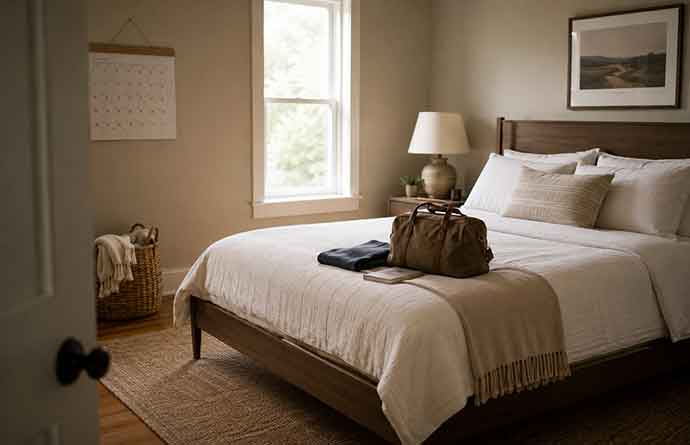
The same for the two spare bedrooms. They very rarely get used. Unless I want to throw some junk in them.
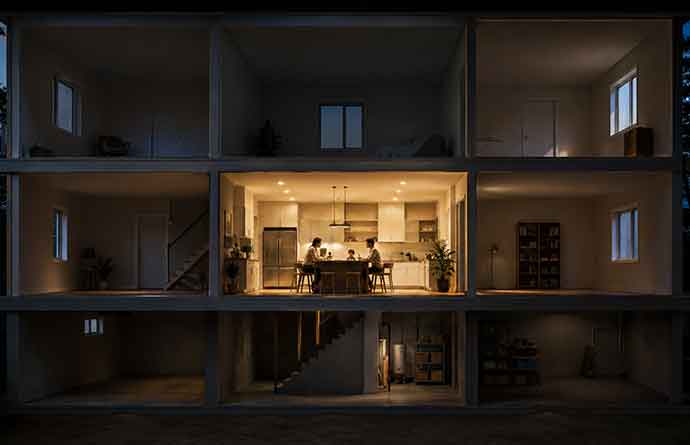
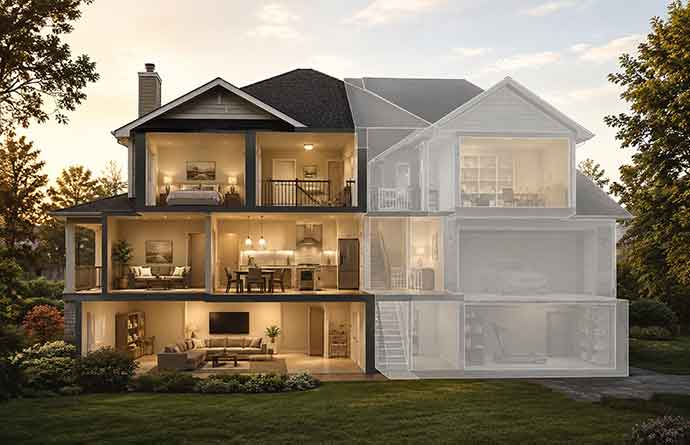
Have you ever considered how much of your home you actually use?
Because every extra square foot has a price.
You pay to buy it.
You may pay interest on the money you borrowed to buy it.
You generally pay higher property taxes and insurance costs on larger homes.
You heat it, cool it, furnish it, clean it, decorate it, and repair it.
And some of those square feet may sit empty for 350 days of the year.
Take a fairly modest 150-square-foot spare bedroom.
At $226 per square foot, that represents about $33,900 worth of real estate.
That does not mean removing one bedroom from a house will knock exactly $33,900 off its value. Homes do not price that neatly, unfortunately.
But it does give us a useful way of thinking about what our square footage costs.
For somebody buying today with 20% down, approximately $6,780 of their cash would go into that room, with another $27,120 financed.
As of August 27, 2026, the average 30-year fixed mortgage rate was 6.66%. At that rate, financing $27,120 over 30 years works out to roughly $174 a month in principal and interest.
That is about $2,090 a year.
And we have not paid the property tax yet.
The average effective property tax rate on U.S. single-family homes was 0.9% in 2025. Applied very roughly to our $33,900 share of the house, that would be another $305 a year.
We looked into property tax and asked when it makes sense to stay and when moving may be a smarter choice.
So before we even get to insurance, heating, air conditioning, furniture, cleaning, or maintenance, our guest room is associated with around $2,400 a year in mortgage payments and property tax.
OK, we have to keep in mind that part of your mortgage payment builds equity, so it is not the same as spending $2,400 on a hotel.
But neither is the guest room free. We have not even taken into consideration the cost of extra bedding, washing that bedding, towels, or the extra tanks of hot water for showers, etc.
Fourteen nights at that rate would cost about $2,400.
Now be honest:
How many nights was your guest bedroom occupied last year?
Not how many nights you imagined it would be occupied when you bought the house.
How many nights did somebody actually sleep there?
Five?
Ten?
Twenty?
If your parents visit twice a year and stay for three nights each time, you are maintaining an entire room all year for six nights of use.
At the national average hotel rate, six hotel nights would cost roughly $1,030.
Of course, having family stay in your home has value. A hotel down the street is not the same as having your grandchildren wake up in the room next door.
That is exactly the point.
The room may totally be worth having.
But for the first time, you have just put a price next to that choice.
How Much do Movers Cost?
Save up to 40% on your upcoming move and get a quote from reputable moving experts.
The real cost of additional space does not end with the purchase price.
A 2025 Zillow and Thumbtack analysis estimated that property tax, homeowners insurance, and home maintenance together cost the average U.S. homeowner almost $16,000 a year, before the mortgage. Maintenance alone was an average of nearly $11,000.
Not all of those costs increase neatly with every additional square foot.
Your roof does not suddenly cost 7% more because you have a guest bedroom.
Your insurance company does not send you a separate bedroom bill.
But generally, bigger homes mean more walls to paint, more flooring to replace, more windows, more roof, more siding, more furniture, and more things that will eventually break.
More than half of the energy consumed in the average U.S. home goes toward space heating and air conditioning.
That spare bedroom is still inside your heated and cooled house whether somebody sleeps there tonight or not.
You still have to furnish and decorate it, which costs money.
And after creating a beautiful guest room, you close the door and wait for Thanksgiving.
Your House May Have a Utilization Problem
Businesses think about utilization all the time.
An airline does not want a $100 million aircraft sitting on the ground.
A hotel does not want empty rooms.
A restaurant does not want half its tables unused every night.
Yet when it comes to our homes, we rarely think the same way.
We tend to measure success in bedrooms, bathrooms, and square footage.
More is better.
Until you start asking what all that space actually does.
Consider a formal dining room used for Christmas, Thanksgiving, and two birthdays.
Or a finished basement where somebody watches a movie once every few weeks.
A second living room nobody sits in.
A home office that has barely been touched since everyone went back to work.
A three-car garage containing two cars and several thousand dollars’ worth of things nobody has used since 2018.
A huge yard that looked wonderful in the listing photos but gets used for three summer barbecues while you still have to mow it, water it, landscape it, and maintain it for the other 362 days.
These spaces are not necessarily wasted, but they should still have to justify themselves.
The Cost Per Use Test
Instead of asking whether you “need” a room, try calculating what you are paying each time you actually use it.
For a guest bedroom, calculate the cost per occupied night.
For a formal dining room, calculate the cost per meal.
For a home office, calculate the cost per working day.
For a finished basement or games room, calculate the cost per hour spent there.
The calculation does not have to be perfect. The point is simply to put a number next to space that normally feels “free.”
A simple way to calculate this is:
Annual cost of the space ÷ number of times you use it = approximate cost per use
For example:
$2,400 associated annual cost ÷ 8 guest nights = $300 per occupied night
Space
Measure Your Use
Estimate the Annual Cost
Cost Per Use
Compare It With
Guest bedroom
Nights occupied per year
Share of mortgage/interest, tax, insurance, utilities, and maintenance
Annual cost ÷ occupied nights
Nearby hotel
Home office
Days worked there per year
Cost of the space + utilities, furniture, and upkeep
Annual cost ÷ working days
Co-working space
Formal dining room
Meals eaten there per year
Cost of the space + furniture, heating/cooling, and upkeep
Annual cost ÷ meals
Using your everyday dining area
Finished basement/games room
Hours used per year
Cost of the space + heating/cooling, furnishings, and maintenance
Annual cost ÷ hours used
Smaller home without it
Garage used for storage
Items genuinely stored and needed
Amount of space actually needed
Annual cost ÷ useful items stored
Local storage unit
Large yard
Days actively enjoyed per year
Landscaping, watering, mowing, maintenance, and added property cost
Annual cost ÷ days used
Smaller yard, park, or recreation space
Second living room
Hours used per year
Cost of the space + furniture, heating/cooling, and upkeep
Annual cost ÷ hours used
One main living area
Extra bedroom
Days or nights used per year
Cost of the space + utilities, furnishings, and maintenance
Annual cost ÷ uses
Smaller home or occasional rented space
You may discover that a room costing thousands of dollars a year is one of your favorite places in the house.
Great. Keep it.
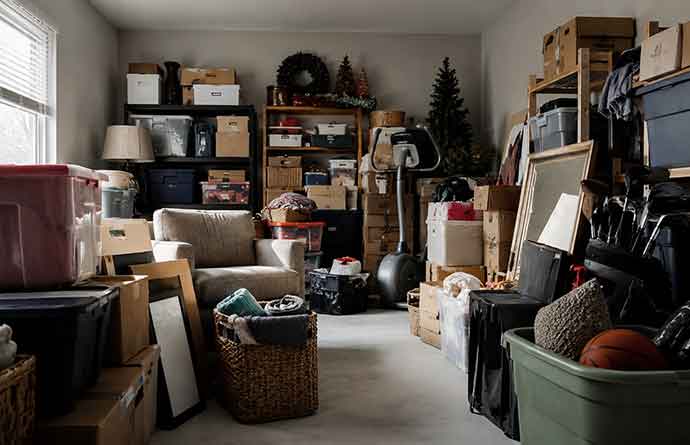
But you may also discover that you have been making mortgage payments for years to store a treadmill and three boxes of Christmas decorations.
The median new single-family home completed in the U.S. in 2025 measured 2,142 square feet.
Imagine removing 300 square feet that you rarely use.
At July 2026’s national median listing price of $226 per square foot, 300 square feet represents about $67,800 worth of real estate.
At 500 square feet, it is $113,000.
Again, you cannot simply take those numbers off the value of every house.
Bedrooms, bathrooms, location, lot size, layout, and local demand all affect what buyers will pay.
But the numbers illustrate something we rarely consider.
There can be a huge financial difference between a house designed around the life you actually live and one designed around every life you might theoretically live one day.
Maybe the children will all come home for Christmas.
Maybe we will start entertaining more.
Maybe I will turn that room into a gym.
Maybe we need another bedroom in case someone visits.
Maybe I will start using the basement.
And so we buy or keep space for the maybes.
Then we spend decades paying for it.
The Things Stored in Your House Need to Pay Rent Too
There is another reason we end up needing larger homes.
Stuff.
A spare room becomes storage.
The garage fills up.
Closets overflow.
That often leads to the logical conclusion that we need a bigger house.
But perhaps the cheaper question is:
Do I need another 300 square feet, or do I need fewer things?
Imagine spending an extra $50,000 on a home largely because you need somewhere to keep possessions worth $5,000.
It sounds ridiculous when written down.
It happens all the time.
This is why decluttering and downsizing are really two versions of the same decision.
Decluttering asks which possessions still deserve space in your life.
Downsizing asks how much space your life deserves.
What Could the Extra Equity Do Instead?
There is one final cost that never appears on your electricity bill.
Opportunity cost.
Imagine you could move into a home that suited your actual lifestyle and release $100,000 of equity.
You could invest it.
Pay off other debt.
Travel.
Help your children.
Retire earlier.
Work less.
Or simply have a much larger emergency fund.
None of those choices automatically makes downsizing the right decision.
A home is not just a financial asset.
Space can provide comfort, privacy, flexibility, and memories.
There is nothing wrong with owning a room that does not produce a measurable financial return.
The problem comes when we assume additional space is free just because it came attached to the house.
It isn’t.
Owning a house can be a route to financial wealth, but is it also stopping you from having the life you really want? In The Homeownership Trap, we find out.
What Size Home Do You Actually Need?
This is where the real downsizing challenge begins.
Forget Alcatraz.
Nobody is suggesting you spend your life in a 45-square-foot box.
Instead, walk through your home and imagine that every room has to earn its place.
Which spaces would you immediately pay to keep?
Which would you fight to keep?
Which would you miss occasionally?
And which could disappear tomorrow without materially changing your life?
The answer may surprise you.
Because the best home is not necessarily the biggest home you can afford.
Nor is it the smallest home you can tolerate.
It is probably somewhere in between.
A home where the square footage you pay for is square footage that makes your life better.
And if your guest bedroom costs thousands of dollars a year while your guests spend eight nights in it?
At the very least, you should probably check the price of the hotel down the road.
If moving is the next logical step for you, then be sure to check out our home moving blog, which is packed with city and state guides and tips to make every aspect of your move easier, cheaper, and safer.
*At MoveAdvisor we will connect you with a professional moving company. Please note that we may not be affiliated with
and you may be speaking with another licensed provider.
We use cookies to optimise your experience.Accept and close or Learn more











Share your thoughts by leaving a comment