What Does “Uninsurable” Mean?
An entire ZIP code does not normally become uninsurable overnight; it is usually a more gradual process.
First, insurers reassess the probability and potential cost of claims in the area.
They may increase premiums, introduce higher wind or hurricane deductibles, insist upon expensive property improvements, or stop accepting new customers.
Some insurers may then decline to renew existing policies.
Homeowners are forced to search among a smaller number of providers, purchase policies with reduced protection, or turn to a state-backed insurer as a last resort.
Coverage might remain available, just not at a price an ordinary household can afford.
The Congressional Budget Office describes the underlying problem: as disaster risks and claims costs increase, insurers need to charge higher premiums. When regulators limit those increases, insurers may instead reduce coverage or withdraw from high-risk markets.
A location is therefore becoming uninsurable when several things happen at the same time:
- Standard insurers stop competing for customers.
- Premiums rise much faster than local incomes or property values.
- Deductibles become large enough to make smaller claims impractical.
- Important hazards are excluded from standard policies.
- Buyers struggle to obtain the coverage required by mortgage lenders.
- State-backed or specialty coverage becomes the only realistic option.
The danger is not only losing insurance, but the real problem is also owning a home that future buyers may struggle to insure, finance, or afford.
Climate Risk Drives Up Insurance Premiums
A major U.S. Treasury analysis examined more than 246 million homeowners’ policies aggregated at the ZIP-code level between 2018 and 2022.
It found that average premiums increased 8.7% faster than inflation during that period.
Homeowners in the 20% of ZIP codes with the highest expected climate-related losses paid an average of $2,321 annually, 82% more than homeowners in the lowest-risk group.
Nonrenewal rates in the highest-risk ZIP codes were also approximately 80% higher.
The Treasury analysis covered hazards commonly included in homeowners insurance, but excluded flooding, which usually requires separate coverage.
The problem with national averages is that they can hide much higher local costs.
Realtor.com estimated that, in 2025, approximately 26.1% of U.S. homes faced severe or extreme exposure to at least one of three major hazards: flooding, hurricane winds, or wildfire.
In some areas, homeowners may need to pay for several types of insurance:
- A standard homeowners policy
- Separate flood insurance
- Windstorm or hurricane coverage
- A hurricane deductible based on a percentage of the home’s insured value
- Additional coverage for contents, temporary accommodation or rebuilding-code upgrades
A 5% hurricane deductible on a home with $400,000 of coverage means you pay $20,000 before the insurer begins paying covered hurricane damage.
That is why buyers should never compare homes using mortgage payments alone. The important figure is the total climate-adjusted cost of ownership.
You may also like to read: How to Decide Where to Move. In this guide, we suggest things to take into consideration when choosing where to live.
Flood Risk – The Danger Outside the Official Flood Zone
Flood risk is very easy to underestimate.
Many buyers see that a property is outside a FEMA Special Flood Hazard Area and assume flooding is not a concern. But an official flood-zone designation is not the same as a guarantee that the property will remain dry.
Flooding can result from overflowing rivers, coastal storm surge, intense rainfall, overwhelmed drainage systems, changing development patterns, and water flowing from higher ground.
Risk can also vary significantly between two properties in the same neighborhood.
Realtor.com estimated that 6.1% of U.S. homes, worth nearly $3.4 trillion, faced severe or extreme flood risk in 2025.
Its analysis also showed that approximately two million homes outside FEMA’s high-risk zones could face significant flood exposure without owners fully recognizing it.
Standard homeowners insurance generally does not cover flood damage.
Flood insurance normally requires a separate policy through the National Flood Insurance Program or a private provider.
Before moving, investigate more than the property’s current FEMA designation. Ask:
- Has the house, street, or surrounding neighborhood flooded before?
- Were nearby roads inaccessible during previous storms?
- Has water entered the basement, garage, crawl space, or yard?
- Have drainage systems or flood defenses been upgraded?
- Is flood insurance required by the lender?
- What would flood coverage cost even if it is not required?
- Could the premium change substantially after the next flood-map update?
- Are essential routes, schools, hospitals and utilities located in vulnerable areas?
A home might not be damaged, but repeated neighborhood flooding still reduces its appeal and increases future insurance costs.
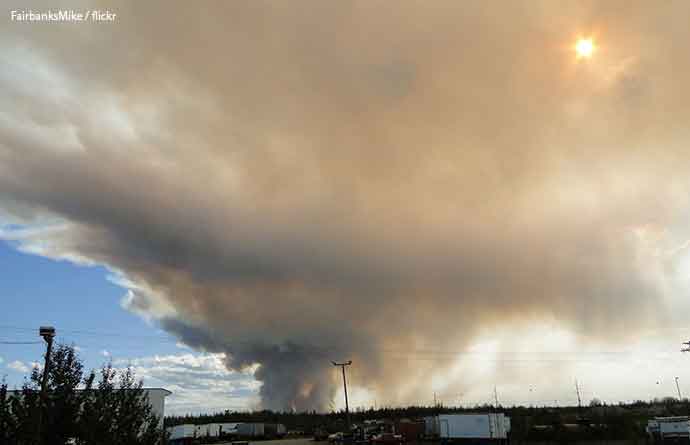
Wildfire Risk – More than Distance from the Trees
A property does not need to be deep inside a forest to face serious fire risk.
Wind-driven embers can travel considerable distances, and homes near grasslands, canyons, or scrubland may be exposed even when flames never reach the immediate street.
Realtor.com estimated that 5.6% of U.S. homes, worth approximately $3.2 trillion, faced severe or extreme fire risk in 2025.
Nearly 39% of those high-risk homes by value were in California.
Insurers may consider factors that are not obvious during a property viewing:
- Roof and siding materials
- Vegetation close to the structure
- Access for fire engines
- Road width and evacuation capacity
- Distance from a fire station
- Water availability
- Local fire-mitigation programs
- Recent fires and claims within the wider area
Homebuyers in fire-prone areas should request insurance quotes before making an offer, not after they have bought the place.
It is also worth asking whether discounts are available for defensible space, ember-resistant vents, fire-resistant roofing or community-wide defenses.
You may also like to read: Canadian Province Comparison. If you are thinking that now is the time to move to Canada, then you will find this guide invaluable.
Hurricane Risk – There Are Several Financial Threats
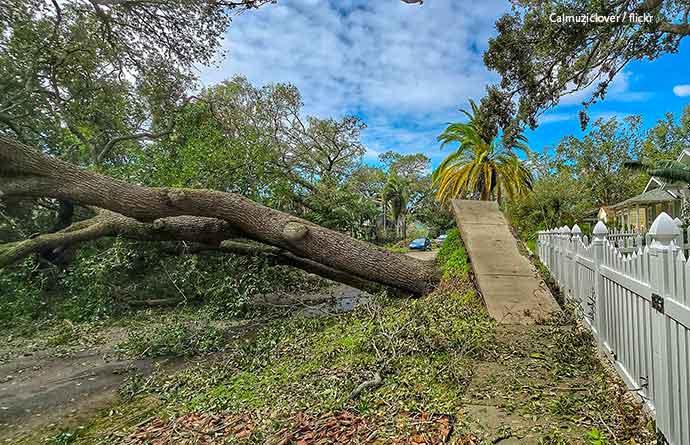
Hurricanes pose multiple hazards: extreme wind, storm surge, inland flooding, falling trees, prolonged power loss, and water intrusion.
In 2025, approximately 18.3% of U.S. homes, representing nearly $8 trillion in value, faced severe or extreme hurricane-wind risk, according to Realtor.com’s analysis.
Insurance policies may treat these hazards differently; Wind damage might be covered under one policy, flood damage under another, and certain coastal properties may need separate windstorm insurance.
Movers considering a home in an area prone to hurricanes should ask:
- Is wind coverage included in the standard policy?
- Is there a named-storm or hurricane deductible?
- Is that deductible a fixed amount or a percentage of coverage?
- Does the policy pay replacement cost or depreciated value?
- Is temporary accommodation covered after an evacuation?
- Are fences, pools, docks and detached structures protected?
- What happens if the property is damaged by both wind and flooding?
- How long have recent local claims taken to resolve?
Beware of low premiums as they often come with exclusions or deductibles that impose a large share of the risk onto the homeowner.
How Insurance Problems Can Affect Property Values
Insurance does not only protect a home’s value; often it helps determine that value.
Most mortgage lenders require borrowers to maintain adequate homeowners insurance.
A property that is difficult or extremely expensive to insure may therefore be difficult to finance and ultimately sell.
Some cash buyers can purchase without lender-required coverage, but they may demand a lower price in exchange for accepting the risk.
This creates a chain reaction:
Higher risk leads to higher premiums. Higher premiums reduce affordability. Lower affordability reduces buyer demand. Weaker demand often lowers property values.
A 2025 First Street model projected that climate-driven insurance increases and population shifts could reduce U.S. residential real estate values by a net $1.47 trillion by 2055.
This is a long-term modeled estimate rather than a guaranteed outcome, but it shows how risk can be reflected through insurance costs and buyer behavior before a property becomes physically uninhabitable.
You may also like to read: The States with the Lowest Cost of Living. In this guide, we look at which states offer the lowest cost of living.
7 Warning Signs That It May Be Time to Consider Moving
One premium increase alone is not a big red flag, but several warning signs together should be a wake-up call.
1. Your policy has been nonrenewed
A nonrenewal does not necessarily make the property uninsurable, but it may signal that insurers are reducing their exposure in your area.
2. The number of available insurers is shrinking
A sharp decline in the number of insurers willing to insure your home can be more worrying than the price from your current insurer.
3. Premiums repeatedly rise much faster than your income
Calculate the percentage of your household income being spent on homeowners, flood and wind insurance combined.
4. Deductibles are becoming unaffordable
A policy provides little comfort if you cannot pay the deductible after a disaster.
5. Coverage is moving to an insurer of last resort
State-backed plans can provide essential protection, but they may offer more limited coverage or higher costs than the competitive private market.
6. Buyers are beginning to ask about insurance before viewing homes
Local real estate agents, lenders and insurance brokers can tell you whether deals are falling through because buyers cannot obtain suitable coverage.
7. You would not buy your current home today
Knowing what you now know about premiums, hazards, evacuations and repairs, would you choose the same property again at its current price?
If the answer is no, it may be worth planning a move while the home remains marketable.
You may also like to read: Home Moving Insurance. On the subject of insurance, if you are planning to move, then ensure that you read this guide. Being underinsured is one of the biggest home moving mistakes. In this guide, we explain all you need to know about insuring your home move.
Questions to Ask Before Choosing Your Next Home
Moving away from one risk does not guarantee that you are moving somewhere safer.
Leaving a hurricane-prone coast, you could unknowingly choose an area exposed to wildfire smoke, extreme heat, tornadoes, hail or inland flooding.
Before choosing a new ZIP code, investigate the following.
What are the property’s major hazards?
Review flood, wildfire, wind, heat and air-quality risks at both property and neighborhood level. Use more than one source if possible.
What does insurance actually cost?
Obtain preliminary quotes for specific properties as prices can vary substantially between nearby addresses.
How many insurers are accepting new customers?
Ask an independent insurance agent whether the market is competitive or becoming dependent on specialty and last-resort providers.
What is excluded?
Confirm whether the quote includes flood, wind, wildfire, sewer backup, replacement-cost coverage and temporary living expenses.
How large are the deductibles?
Convert percentage-based deductibles into dollars. A “2% deductible” sounds reasonable until it is applied to several hundred thousand dollars of home coverage.
Has the property had previous claims?
Ask about flood, fire, wind, roof and water claims. Review available seller disclosures, inspection findings and insurance-loss information.
How resilient is the wider community?
Consider evacuation routes, drainage, fire-service capacity, utility reliability, building codes, road access, emergency alerts, and local investment in community protection.
Could you still afford the home if insurance doubled?
Stress-test the household budget. Include premiums, deductibles, repairs, property taxes, and HOA assessments.
How easy would the property be to resell?
Talk to local agents about insurance-related buyer objections, longer listing times, and contracts that have failed during the insurance or financing process.
How to Plan a Climate Migration
Looking for a zero-risk location is not possible; no such place exists.
But you can avoid concentrating too much of your financial security in a home whose risks you cannot afford, insure, or mitigate.
Start by documenting your current situation. Collect renewal notices, five years of premium history, deductibles, exclusions, and flood-policy costs.
Ask agents for quotes from alternative insurers and estimate the cost of recommended resilience improvements.
Next, research the local housing market. Find out whether buyers are requesting insurance contingencies, whether policies are delaying closings, and whether similar homes are taking longer to sell.
Then compare possible destinations using total ownership costs rather than sale prices alone.
A more expensive house in a lower-risk area may ultimately cost less than a cheaper home with large insurance bills, repeated repairs, and a high hurricane deductible.
Finally, create an exit timeline before circumstances force the decision. Selling shortly after a disaster, nonrenewal wave, or major premium increase can leave you in a poor bargaining position.
Planning earlier gives you more control over when to list, where to move, and how much financial risk to accept.
You may also like to read: Where to Move to Avoid Climate Change. In this guide, we suggest things to take into consideration when choosing where to move to avoid the effects of climate change.
Do Not Allow Climate Anxiety To Make the Decision
Concern about disasters is normal, but anxiety can lead people to treat every risk score as a prediction of a certain catastrophe.
Climate-risk models are never guaranteed 100% accurate; there are always ifs and buts.
Insurance markets can also change because of regulation, construction costs, reinsurance prices, litigation, local mitigation, and insurer business decisions.
Use risk information to ask better questions rather than to search for a perfectly safe ZIP code.
The best relocation decision is a result of four considerations:
- The probability and potential severity of local hazards
- The cost and availability of adequate insurance
- The property’s resilience and your ability to improve it
- The likely effect on long-term affordability and resale demand
This turns climate anxiety into practical planning.
Pre-Plan Rather Than React
The 63,357-person net outflow from high-flood-risk counties does not prove that Americans are abandoning every vulnerable city.
Some high-risk counties continue to gain residents, particularly where employment, affordability, and lifestyle gains are.
But the direction of the insurance market should not be ignored.
A home can remain beautiful, desirable, and physically intact while becoming ever more expensive to protect.
Once insurance availability begins restricting mortgages and shrinking the buyer pool, leaving may become harder and more costly.
The question we need to be asking ourselves is not ‘can I afford this home today’, but ‘how affordable will it be to insure and repair in the future, and will it even be saleable?’
If moving is the right decision for you, be sure to visit our home moving guide, which is packed with guides to make every aspect of your move easier, cheaper, and safer, as well as numerous city and state guides.
Also Read










Share your thoughts by leaving a comment