


Judging by the international moving quotes people request through MoveAdvisor, the most popular countries for American retirees are Portugal, Mexico, Costa Rica, Spain, Panama, Thailand and Ecuador. Most of them let you live well on $1,200 to $2,500 a month, but the income you need for the visa is a separate test, and it is sometimes much higher than what you will actually spend.
- Lowest visa income bar: Costa Rica and Panama, with a lifetime pension of $1,000 a month. Portugal’s D7 asks for €920 a month in 2026.
- Highest: Mexico’s permanent residency for retirees, at 133,733 pesos a month in pension income (about $7,350). Most retirees start with temporary residency instead, at 79,771 pesos (about $4,385).
- Medicare generally does not pay for care abroad. Budget for local insurance before you compare rents.
For many, retirement isn’t just about slowing down. It’s about starting an exciting new chapter.
With rising living costs and healthcare expenses in the U.S., more retirees are looking at moving to places with a better quality of life, where their budget goes further.
So we looked at the most popular countries for retirees, based on the number of enquiries for international moving quotes. Here’s our list of the countries Americans are choosing for their golden years, with the visa rules that apply in 2026.
Visa amounts change every year, and consulates apply them differently. Treat the figures below as a planning guide, not legal advice, and confirm the current rule with the consulate that will handle your application.
Retiring abroad in 2026: comparison table
| Country | Main retiree visa | Minimum income in 2026 | Typical monthly cost of living | Healthcare most retirees use |
|---|---|---|---|---|
| Portugal | D7 (passive income) | €920 a month, plus €460 for a spouse | $2,000 to $2,500 | Public SNS once resident, plus private cover |
| Mexico | Temporary or permanent residency | Temporary: 79,771 pesos (about $4,385). Permanent: 133,733 pesos in pension income (about $7,350) | $1,500 to $2,000 | Mostly private |
| Costa Rica | Pensionado | $1,000 lifetime pension | $1,500 to $2,500 | Public Caja (required), plus private clinics |
| Spain | Non-Lucrative Visa | €2,400 a month, plus €600 per dependant | $2,000 to $2,500 | Private insurance (required for the visa) |
| Panama | Pensionado | $1,000 lifetime pension, or $750 if you own property worth $100,000+ | $1,800 to $2,500 | Mostly private |
| Thailand | Non-Immigrant O-A (age 50+) | 65,000 baht a month (about $2,000) or 800,000 baht in a Thai bank | $1,200 to $1,800 | Private (insurance required for the O-A) |
| Ecuador | Jubilado (pensioner) | $1,446 pension, plus $250 per dependant | $1,000 to $1,800 | Private, or IESS public insurance |
Income figures are the 2026 minimums for the main applicant. Dollar amounts for Mexico, Portugal, Spain and Thailand are approximate and move with the exchange rate. Living costs are for a modest lifestyle outside the most expensive cities. A couple should plan toward the top of each range, or above it.
How Much do Movers Cost?
As Featured On:

1. Portugal

Why it’s popular: Portugal ranks high on many global retirement indexes. It offers a mild climate, rich culture, good healthcare and a surprisingly low cost of living.
Cost of living: You can live comfortably on $2,000 to $2,500 a month, including rent, in smaller cities like Coimbra or Braga. Even Lisbon is cheaper than most major U.S. cities, although rents there have climbed fast.
Portugal retirement visa requirements
Portugal’s D7 visa (the passive income visa) is the usual route for retirees. The income test is tied to the Portuguese minimum wage. In 2026 you need at least €920 a month (a little over $1,000), plus €460 for a spouse and €276 for each child. Many consulates also expect to see about a year’s worth of that income (around €11,040) in a Portuguese bank account. The amount is the same wherever in Portugal you plan to live.
One thing has changed for retirees: the old NHR tax regime, which taxed many foreign pensions very lightly, closed to new applicants in 2024. Talk to a tax adviser who knows both U.S. and Portuguese rules before you move.
Expat community: Portugal has a large expat community, especially in Lisbon, Porto and the Algarve. Many people speak English, which makes settling in easier.
Language: Portuguese is the official language, but English is widely spoken in tourist areas and by younger people.
Healthcare: Once you are a resident, you can use the public SNS system at little or no cost. Private plans cost far less than in the U.S., but premiums rise with age and some insurers will not take new customers past a certain age, so get quotes early.
Read more about retiring to Portugal at www.getgoldenvisa.com
You may also like to read: International Moving Costs. In this guide, we look at how much it costs to move to various countries, what affects those costs, and how to save money on your international relocation.
2. Mexico
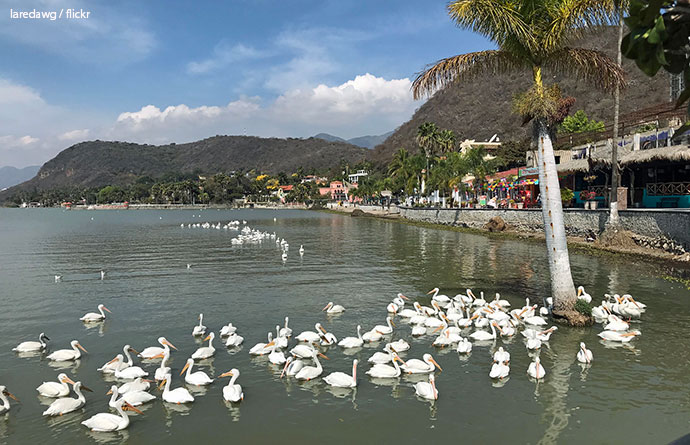
Why it’s popular: It’s close to the U.S., the culture feels familiar, and you can choose anything from beach towns to colonial cities and cool mountain climates. Mexico tops many retirees’ lists.
Cost of living: You can live well on $1,500 to $2,000 a month, especially in places like San Miguel de Allende, Lake Chapala or Mérida.
Mexico residency requirements for retirees
Mexico has two residency options, and they have very different income tests. The amounts are set in multiples of Mexico’s daily UMA value (117.31 pesos in 2026), so they rise every year.
- Temporary residency: monthly income of at least 79,771 pesos (about $4,385) over the last six months, or an average balance of about 1,344,373 pesos (about $73,900) over the last twelve months. Most retirees start here.
- Permanent residency for retirees: monthly pension income of at least 133,733 pesos (about $7,352), or an average balance of about 5,378,664 pesos (about $295,700) over the last twelve months.
You qualify on income or on savings, not a mix of the two, and each dependant adds to the amount. If you don’t meet the permanent residency test, you can hold temporary residency for four years and then switch to permanent residency without a new income test. Consulates convert the peso amounts to dollars at their own rate, so the figure you are quoted may differ a little from ours.
Expat community: The U.S. State Department has estimated that about 1.6 million Americans live in Mexico, and some areas have a large concentration of retirees. These communities often have English-speaking doctors, social clubs and support networks.
Language: Spanish is the official language, but English is common in expat areas.
Healthcare: High-quality private care is affordable, and many doctors speak English. A private health insurance plan costs roughly $100 to $300 a month, depending on age and coverage.
Read more about retiring to Mexico at www.mexicorelocationguide.com
You may also like to read: Moving Pets Internationally. In this guide, we explain all you need to know about moving your pet to another country.
3. Costa Rica
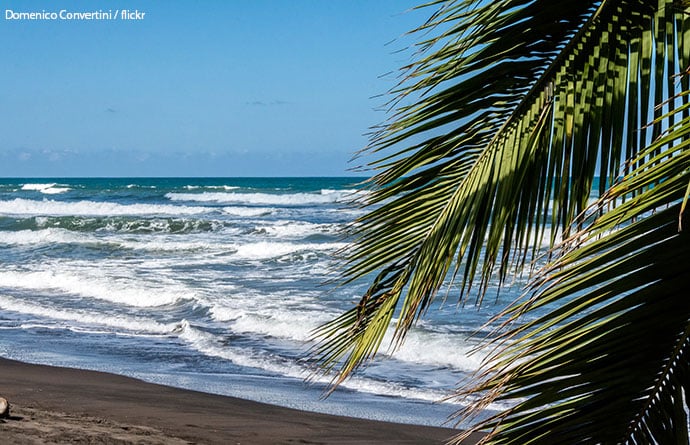
Why it’s popular: Costa Rica is known for its natural beauty, biodiversity and well-established expat infrastructure.
Cost of living: Expect $1,500 to $2,500 a month, depending on where you live and how. Smaller towns are cheaper than the tourist areas.
Costa Rica retirement visa requirements
The Pensionado visa needs proof of a lifetime pension of at least $1,000 a month. Social Security counts, and there is no minimum age. The same $1,000 can cover a spouse. You must join the public health system (the Caja) as a condition of residency, and you need to show you still receive the pension when you renew.
Expat community: Tens of thousands of Americans call Costa Rica home. Towns like Atenas and Grecia are especially popular with retirees.
Language: Spanish is the official language. English is spoken in expat areas, but learning basic Spanish will help a lot.
Healthcare: Costa Rica offers excellent healthcare. Caja contributions are a percentage of the income you declare, which comes to roughly $70 to $150 a month at the $1,000 minimum and more on a bigger pension. Private clinics are also affordable and efficient.
Learn more about retiring to Costa Rica at www.yourpuravida.com
You may also like to read: Moving after Retirement. In this guide, we look at the pros and cons of moving home in retirement.
4. Spain

Why it’s popular: Spain offers a lively culture, a sunny climate and outstanding food. Compared to many European countries, it is also fairly affordable.
Cost of living: Outside Madrid and Barcelona, cities like Valencia, Seville and Granada (having lived in Andalusia, I can thoroughly recommend Granada and the surrounding villages) are cheaper and will let you live comfortably on $2,000 to $2,500 a month.
Spain retirement visa requirements
Spain’s Non-Lucrative Visa (NLV) is the usual choice for retirees. The income test is 400% of Spain’s IPREM index, which is €2,400 a month (€28,800 a year) in 2026, or roughly $2,700 to $2,900 depending on the exchange rate. Each dependant adds €600 a month. You also need private health insurance from a company authorized in Spain, with no co-payments, and you cannot work in Spain on this visa.
Expat community: Spain has a growing American expat community, especially on the Costa del Sol. English is widely spoken in tourist areas.
Language: Spanish is the national language. Some Spanish is essential for day-to-day life if you want to live outside the tourist areas.
Healthcare: Spain has one of the top-ranked healthcare systems in Europe. Private insurance is reasonably priced, often around $100 to $200 a month, though it costs more as you get older.
Learn more about retiring to Spain at www.getgoldenvisa.com, or read our practical guide to moving to Spain.
You may also like to read: How to Ship a Car to Europe. If you are planning to take your car with you to Spain, this guide covers shipping costs, the documents you need, how to prepare your car, and how to find a good international car shipper.
5. Panama
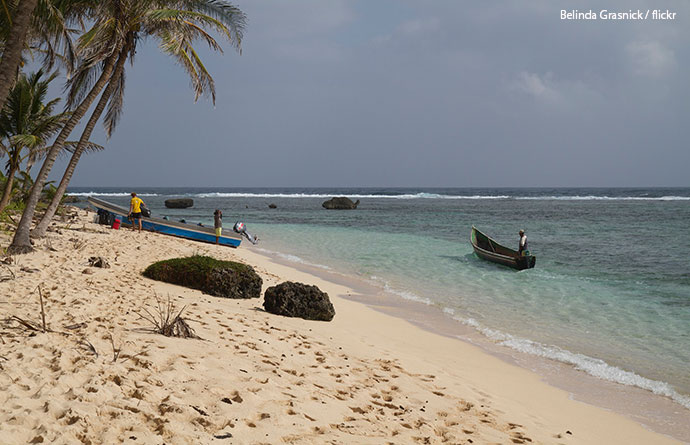
Why it’s popular: With U.S.-style infrastructure, the U.S. dollar as its currency and short flights to the States, Panama is an increasingly popular retirement spot.
Cost of living: You can live well on $1,800 to $2,500 a month, especially in cities like David or mountain towns like Boquete.
Panama retirement visa requirements
Panama’s Pensionado program is one of the best in the world. You need a lifetime pension of at least $1,000 a month, or $750 a month if you also own property in Panama worth more than $100,000. Each dependant adds $250 a month. Unlike most countries on this list, the Pensionado visa gives you permanent residency straight away, along with discounts on healthcare, travel, restaurants and more.
Expat community: Thousands of Americans live in Panama, and there are well-established support networks.
Language: Spanish is spoken, but many Panamanians speak English, especially in expat areas.
Healthcare: There are excellent healthcare options in Panama City and the larger towns. Insurance can cost as little as $100 a month, depending on age and coverage.
Learn more about retiring to Panama at www.embassyofpanama.org
You may also like to read: Moving Abroad Checklist. From pre-move through to post-move, this checklist will help your international relocation go as smoothly as possible.
6. Thailand

Why it’s popular: Affordable living, friendly locals, beautiful landscapes and world-class private hospitals make Thailand a favorite in Asia.
Cost of living: You can live very comfortably in Chiang Mai or Hua Hin (one of my favourite places in Thailand) for $1,200 to $1,800 a month, including rent and food.
Thailand retirement visa requirements
Thailand’s retirement visa (Non-Immigrant O-A) is for people aged 50 or over, and you apply for it from your home country through the official Thai e-Visa site. You need 65,000 baht a month in income (about $2,000), or 800,000 baht (about $24,000) held in a Thai bank account. The O-A also requires health insurance accepted by the Thai authorities. The minimum cover has changed more than once, so check the current amount before you buy a policy. The visa is valid for a year and can be renewed.
Expat community: Tens of thousands of Western retirees live in Thailand, especially in Chiang Mai and Phuket. English is widely spoken in tourist and expat areas.
Language: Thai is the official language, but English is common in the cities.
Healthcare: Thailand’s private healthcare is excellent and affordable. A check-up might cost $30 to $50, and health insurance starts around $100 a month, rising with age.
Learn more about retiring to Thailand at www.thaiembassy.com
You may also like to read: How to Overcome the Fear of Moving. Many retirees would love to move abroad, but fear stops them. This guide looks at how to get past it so you can follow your plans.
7. Ecuador
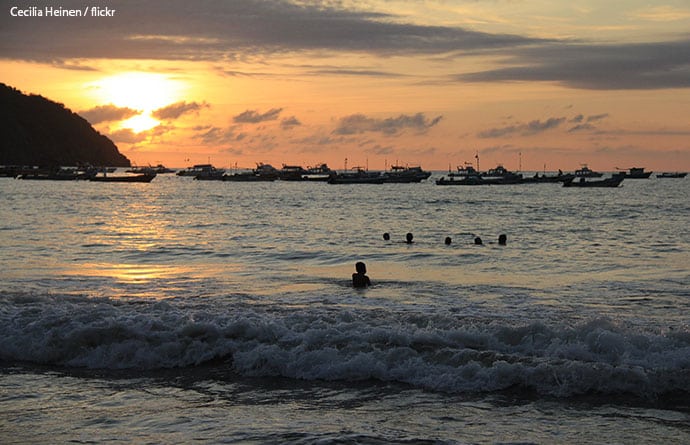
Why it’s popular: With a low cost of living, stunning landscapes (mountains, beaches and jungle) and a welcoming feel, Ecuador is an under-the-radar gem. It also uses the U.S. dollar, so there is no exchange rate to worry about.
Cost of living: Live comfortably on $1,000 to $1,800 a month in places like Cuenca or Loja.
Ecuador retirement visa requirements
Ecuador’s Jubilado (pensioner) visa requires a monthly pension of at least three times the national basic wage. In 2026 that is $1,446 a month, plus $250 for each dependant. The amount goes up a little every January when the basic wage changes. You will also need health insurance for the whole visa period. The process is fairly straightforward with legal help.
Expat community: Cuenca is home to a large and active American retiree population. English-speaking services and social groups are common.
Language: Spanish is the official language, though English is common among expats and professionals.
Healthcare: Ecuador offers both public and private healthcare. Private insurance is low-cost, often $80 to $150 a month depending on age.
Learn more about retiring to Ecuador at www.us.iasservices.org
You may also like to read: How to Create a Moving Budget. Understanding the cost of moving abroad is critical. This guide explains how to build a moving budget checklist so nothing is left out.
Social Security, Medicare and taxes when you retire abroad
The visa is only half the paperwork. These U.S. rules follow you wherever you go.
- Social Security: You can keep receiving your benefits in all seven countries on this list. The Social Security Administration can pay into a foreign bank account or a U.S. one. Check your destination with its payments abroad screening tool.
- Medicare: Medicare generally does not pay for care outside the U.S., apart from a few narrow exceptions. Plan on local insurance or a public system you are allowed to join. If you drop Part B and come back later, you may face a late enrollment penalty, so speak to a Medicare adviser before you cancel anything.
- U.S. taxes: U.S. citizens file a U.S. tax return on their worldwide income wherever they live. If your foreign bank accounts add up to more than $10,000 at any point in the year, you also need to file an FBAR. The IRS guide for citizens abroad is a good starting point, and a cross-border tax adviser is worth the fee.
Shipping your belongings overseas
Most retirees ship far less than they expect to. Ocean freight, insurance, customs duty and delivery add up quickly, and U.S. furniture often doesn’t suit smaller homes or 220-volt power.
- Sort into three piles: things you carry (documents, medicines with prescriptions, glasses, valuables), things worth shipping (heirlooms, art, items that are hard to replace) and things you sell or give away.
- Compare a shared container with a full one. A few cubic meters in a shared container is often much cheaper than a full 20-foot container. Get prices on our international moving cost estimator.
- Check customs rules early. Several countries on this list let new residents bring household goods in duty-free, but only within a set time after you get residency and with the right paperwork.
- Make a detailed inventory with photos. Customs and your insurer will both ask for it.
For typical prices by destination, see our guide to international moving costs.
What to consider before you move abroad

- Do the math: Can you afford to relocate and still keep healthy savings? There are always hidden costs when you move, and even more when you set up a new life in a new country.
- Check the visa before the rent: The income a visa asks for can be much higher than what you will spend. Spain and Mexico are the clearest examples on this list.
- Consider renting first: If you are not sure exactly where you want to put down roots, rent for several months before you buy. It is the best way to find out which town suits you.
- Healthcare access: Make sure you can get good care, especially for chronic or age-related conditions. Check that the medicines you take are available, and in the same doses.
- Legal help: Use a local immigration lawyer or relocation service. Ask for recommendations on expat forums to avoid scams.
- Language learning: Even basic language skills go a long way in helping you settle in.
- Taxes: Speak to a tax expert who knows U.S. rules and the tax treaty with your new country.
Finally, to throw a curveball your way, have you considered moving to Bulgaria? Judging by the number of international moving quotes requested for Bulgaria, many Americans are discovering this hidden gem of a country.
You may also like to read: Moving to Bulgaria. This amazing country is on few people’s radar, but it should be. Check out this guide to find out why.
Learn about moving to Bulgaria and browse the latest properties for sale at www.realistimo.com
Frequently asked questions
How much income do I need to retire in Mexico?
In 2026, temporary residency needs about 79,771 pesos a month in income (about $4,385), or an average balance of about 1,344,373 pesos over twelve months. Permanent residency as a retiree needs 133,733 pesos a month in pension income (about $7,352), or an average balance of about 5,378,664 pesos (about $295,700). Day-to-day living costs are much lower, often $1,500 to $2,000 a month.
Which country has the easiest retirement visa for Americans?
On this list, Panama and Costa Rica have the lowest bar: a lifetime pension of $1,000 a month, and Social Security counts. Panama’s Pensionado visa also gives permanent residency from the start. Portugal’s D7 has a low income test too (€920 a month in 2026), but it involves more paperwork and a Portuguese bank account.
Can I collect Social Security if I retire abroad?
Yes, in all seven countries here. Social Security can be paid to most countries, and only a few are restricted. Use the SSA’s payments abroad screening tool to check your destination before you move.
Does Medicare cover me if I retire overseas?
Generally no. Medicare pays for care abroad only in a few narrow cases. Budget for local insurance or a public system you can join, and think carefully before you drop Part B, because re-enrolling later can come with a penalty.
Do I still pay U.S. taxes if I retire abroad?
You still have to file a U.S. tax return on your worldwide income as a U.S. citizen, wherever you live. Tax treaties and credits often stop you from paying tax twice on the same income, but the rules differ by country. Report foreign accounts on an FBAR if they add up to more than $10,000.
Which of these countries is the cheapest to retire in?
Ecuador and Thailand have the lowest everyday costs on this list, with many retirees living on $1,000 to $1,800 a month. Mexico is close behind outside the big tourist towns. For more low-cost options, see our list of the cheapest safe countries to retire.
More guides for retiring abroad
Good luck choosing your new home, and happy retirement!
Also Read

Moving to Puerto Rico Guide
Discover why so many Americans are moving to Puerto Rico Recently, we have seen an increasing number of Americans... Read More

Practical Tips for Moving to France
For generations, France has drawn people to live here with its stunning scenery, historic villages, healthy... Read More

Guide to Moving to Europe
If the history, diverse cultures, high quality of life, excellent healthcare and education, and convenient travel... Read More
More about the author

Peter is a regular contributor to the blog and a relocation specialist. He is also a seasoned UK and International homeowner which gives him real-life moving experience. Writes for MoveAdvisor, formerly MyMovingReviews.com.

Martin is a moving expert and online marketer who’s been involved in the moving industry since 2004. Writes for MoveAdvisor, formerly MyMovingReviews.com.
Posted on
Discussion 0 comments
Leave a comment