North Carolina has mountains, beaches, growing job markets, relatively moderate taxes, good universities, and Southern culture
But moving to North Carolina is not for everyone.
The state is growing quickly, and that growth has changed the cost of housing, traffic, schools, and the feel of many communities.
Some people move to North Carolina expecting a cheap, quiet Southern state and are surprised by rising home prices in Raleigh, Charlotte, Durham, Asheville, and Wilmington.
Others come for the weather, only to discover that humidity, hurricanes, pollen, and summer storms are common.
Find out what determines the cost of hiring long-distance movers!
So is North Carolina a good place to live?
For many people, yes. But the best answer depends on where you move, what kind of work you do, whether you have children, how much space you need, and whether you prefer a city, suburb, beach town, mountain town, or rural lifestyle.
Is North Carolina a Good Place to Live?
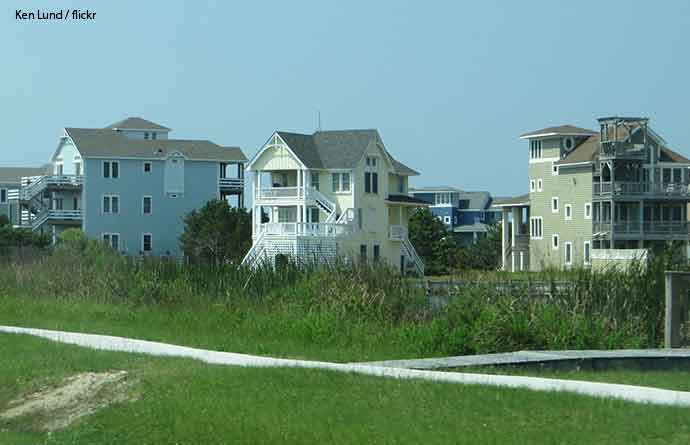
Avon NC
North Carolina is a good place to live if you want a mix of affordability, job opportunities, outdoor access, and a milder climate than much of the Northeast or Midwest.
It is especially appealing to people moving for tech, finance, healthcare, education, biotech, military, retirement, or a better quality of life.
The state is not perfect. Housing is no longer as cheap as many people expect, traffic has worsened in fast-growing areas, public school quality varies by district, and coastal areas come with hurricane and flood risk.
North Carolina is best for people who want growth and opportunity without the extreme cost of the largest U.S. metros. It may be less ideal for people who rely on public transit, want very low summer humidity, dense urban living, or consistently walkable neighborhoods.
You may also like to read: How to Decide Where to Move. In this guide, we suggest things to take into consideration when deciding which city to move to.
How Much do Movers Cost?
Save up to 40% on your upcoming move and get a quote from reputable moving experts.
1. You Get Mountains, Beaches, and Cities in One State
One of North Carolina’s biggest advantages is the landscape. Few states offer this much variety without requiring you to cross state lines.
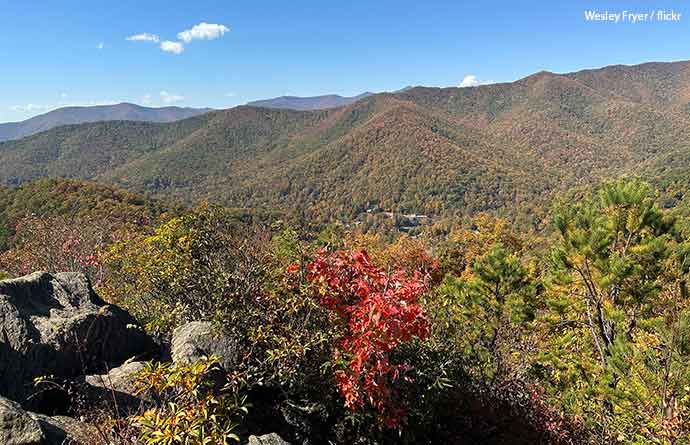
In the west, you have the Blue Ridge Mountains, Asheville, Boone, Hendersonville, mountain cabins, hiking, waterfalls, fall foliage, and cooler temperatures.
In the center, you have the Piedmont region, where Charlotte, Raleigh, Durham, Greensboro, Winston-Salem, and Chapel Hill drive much of the state’s population and job growth.
In the east, you have Wilmington, the Outer Banks, Atlantic beaches, historic coastal towns, and a slower pace of life.
If you want a bigger job market but still want weekend access to nature, North Carolina works well. From Raleigh, you can drive to the beach or mountains in a few hours.
From Charlotte, the mountains are close enough for a weekend trip. From Wilmington, the beach is part of daily life.
2. The Job Market Is Strong in Several Industries
North Carolina has moved on from tobacco, textiles, and furniture. Today’s economy is much broader.
Charlotte is one of the country’s major banking and financial centers.
Raleigh, Durham, and the Research Triangle are known for technology, life sciences, biotech, pharmaceuticals, research, healthcare, and universities.
The state also has strong sectors in advanced manufacturing, aerospace, defense, food processing, logistics, energy, and tourism.
For job seekers, this means North Carolina is not dependent on one single industry. If you’re moving for software, finance, nursing, engineering, university work, healthcare administration, pharmaceuticals, or skilled trades, you may find more opportunity than you expected.
That said, the job market is not the same everywhere.
Charlotte and the Triangle are the best for higher-paying professional jobs.
Wilmington is more limited.
Asheville has lifestyle appeal but can be tougher for salaries compared with housing costs.
Smaller towns may be affordable but offer fewer career options.
3. Cost of Living Is Reasonable Compared With Many States
North Carolina is not the bargain it was 15 years ago, especially in Raleigh, Durham, Charlotte, Asheville, and coastal areas. But compared with California, New York, New Jersey, Massachusetts, Washington, D.C., much of Colorado, and parts of Florida, it can still feel more affordable.
According to recent cost-of-living data, North Carolina is close to the national average rather than being very cheap or very expensive. Housing is usually the biggest factor. Groceries, utilities, transportation, and everyday expenses are often manageable, but it depends a lot on the city.
A household moving from Boston, Seattle, Los Angeles, Miami, or Washington, D.C., may find North Carolina much more affordable.
A household moving from rural Ohio, Indiana, Alabama, or Mississippi may not.
North Carolina is moderately affordable, not universally cheap.
4. Housing Options Are Diverse
North Carolina offers many types of housing. You can find downtown apartments, suburban single-family homes, townhomes, new-build communities, older brick ranches, mountain cabins, beach condos, college-town rentals, and rural homes with land.
This is one reason people move there at different stages of their lives.
Young professionals may choose Charlotte’s South End, Raleigh’s downtown neighborhoods, or Durham near restaurants and universities.
Families may prefer Cary, Apex, Wake Forest, Huntersville, Matthews, and Fort Mill just across the South Carolina border, Chapel Hill, or parts of Greensboro.
Retirees may look at Asheville, Hendersonville, Wilmington, New Bern, Pinehurst, or smaller lake and coastal communities.
The downside is that demand has pushed prices up. The statewide median home sale price was around the high $300,000s in spring 2026, while popular cities like Charlotte, Raleigh, Durham, and Asheville were higher.
Asheville, in particular, has become expensive relative to local wages.
5. Taxes Are Fairly Competitive
North Carolina has a flat state income tax, and the rate has been getting lower. For tax years after 2025, the state income tax rate is 3.99%.
Property taxes are generally lower than in many Northeastern and Midwestern states, although the exact amount depends on the county and municipality.
There is also no estate tax or inheritance tax in North Carolina.
This can be attractive for retirees, higher-income households, remote workers, and people moving from states with higher taxes.
However, sales tax, vehicle taxes, local property taxes, insurance costs, and HOA fees still need to be included in your budget.
6. The Weather Is Milder Than Some Parts of the U.S.
North Carolina has four seasons, but winters are generally milder than in the Northeast, Midwest, or Mountain West. Snow is common in the mountains, occasional in the Piedmont, and rare on the coast.
Spring brings flowers, green landscapes, and outdoor events. Fall brings cooler air, football, festivals, and mountain foliage.
The state is great for people who want warmer weather without going as far south as Florida. You still get seasonal change, but you usually do not get months of deep winter.
7. Good Universities and Colleges
North Carolina has excellent higher education. The Research Triangle has Duke University, the University of North Carolina at Chapel Hill, and North Carolina State University.
The state also has UNC Charlotte, UNC Greensboro, East Carolina University, Appalachian State University, Wake Forest University, Elon University, Davidson College, and many community colleges.
This gives parts of the state a strong education, research, healthcare, startup, and sports culture. It also helps attract employers.
For families, college access is not the same as K-12 school quality, but the wider education ecosystem is a plus.
8. Culture, Food, and Lifestyle
You will find barbecue traditions, college basketball obsession, church communities, music festivals, craft breweries, beach towns, mountain arts, NASCAR history, military communities, farm culture, and fast-growing urban neighborhoods.
Food is a major part of life here. Eastern North Carolina barbecue and Lexington-style barbecue both have loyal followings.
Seafood is important along the coast.
Charlotte and Raleigh have increasingly diverse restaurant scenes, while Durham and Asheville have good reputations for food, breweries, and local culture.
Sports are also big. College basketball is almost a religion, especially around Duke, UNC, NC State, and Wake Forest.
The Carolina Panthers, Charlotte Hornets, Carolina Hurricanes, Charlotte FC, minor league baseball, NASCAR, and college football all add to the sports scene.
9. It Can Be a Good State for Families
Many families move to North Carolina for more space, suburban communities, parks, schools, and a better lifestyle.
The best family areas tend to be aligned with school districts, commute patterns, and housing budgets.
Cary, Apex, Morrisville, Chapel Hill, parts of Raleigh, Matthews, Huntersville, Davidson, Waxhaw, Fort Mill nearby in South Carolina, and some Greensboro and Winston-Salem suburbs are favored by families.
But families need to research carefully. School quality varies widely by county, district, and even neighborhood. You can’t assume every suburb has the same school performance.
10. Each City Offers Something Different
Moving to Charlotte is not the same as moving to Raleigh. Raleigh is not Durham. Durham is not Asheville. Asheville is not Wilmington. Wilmington is not Greensboro.
You can choose a version of the state that fits you:
Charlotte for banking, corporate jobs, nightlife, airport access, and big-city growth.
Raleigh for tech, government, families, universities, and planned suburban growth.
Durham for biotech, healthcare, Duke, food, culture, and a more creative urban feel.
Chapel Hill for education, college-town life, and progressive politics.
Asheville for mountains, arts, breweries, nature, and a more alternative lifestyle.
Wilmington for beach access, coastal living, film history, and a slower pace.
Greensboro and Winston-Salem for lower costs, central location, universities, and a more manageable lifestyle.
Fayetteville for military life, Fort Bragg, and affordability.
The biggest complaint from many wanting to move here and locals is housing affordability. North Carolina still looks affordable compared with New York or California, but prices have risen quickly in many popular areas.
Charlotte, Raleigh, Durham, Cary, Chapel Hill, Asheville, Wilmington, and many nearby suburbs are no longer cheap. In some neighborhoods, buyers compete with high-income remote workers, retirees, investors, and people relocating from more expensive states.
Renters are affected as well. Statewide rent averages are moderate compared with the national average, but popular cities are higher. Charlotte, Raleigh, Durham, Asheville, and Wilmington can all be expensive depending on the neighborhood and property type.
2. Traffic Is Getting Worse
North Carolina is still easier than Los Angeles, New York, Atlanta, or Washington, D.C., but traffic has become a real issue in the fastest-growing areas.
Charlotte has congestion on I-77, I-85, I-485, and around Uptown/South End/SouthPark/Ballantyne commuter routes.
Raleigh and the Triangle have pressure on I-40, I-440, I-540, U.S. 1, and roads between Raleigh, Durham, Cary, Apex, Morrisville, and RTP.
Public transportation is limited compared with larger urban states. Most people need a car. If you want to live car-free, your choices are limited to specific neighborhoods, and even then, it can be inconvenient.
3. Summers Are Hot and Humid, with plenty of Bugs
People often focus on North Carolina’s mild winters and forget about the summers.
Summers are hot and humid, especially in the Piedmont and coastal plain. Mosquitoes, ticks, pollen, and humidity are part of life. Air conditioning is essential. Afternoon thunderstorms are common.
If you dislike humidity, you may prefer the mountains around Asheville, Boone, or Hendersonville, though even western North Carolina can still get warm and humid.
4. Hurricanes and Flooding Are Real Risks
Coastal North Carolina is beautiful, but it comes with hurricane, storm surge, wind, and flood risk. The Outer Banks, Wilmington, New Bern, Jacksonville, Morehead City, and other coastal areas need extra due diligence.
But hurricane effects are not limited to the coast. Storms can move inland and cause flooding, wind damage, power outages, and tree damage. Hurricane Florence, Matthew, Fran, Floyd, and Helene are examples of storms that affected different parts of the state.
If you are buying a home, check flood maps, insurance costs, drainage, roof condition, tree risk, and whether the property has had prior flooding. Do not rely only on “it is not right on the beach.”
5. Public Schools Vary a Lot
North Carolina has many good schools, but school quality varies. Some districts and individual schools perform very well. Others struggle with funding, teacher retention, test scores, and crowding.
Fast-growing counties can face overcrowding, redistricting, and long-term ongoing construction. Rural areas may have fewer advanced programs or specialized options.
Charter and private schools are available, but access varies.
For families, school research should be neighborhood-specific. Compare individual schools, attendance zones, district plans, commute times, after-school options, and whether the area is likely to be redistricted.
6. Politics and Culture Can Feel Split
North Carolina is politically and culturally mixed. Urban areas like Raleigh, Durham, Chapel Hill, Charlotte, and Asheville tend to be more progressive. Rural areas and many smaller towns are more conservative. Suburbs can be mixed and changing.
For some people, this balance is appealing. For others, it can feel like two different states.
If politics, religion, school policy, development, or social issues matter strongly to you, spend time in the exact city or county before moving. The culture can change a lot within 30 minutes.
7. Wages May Not Match Housing Costs Everywhere
This is especially important in Asheville, Wilmington, and some of the popular smaller towns.
A place can be expensive because people want to live there, not because local wages are high. Remote workers and retirees can push up housing prices while local service, education, tourism, and healthcare wages lag behind.
If you are bringing a remote salary from another state, this may not be a problem. If you need a local job, compare salaries and housing before assuming the move will save you money.
8. Growth Has Changed the Feel of Some Communities
Many people move to North Carolina because it feels friendly, green, relaxed, and less crowded. But fast growth has brought construction, traffic, higher prices, crowded schools, and suburban sprawl.
Some longtime residents feel priced out. Some people moving here are surprised that the quiet Southern lifestyle they imagined is harder to find in booming suburbs.
You can still find slower-paced communities, but they may be farther from the big job centers.
Cost of Living in North Carolina
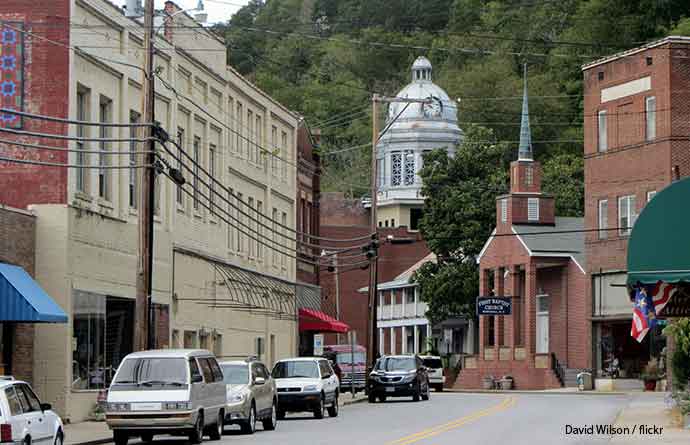
Marshall NC
North Carolina is best described as moderately affordable. It is not one of the cheapest states, but it remains less expensive than many major coastal markets.
The statewide cost of living is close to the national average. In early 2026, North Carolina’s overall cost-of-living index was slightly below the U.S. average, according to MERIC.
Housing, utilities, transportation, and healthcare can vary widely by region.
Housing Costs
Housing is the biggest cost difference between cities.
Charlotte: Higher than the state average, especially in popular neighborhoods.
Raleigh: Similar to Charlotte in many areas, with a lot of demand from tech, government, education, and families.
Durham: Competitive because of Duke, healthcare, biotech, and Research Triangle access.
Asheville: Expensive relative to local wages because of tourism, lifestyle demand, and limited mountain geography.
Wilmington: Coastal demand keeps prices high in desirable areas.
Greensboro and Winston-Salem: More affordable than Charlotte, Raleigh, Durham, Asheville, and Wilmington.
Fayetteville: More affordable, with a strong military influence.
Everyday Expenses
Groceries and utilities are usually reasonable, although summer electricity bills can rise because of air conditioning. Car insurance, property insurance, and homeowners insurance can vary by location. Coastal homes may require flood insurance or higher wind/hurricane coverage.
Transportation costs are important because most residents drive. Even in Charlotte and Raleigh, most households still rely on cars.
Taxes
North Carolina’s income tax is a flat rate of 3.99% for taxable years after 2025.
The state sales tax is combined with local sales taxes, so the rate you pay depends on the county. Property taxes are generally moderate compared with many states, but local rates vary.
For retirees, North Carolina can be attractive, but it is not automatically the best tax state for every retiree.
Compare income sources, Social Security treatment, pension income, property taxes, healthcare access, and insurance before deciding.
North Carolina is not particularly dangerous, but it is not one of the lowest-crime states either.
In 2024, North Carolina’s violent crime rate was 376 per 100,000 people, and the property crime rate was 1,968 per 100,000 people, according to FBI-based USAFacts data.
Both were higher than the national average. The good news is that overall crime in the state decreased from 2023 to 2024.
Crime can vary sharply between cities, neighborhoods, and even blocks.
Charlotte has safer suburban and residential areas, but some urban areas have higher crime.
Raleigh is often viewed as relatively safe for a city of its size, though it still has neighborhood issues.
Durham has improved in many ways but still has pockets with higher crime.
Cary, Apex, Chapel Hill, Wake Forest, and many suburbs tend to be safer, though they are not immune to theft or property crime.
Fayetteville has a higher-crime reputation compared with many other North Carolina cities, partly tied to its size, military turnover, and local economic factors.
Before choosing a neighborhood, check local police crime maps, visit at different times of day, talk to residents, and look at property crime, not only violent crime. Car break-ins, package theft, and burglary can really affect daily life.
You may also like to read: Moving to Raleigh, NC. If you are thinking of moving to Raleigh, then you will find plenty of useful information in this guide.
Education in North Carolina
Education in North Carolina is mixed.
The state has excellent universities and research institutions, especially in the Triangle. Higher education is one of North Carolina’s best assets.
K-12 schools are more hit-and-miss. The state publishes school performance grades, academic growth, testing data, graduation rates, and other accountability measures.
This is useful, but families should not rely only on one grade or ranking. A school can have strong growth but lower test scores because it serves a more challenging population. Another school can have high scores but intense competition, crowding, or less diversity.
Choose the school zone as carefully as your home. In fast-growing counties, also check whether school boundaries may change.
Areas often chosen by families because of schools include parts of Wake County, Cary, Apex, Morrisville, Chapel Hill-Carrboro, Union County, parts of Mecklenburg County, Davidson, Huntersville, Matthews, and some Triad suburbs.
But there are good and not-so-good schools in almost every region.
You may also like to read: Moving Home and Changing Schools. In this guide, we suggest things to take into consideration when choosing a new school.
Weather and Climate
North Carolina has a humid subtropical climate in most of the state, with cooler mountain climates the higher you go.
The state’s climate varies more than many expect. The mountains can be much cooler than the coast. The coast has milder winters but more hurricanes. The Piedmont gets hot summers, mild winters, spring storms, and occasional snow or ice.
What to Expect by Season
Spring: Beautiful but heavy pollen. Expect warm days, rain, flowers, and allergy season.
Summer: Hot, humid, stormy, and green. Afternoon thunderstorms are common.
Fall: One of the best seasons. Cooler temperatures, lower humidity, football, festivals, and mountain foliage.
Winter: Usually mild in the Piedmont and on the coast. The mountains get more snow. Ice storms can happen and are often more disruptive than snow.
Weather Risks
The main weather risks are hurricanes, tropical storms, flooding, severe thunderstorms, tornadoes, ice storms, and heat.
Coastal areas have the highest hurricane and flood risk, but inland flooding and storm damage can happen too.
You may also like to read: Climate Migration. In this guide, we look at how climate change affects where you choose to move and which regions are likely to be most affected.
Diversity and Demographics
International Folk Festival Fayetteville
North Carolina is becoming more diverse as it grows.
The state had an estimated population of about 11.2 million in 2025 and grew more than 7% from 2020 to 2025.
Census data shows the population is majority White, with a large Black population, a growing Hispanic population, an Asian population concentrated more heavily in metro areas, and increasing foreign-born and multilingual communities.
Charlotte, Raleigh, Durham, Cary, Morrisville, Greensboro, and parts of the Triangle are more diverse.
Smaller towns and rural areas may feel more traditional and less internationally mixed.
Durham has a strong Black cultural history, a growing creative scene, and major university and healthcare influence.
Charlotte is more corporate and international.
Raleigh and Cary attract tech workers, families, and many transplants.
Asheville is known for arts, music, breweries, and alternative culture, but is less racially diverse than Charlotte or Durham.
You may also like to read: Moving to Charlotte, NC. Discover all you need to know about living in Charlotte in this guide.
Culture and Lifestyle
Piratefest Greenville NC
North Carolina’s culture is a blend of old South, new South, college-town energy, mountain independence, coastal tradition, and fast-growing metro life.
You will see friendliness, church influence, barbecue debates, college basketball rivalries, and local pride.
Charlotte feels the most like a major business city.
Raleigh feels planned, educated, and suburban-professional.
Durham feels more creative and research-driven.
Asheville feels artsy, outdoorsy, and tourist-heavy.
Wilmington feels coastal and relaxed.
Greensboro and Winston-Salem feel more affordable, established, and less hectic.
For outdoor life, North Carolina is excellent. Hiking, beaches, lakes, waterfalls, fishing, boating, golf, camping, and scenic drives are all part of the lifestyle.
Best Places to Live in North Carolina – City Comparison
Charlotte is best if you want the biggest-city feel in North Carolina. It has a robust banking and corporate job market, a large airport, professional sports, nightlife, and rapid development. It is also more traffic-heavy and can feel less “local” because so many residents are from outside NC.
Raleigh is better for families, tech workers, government employees, and people who want a cleaner, more planned metro feel. It is less urban than Charlotte but strong economically. Many people who move to Raleigh actually live in Cary, Apex, Wake Forest, Garner, Morrisville, or other suburbs.
Durham is the most interesting of the three culturally. It has Duke, healthcare, biotech, great food, a strong arts scene, and more history. It can feel more authentic than Raleigh or Charlotte, but safety and school quality vary more by neighborhood.
Asheville vs. Wilmington
Asheville and Wilmington attract many people for lifestyle rather than just job opportunities.
Asheville is for mountain people. It has hiking, breweries, arts, music, and a cooler climate. But it is expensive for the local wages, and tourism affects daily life.
Wilmington is for coastal people. It has beaches, boating, historic neighborhoods, and a warmer climate. But buyers must take hurricane, flooding, insurance, and seasonal congestion seriously.
Greensboro and Winston-Salem
People often focus on Charlotte and Raleigh, but Greensboro and Winston-Salem deserve consideration.
They are more affordable, less crowded, and centrally located. They do not have the same high-powered job markets as Charlotte or the Triangle, but they can work well for families, remote workers, students, healthcare workers, university employees, and people who want a more grounded lifestyle.
If your priority is value, the Triad may be one of the smarter places to look.
What You Should Know Before Moving to North Carolina
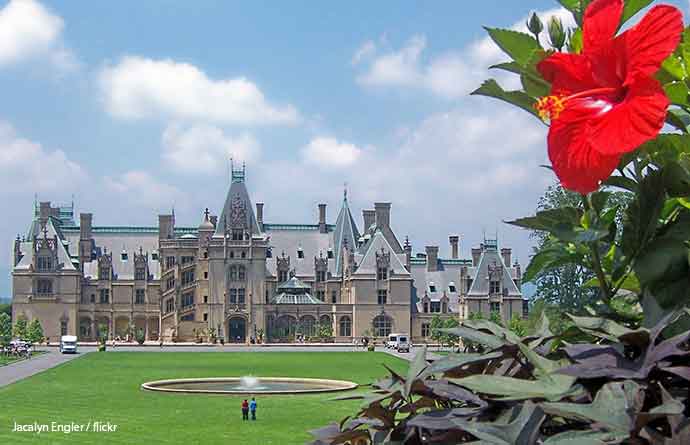
Biltmore, Asheville
You Probably Need a Car
Outside a few walkable neighborhoods, North Carolina is car-dependent. Even if you live in a city, daily life usually involves driving.
Visit in July or August Before You Decide
A spring weekend in North Carolina can make anyone want to move. But visit during the humid summer too, as that is the real test.
Check Flood Risk Before Buying
This applies especially near the coast, rivers, creeks, low-lying land, and older neighborhoods with drainage issues.
Compare Local Wages, Not Just Home Prices
A cheap house does not help much if the local job market is weak. An expensive city may be worth it if your income is higher.
Research Schools at the Address Level
Do not search only “best schools in Raleigh” or “best schools in Charlotte.” Look at the exact assigned school zone.
Understand the Growth Pattern
Many desirable areas are still growing. Empty land today may become subdivisions, apartments, shopping centers, or road projects later.
Watch HOA Rules
Many newer communities have HOAs. Some are reasonable. Others are strict or expensive. Read the rules before buying.
You may also like to read: Moving to a New City Alone. In this guide, we look at the challenges and solutions of moving to a new city on your own.
Who Should Move to North Carolina?
North Carolina may be a good fit if you:
Want a lower cost of living than major coastal metros.
Work in tech, finance, healthcare, education, biotech, research, logistics, or skilled trades.
Want access to both mountains and beaches.
Prefer mild winters.
Want more space than you can afford in larger metro areas.
Like suburban living but still want city amenities nearby.
Are retiring and want warmer weather without moving all the way to Florida.
Want a family-friendly area with parks, schools, and newer housing.
Who May Not Like North Carolina?
North Carolina may not be the best fit if you:
Need comprehensive public transportation.
Dislike humidity.
Want dense, walkable urban living everywhere.
Expect very cheap housing in popular cities.
Need a very high local salary outside Charlotte or the Triangle.
Do not want to deal with hurricanes, flooding, pollen, or summer storms.
Prefer a more uniformly progressive or uniformly conservative state.
Want big-city culture on the level of New York, Chicago, Los Angeles, or D.C.
You may also like to read: The Pros and Cons of Moving to the Country. In this guide, we look at the advantages and disadvantages of moving into the countryside.
Is Moving to North Carolina Worth It?
Lake Johnson NC
Moving to North Carolina can absolutely be worth it, but the state needs to be evaluated city by city.
The biggest advantages are job growth, moderate cost of living, natural beauty, universities, mild winters, and lifestyle variety.
The biggest disadvantages are rising housing costs, traffic, uneven schools, humid summers, storm risk, and large differences between communities.
If you are choosing between Charlotte, Raleigh, Durham, Asheville, Wilmington, Greensboro, Winston-Salem, Fayetteville, or a smaller town, do not ask only, “Is North Carolina a good place to live?” Ask, “Which version of North Carolina fits my life?”
North Carolina offers a rare mix of opportunity, space, scenery, and livability.
But the best move is the one made with clear expectations, realistic numbers, and careful neighborhood research.
Good luck with your move, and be sure to visit our home moving blog, which is packed with guides to make every aspect of your move easier, cheaper, and safer.
*At MoveAdvisor we will connect you with a professional moving company. Please note that we may not be affiliated with
and you may be speaking with another licensed provider.
We use cookies to optimise your experience.Accept and close or Learn more











Share your thoughts by leaving a comment