The United Arab Emirates is located in the Middle East and comprises seven self-governed emirates: Abu Dhabi, Dubai, Sharjah, Ras Al Khaimah, Ajman, Umm Al Quwain, and Fujairah.
Situated on the Persian Gulf, the country shares its borders with Saudi Arabia and Oman and boasts almost 700 kilometers of pristine coastline.
Around 80% of the population is foreign, so in this week’s home-moving blog, we find out just what makes the UAE such a magnet for expats.
What You Really Need to Know
The UAE offers strong job opportunities (tech, finance, renewables, healthcare), tax advantages (no personal income tax), and modern infrastructure
Living costs (especially rent in Dubai/Abu Dhabi) and school fees can be high.
Residence options include employer/work visas, investor visas, and long-term Golden Visas for talents/investors.
Employer medical insurance is widely mandatory, so always confirm your family’s coverage before you arrive.
Shipping household goods is common; sea freight can take several weeks (air is faster but costlier). Plan 3–8+ weeks for sea door-to-door from Europe/US, depending on the port and schedule.
The UAE is generally safe, modern, and family-friendly, but monitor travel advisories and local laws/cultural norms.
You may also like to read: Moving Abroad Checklist. In this guide, we have created a comprehensive checklist for anybody considering moving overseas.
How Much do Movers Cost?
Save up to 40% on your upcoming move and get a quote from reputable moving experts.
Families: The UAE is very family-oriented: international schools, lots of family activities, parks, and expatriate communities. Expect higher housing and schooling costs in Dubai/Abu Dhabi, but excellent facilities in many neighborhoods.
Singles / young professionals: Dubai and Abu Dhabi offer the fastest career growth and a good nightlife/social life; coworking spaces and networking are plentiful. Costs vary widely by lifestyle.
Retirees: There is no regular “retirement visa” for most nationalities, but long-term visas (Golden Visa, investor/property owner visas) and visa-sponsored retirement programs are options — consider quieter emirates like Ras Al Khaimah, Fujairah, or Al Ain for lower costs and a more relaxed pace.
What’s Living in the UAE Like for Women?
We often get asked whether the UAE is safe for women to move to alone, so I reached out to a lady I know who lives in Dubai. This is what she had to say: Whilst moving here can be an exciting and empowering experience for women, there is obviously a cultural difference from many other countries.
The UAE is generally safe, modern, and welcoming, with women enjoying freedom to work, drive, and participate fully in public life. That said, it’s still a region where cultural norms may differ from your current country, so dressing modestly in certain public places and being mindful of local customs can help you feel more comfortable and respected. Women will also find that most workplaces are diverse and inclusive, and daily life, whether commuting, dining out, or socializing, is straightforward.
You may also like to read: Moving to a New City Alone. In this guide, we look at the challenges and solutions of moving to a new place on your own.
Visas and Residency
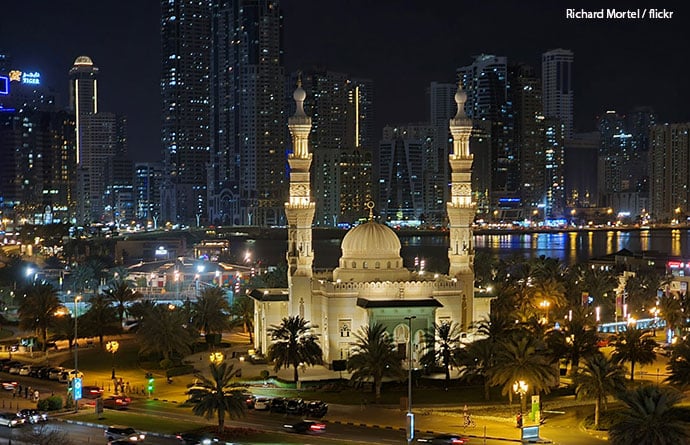
King Faisal Mosque, Sharjah
Visa Types:
Employment (work) visa: employer-sponsored; typical for most expats. Employer handles permit/work visa and Emirates ID formalities.
Investor/propertyvisa: if you invest in a qualifying UAE property or company, there are residency pathways (terms vary by emirate).
Golden Visa (5–10 years): for investors, certain professionals, researchers, and those with outstanding talents, this visa gives long-term residency with many perks.
Practical steps:
Job offer → employer applies for an entry/work permit.
Arrive on entry permit → medical tests, Emirates ID registration, labor contract, and residency stamping.
For family dependents, sponsor them under your residency (income thresholds and sponsor rules apply).
If seeking a Golden Visa or investor routes, prepare financial documents, attested education/certificates, and apply via the ICP/Government portal or nominated sponsor.
Tip: Degree attestation/certificate equivalency is often needed for jobs or study, so start attestation early.
You may also like to read: I Want to Move. My Partner Doesn’t. In this guide, we look at solutions and compromises to this very common home-moving problem.
Cost of Living
Shopping Mall, Sharjah
Costs vary strongly by emirate, neighborhood, and lifestyle. Below are typical monthly figures (USD / AED approximate), excluding one-off costs like deposits.
Estimated monthly costs
Single (basic lifestyle, excluding rent): USD 1,100–1,600 (AED 4,000–6,000). A single person’s living costs, excluding rent, are around USD 1,100–1,200 as an estimate for Dubai.
Family of 4 (moderate lifestyle, excluding rent & schooling): USD 3,500–5,000 (AED 13,000–18,500) — groceries, utilities, transport, entertainment.
Rent (monthly):
1-bed apartment in city centre (Dubai): AED 7,000–10,000+ (USD 1,900–2,700).
3-bed apartment/villa (family) in suburbs: AED 10,000–35,000+ depending on area and quality. Dubai rents tend to be higher than Abu Dhabi; Sharjah/Ajman are cheaper commuter alternatives.
School Fees
International school fees vary widely: AED 16,000 (USD 4,350) per year for lower-tier schools to AED 80,000+ (USD 21,800+) per year for premium international schools (per child).
Expect high fees for British/American/IB schools in Dubai and Abu Dhabi.
Taxes
The UAE generally has no personal income tax, though corporate tax and VAT exist — factor these into contracts and salary negotiations.
You may also like to read: Home Moving Insurance. It is critical that you understand any insurance policy you are offered to cover your goods in transit. Being underinsured is one of the most common home-moving mistakes. Find out all you need to know about moving insurance in this guide.
Best Emirates / Neighborhoods
Dubai
Top Emirates and Who They Suit Best
Dubai: best for career growth, international lifestyle, big expat community. Popular neighborhoods: Downtown, Dubai Marina, Jumeirah, Arabian Ranches, and Dubai Hills. Higher rents but huge amenities.
Abu Dhabi: government jobs, oil & energy sector, calmer than Dubai but high standard of living — Saadiyat, Al Maryah Island, Khalifa City. Generally, slightly cheaper rent than in Dubai in many cases.
Sharjah: cultural, more affordable, family-friendly; many residents commute to Dubai.
Ras Al Khaimah / Fujairah / Umm Al Quwain: cheaper, quieter, better for retirees or nature lovers. Good if you don’t need daily access to Dubai/Abu Dhabi.
You may also like to read: How to Choose a Good Neighborhood. In this guide, we suggest things to take into consideration when choosing which neighborhood to move to.
Schooling and Higher Education
Falaj al Mualla Fort, Umm al Quwain
Curricula available: British, American, IB, Indian (CBSE/ICSE), UAE Ministry curriculum, and other international options.
Fees & registration: Expect competitive admissions and waiting lists for top schools; Dubai KHDA publishes school fees info and a “School Fees Fact Sheet” to help parents compare. Budget for registration fees, security deposits, and annual tuition.
Equivalency & attestation: foreign degrees/marks often require a Certificate of Equivalency from the UAE Ministry of Education for university entry or certain job classifications. Start this early if you need it.
Tips: Visit schools in person or attend open days if possible; negotiate on placement fees (some schools offer instalment plans).
You may also like to read: How to Choose a New School. In this guide, we suggest things to take into consideration when choosing a new school for your kids.
Careers and Employment Opportunities
Khaleed Lagoon
Growing and in-demand sectors
Technology (AI, cloud, cybersecurity), fintech, renewable energy, healthcare, logistics, tourism/hospitality, construction/real estate, and professional services. Many hubs and government initiatives are pushing tech and green energy.
Salaries and negotiation
Salaries vary dramatically by role and seniority. Some high-level government/tech roles can pay very well; junior roles in services/retail pay less. Check salary guides and negotiate housing allowance, medical cover, annual flight allowance, and schooling support where relevant.
Work Culture
It is professional yet competitive. Networking and local contacts help. Some firms expect blended in-office/remote models; always clarify remote work and tax implications with the company.
You may also like to read: Moving Home for Work. In this guide, we look at the pros and cons of moving home for a new career opportunity.
Healthcare
Fujairah
Public & Private
The UAE has modern hospitals/clinics; private care is widespread and frequently used by expats. Many insurers offer excellent coverage, and private hospitals maintain international standards.
Mandatory Insurance
Employer-provided health insurance has become more pervasive, and in many emirates, employers must provide coverage. Verify what’s included (dependents, maternity, chronic conditions) in your employment package. The government publishes health insurance guidance and basic scheme information.
Tips: carry your medical records and any prescriptions when you move; confirm if pre-existing conditions are covered. Register with a GP and then find specialists via your insurer if you need them.
You may also like to read: Moving After Retirement. In this guide, we look at the pros and cons of moving after retirement.
Safety, Laws, & Cultural Considerations
Sharjah
Safety
Overall crime rates are relatively low in the UAE compared with many global cities.
Local Laws and Etiquette
The UAE has conservative laws compared with many Western countries.
Avoid public displays of affection
Be careful with alcohol (licensed venues are fine, drinking in public areas is not)
Respect Ramadan customs when visiting religious sites or eating and drinking in public during fasting hours.
Be mindful of social media content and public speech.
Dress modestly in formal or government settings.
Legal Consequences
Certain actions that are legal at home can be illegal in the UAE (drugs carry severe penalties; some speech/online posts can lead to legal action). When in doubt, follow local guidance and legal counsel.
You may also like to read: How to Ship a Car Abroad. In this guide, we explain how to ship your car overseas.
Moving Tips
Dubai
Typical Transit Times
Express courier (DHL/FedEx/UPS): 1–5 business days (documents/small parcels).
Air freight: typically 5–10 days door-to-door depending on routing and customs.
Sea freight: typical door-to-door from the US/Europe ranges from 20 to 60+ days depending on origin port, transshipment, and customs, so plan conservatively for 4–8 weeks.
Customs & household goods: most personal effects are allowed duty-free if properly documented and shipped under ‘household goods’ status. You’ll need inventories, passport copies, UAE visa/residence documents, and sometimes a no-objection certificate from your employer. Customs rules vary by emirate and change, so confirm with your shipping company.
What to bring: original certificates (birth, marriage, degree), medications with prescriptions, sentimental items, and compact electronics (the UAE uses a G-type plug, 230V). Don’t assume bulky furniture will be worth the cost of shipping unless it is sentimental or of a very high value.
Practical Tips
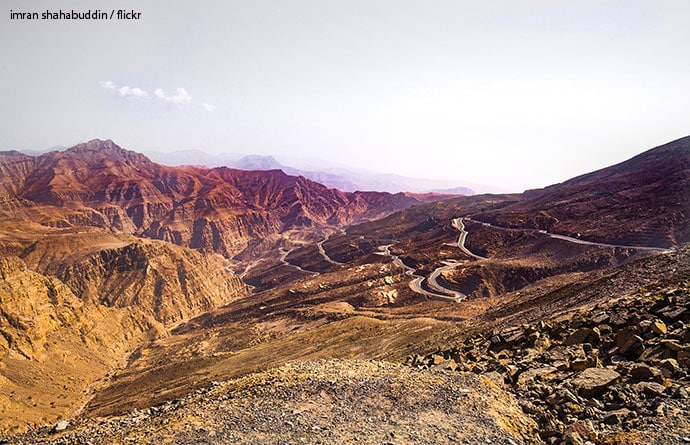
Ras al Haimah, Jebal Jais
Confirm job contract, salary in AED, housing allowance, and schooling allowance (if applicable).
Arrange for an Emirates ID and medical screening as soon as you arrive on your employment/entry permit.
Open a UAE bank account (you’ll need a passport, a visa/residence, and proof of address/employer).
Get a local SIM (eSIM options widely available) and set up Nol / transport cards for Dubai public transport.
If you drive, check license transfer rules (some nationalities can transfer; others need a driving test).
Join expat groups and community forums; they’re invaluable for local tips and school housing leads.
You may also like to read: Choosing International Movers. In this guide, you will find comprehensive instructions on how to select a reputable international moving company.
What Most People Wish They’d Known
Negotiate the package (housing, flights, and schooling): salary alone can be misleading without allowances.
Plan the move timeline for schools and shipping: school admissions and container slots fill up quickly, so book early.
Check health coverage for dependents and pre-existing conditions BEFORE arrival.
Respect local laws and keep copies of important documents in cloud storage.
You may also like to read: Moving Internationally. This is a whole library of guides dedicated to making your move abroad so much easier.
Numbeo — Cost of living and rent comparisons (there are city pages for Dubai and Abu Dhabi).
KHDA (Dubai) — school fees and school quality info; essential for parents.
Travel advisories (your home government) — for the latest safety and security updates.
MoveAdvisor for no-obligation quotes for your move
Propertyfinder – For more in-depth city guides and to find properties for sale and rent.
UAE Government – For official advice on moving to the UAE.
You may also like to read: How to Ship Pets Abroad. In this guide, we explain the steps you need to take to relocate your pets abroad.
FAQs
Q: How long does a typical work/residence visa take? A: If the employer sponsors you, the process commonly takes a few weeks (entry permit → medical → Emirates ID → residency stamp), but times vary by employer, role, and documentation.
Q: Can I keep my home country bank account? A: Yes, but many expats open a UAE bank account for salary and local payments; you may need proof of residence and employment.
Q: Can families be sponsored on my visa? A: Yes — most employment visas allow sponsoring spouse and children under certain income thresholds and documentation.
Good luck with your move to the UAE, and be sure to visit our home moving blog for guides to make every aspect of your move easier, cheaper, and safer.
*At MoveAdvisor we will connect you with a professional moving company. Please note that we may not be affiliated with
and you may be speaking with another licensed provider.
We use cookies to optimise your experience.Accept and close or Learn more


















Share your thoughts by leaving a comment