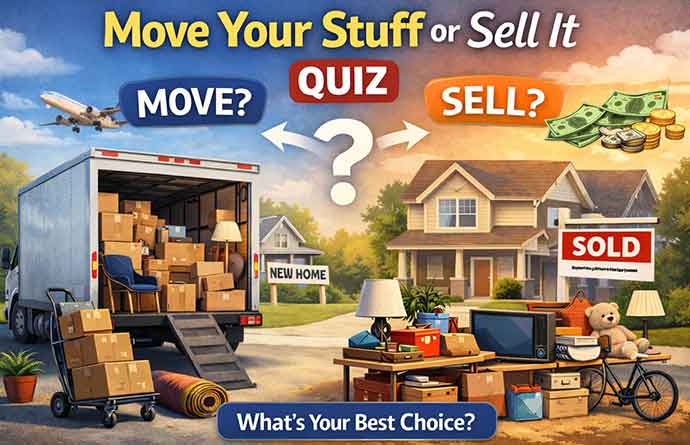
Planning a relocation and wondering whether to move your belongings or sell them and start fresh?
This decision affects your budget, stress level, and even how quickly your new place feels like home.
Start with this quick quiz to help you decide which is best for you:
The Move It or Sell It? Quick Quiz
1) Moving to a new home is a chance to:
a) start afresh and build a new life b) put your old life into a new perspective
2) Your household items are:
a) outdated things you can’t wait to replace b) cherished belongings you’re attached to
3) Shopping for new items is:
a) exciting and something you look forward to b) a stressful hassle you’d rather avoid
Mostly “a” answers? You’re ready for a clean slate. Selling most of your belongings before the move and buying new items afterward may suit you best.
Mostly “b” answers? You value familiarity and comfort. Moving your belongings will help you quickly recreate your comfort zone in your new home.
That said, real life is rarely that simple.
You may also like to read: How to Declutter for a Home Move. Whichever way you decide to go, there will always be stuff you don’t need or love anymore. In this guide, we explain how to declutter ready for moving home.
How Much do Movers Cost?
Save up to 40% on your upcoming move and get a quote from reputable moving experts.
Even if you dream of a brand-new life, buying everything at once may not be financially realistic. And even if you love your old items, they may not fit your new space, lifestyle, or relocation budget.
That’s why the smartest approach is to evaluate each item individually, considering cost, value, distance, and practicality.
You may also like to read: How to Move Home Cheaply. In this guide, we share tips on how to save money on every aspect of your home move.
Pros and Cons of Selling Your Items Before Moving
The fewer items you move, the cheaper your move, but the more epensive your set-up costs are
Selling everything before relocating can be liberating, but it comes with trade-offs.
Advantages of Selling Before You Move
Extra cash: Every item sold adds money to your moving budget
Lower moving costs: Fewer movers, smaller trucks, and less packing materials
Less effort: Packing an entire household is exhausting and time-consuming
Design freedom: Furnish your new home exactly how you want
Better fit: New items can match your new home’s size, layout, and style
Less clutter: A simpler, more minimal lifestyle
Disadvantages of Selling Everything
Loss of sentimental items that can’t be replaced
Time-consuming repurchasing of essentials after the move
Higher upfront costs to replace furniture and household basics
Temporary discomfort if you delay buying replacements
Selling everything often sounds appealing, but it rarely makes sense in practice.
You may also like to read: How to Organize a Garage Sale. In this guide, we share tips on how to hold a successful yard sale.
Pros and Cons of Moving Your Old Belongings
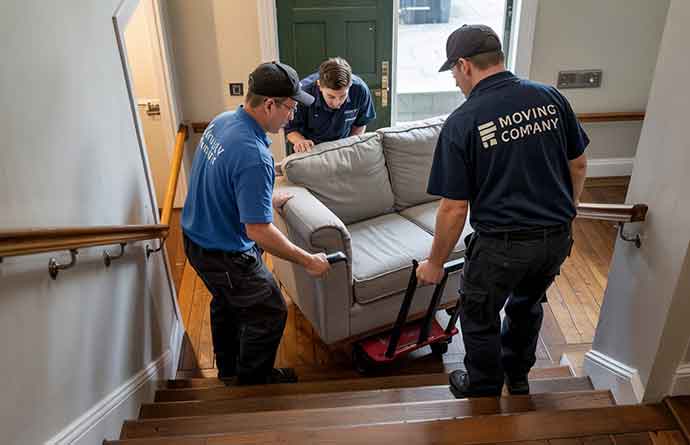
Moving your heavy and large furniture is expensive
Bringing your belongings with you offers comfort and continuity, but it isn’t always the cheapest or easiest option.
Advantages of Moving Your Stuff
Quickly setting up once your shipment arrives
Emotional comfort from familiar and cherished items
Faster adjustment to your new environment
Lower replacement costs compared to buying new
Disadvantages of Moving Your Stuff
Exhausting packing effort or added cost for professional packers
Higher transportation expenses, especially for long-distance moves
Risk of damage or loss
Limited flexibility in creating a new style or layout
Fit issues if items don’t suit your new space
You may also like to read: How to Negotiate with Movers. Once you have decided what you are taking, another tip to save money is to negotiate a better price for your move with the movers. In this guide, we explain how.
Should You Move or Sell Your Stuff? Things to Consider
A stress-free move is invaluable
1. The Value of Each Item
Think beyond emotional attachment and assess value objectively.
Practical Value
Move items that are:
Frequently used
Functional and comfortable
Durable and in excellent condition
Sell items that are worn out or nearing replacement anyway.
Sentimental Value
Always keep:
Family heirlooms
Personal favorites
Items tied to meaningful memories
Monetary Value
Move:
Expensive or high-quality items
Hard-to-replace pieces
Artwork, antiques, and collectibles you enjoy
Important: Always confirm that an item will fit through doors and into your new space before deciding to move it.
You may also like to read: How to Make a Floor Plan. It may be that you are downsizing or have large pieces of furniture that may not fit into your new home. Making a floor plan will help you make that decision, here we show you how to make a floor plan of your new home.
2. The Type of Move
Local move: Moving your belongings usually makes sense
Long-distance move: Consider selling bulky or heavy items
International move: Take only essential personal possessions
If you’re downsizing, selling becomes unavoidable unless you want to deal with long-term storage, which is often costly and impractical.
3. Risk of Damage
If an item is:
Extremely fragile
Oversized or awkwardly shaped
Difficult to transport safely
It may be better to sell it and replace it, unless it’s truly irreplaceable and worth custom crating.
4. Cost Comparison: Move vs. Replace
A simple rule:
If moving costs are lower than replacement costs – sellit
If replacement costs more – move it
To decide accurately:
Get binding moving estimates
Research replacement prices in your new location
Include delivery and setup costs
This comparison usually makes the answer obvious.
You may also like to read: Understanding Estimates. It is vitally important that you understand exactly the type of quote you are being given so that you can better decide what to take and what to sell. This guide explains the different types of quotes you will receive.
What to Move and What to Sell Before Relocating
If moving internationally take the essentials only
Items Worth Moving
Daily-use essentials in good condition
High-quality furniture
Favorite clothing and personal items
Family heirlooms and sentimental objects
Artwork and décor you love
Anything that makes your new place feel like home
Items Best Sold Before Moving
Large, heavy furniture with low resale value
Appliances that are costly to transport
Fragile or easily damaged items
Most books, dishes, and glassware
Extra linens and duplicates
Cheap décor and unused items
Anything you won’t use in your new lifestyle
You may also like to read: Home Moving Insurance. One of the most common home moving mistakes is underinsuring your home move. In this guide, we explain all you need to know about home moving insurance.
How to Sell Your Stuff When Moving
Step 1: Price Items Realistically
Consider:
Market value
Brand or maker
Condition and age
Overpricing slows sales, especially when buyers know you’re moving.
Requires planning, but you can sell many items at once
Bundle items and offer discounts
Great for quick, in-person transactions
House Clearances
Least effort, least profit
You’re paid only after items sell
Bonus tip: Always mention other items for sale, as buyers often want matching or related pieces.
You may also like to read: How to Sell Furniture. In this guide, we share tips for selling any furniture that you will not be taking to your new home.
When relocating, take what you need and love and sell the rest. Avoid rushing to refill your new home. Buy only essentials and items you truly enjoy.
This ensures that you save money, reduce clutter, and helps you create a space that fits your new life, not your old one.
Good luck with your move, and be sure to visit our home moving blog for guides on how to make every aspect of your home move easier, safer, and cheaper.
*At MoveAdvisor we will connect you with a professional moving company. Please note that we may not be affiliated with
and you may be speaking with another licensed provider.
We use cookies to optimise your experience.Accept and close or Learn more










Share your thoughts by leaving a comment