

- Benefits of selling your furniture when moving
- Move it or sell it? How to decide which furniture to keep
- How to sell furniture when moving
- Where to sell furniture when moving
- Option 1. Sell furniture to the new tenant or home buyer
- Option 2. Sell your furniture online (best 2026 marketplaces)
- Option 3. Host a moving sale (garage or yard sale)
- Option 4. Offer your furniture to friends and family
- Option 5. Contact a consignment store or used furniture dealer
- Option 6. Donate unsold furniture for free charity pickup
Quick Guide: Should You Move or Sell Your Furniture?
- The Move-vs.-Replace cost rule: On long-distance moves (~$0.70 to $1.10+ per pound), sell a piece if moving, packing, and disassembling it costs more than replacing it at your destination. Keep solid-wood, high-value, and sentimental items that cost far more to replace than to ship.
- Fastest zero-lifting sale: Offer fitted, oversized, or patio items to the incoming tenant or home buyer first so nobody has to haul them down stairs.
- Best places to sell furniture in 2026: Facebook Marketplace, OfferUp, and Nextdoor for fast local cash pickup; AptDeco and Chairish for brand-name or vintage pieces; plus garage sales and consignment shops.
- Compare moving costs first: Check how much keeping vs. cutting bulky furniture changes your quote with our free Moving Cost Calculator.
Moving day is approaching fast, maybe a bit faster than you want.
All of a sudden, you find yourself thrown into a whirlwind of various moving preparation tasks meant to get you ready for the Big day.
While you go from room to room trying to decide which household items to take with you and which ones to leave behind, an unexpected and yet highly logical thought crosses your mind,
What if I sell my used furniture and pocket some much-needed cash instead of paying big dollars out of the same pocket for transporting all these furniture pieces to the new home?
What’s more, what about all the time, effort, and nerves that you are going to waste while disassembling, packing, loading, unloading, unpacking, and reassembling all the furniture items you have chosen to take with you?
Of course, you would be right to think this way. Don’t forget, not even for a second, that you’re paying for the transportation of every item you decide to move to your new residence.
After all, you can use the money you earn from the sale of your old furniture to either buy new furniture units after the move or lower your overall moving expenses.
Without a doubt, selling your furniture when moving will often prove to be hugely beneficial for you on various levels.
What is the best way to sell furniture when moving?
Read on to find out.
Benefits of selling your furniture when moving
Here are the clear benefits of selling your furniture before moving out:
- You will earn some cash. Needless to say, selling several or all your pieces of furniture before you move out will bring in much-needed money that you can use to cover some of your moving expenses. You shouldn’t expect to sell your furniture pieces for the amount you paid for them in the first place (or maybe you should in some specific cases) but any money you get is still a bonus you should definitely welcome during that transitional period.
- You will save precious time. You should know that the tasks of disassembling and protecting any furniture items take time, usually more time than you think. By choosing to sell your furniture, you will save hours and hours of valuable time. This is especially important when you’re moving out quickly – that is, you only have a very limited time until Moving day (emergency moving).
- You will save considerable effort. It takes quite an effort to protect your furniture units, take them out of your place, and load them safely into the moving vehicle. Your smart decision to sell your furniture before moving will save your energy for other tasks that seem to make more sense in your relocation case.
- You won’t have to rely on your friends. You should always keep in mind that moving furniture is not a job for one person. By opting to get rid of your old furniture by selling it, you’ll save yourself the hassle of having to ask your friends to give you a hand with the heavy lifting.
- You will save yourself from possible post-move headaches. There are several post-move scenarios that can prove to be problematic when you’ve moved your furniture to the new place: 1) some furniture pieces won’t fit through the doors, 2) a few furniture items may not match the décor of the new house or apartment, or 3) some furniture units may have been damaged during the transportation phase. So, your decision to get rid of the furniture before moving out can save you from possible troubles in the new place.
Still torn on specific pieces? Before listing your whole living room, run each item through the four-part filter below.
How Much do Movers Cost?
As Featured On:

Move it or sell it? How to decide which furniture to keep

Selling everything before a move sounds liberating on paper, yet replacing a full household of sofas, beds, dining chairs, and lamps at current retail prices adds up fast and can leave your new home bare for weeks. Conversely, paying interstate movers hundreds of dollars to haul a sagging couch or particleboard bookcase rarely pays off. Evaluate each piece individually using four criteria:
1. Run the move-vs.-replace cost math
- If moving the item costs MORE than replacing it: sell it. Long-distance shipments are priced by weight (often working out to roughly $0.70 to $1.10+ per pound once fuel and packing are factored in). Shipping a 200-pound flat-pack dresser coast to coast can easily add $160 to $220+ to your bill, more than a similar secondhand or flat-pack replacement costs.
- If replacing the item costs MORE than moving it: move it. A well-kept $2,200 solid-oak dining table or supportive $1,800 mattress is almost always cheaper to pad, wrap, and move than to sell at 30% of retail and repurchase new.
- Get real numbers first: Request written binding estimates (ask movers to quote both with and without your heaviest pieces) and remember to include delivery taxes and assembly fees when pricing replacements.
2. Factor in move distance and downsizing
- Local moves (hourly): Since the truck is already booked, keeping good everyday furniture usually makes financial sense unless a piece is worn out or requires specialty hoisting.
- Long-distance & cross-country moves (weight-based): Cutting heavy sectionals, spare guest beds, gym racks, and patio sets directly reduces shipment weight and can even drop you into a smaller truck tier.
- International moves or downsizing: Take only compact essentials and irreplaceable heirlooms; paying monthly self-storage fees for surplus furniture quickly exceeds what those items are worth.
3. Check your new floor plan, doorways, and item quality
Measure stairwells, elevator doors, tight hallway turns, and wall lengths before moving day (see How to Make a Floor Plan). Keep pieces with high practical value (daily comfort and solid joinery), monetary value (hardwood, designer, or antique pieces), or genuine sentimental value. Sell particleboard furniture that loosens when disassembled, oversized sectionals that overpower your new rooms, and anything you were already planning to replace. For whole-home sorting tips, read How to Declutter Before Moving and How to Negotiate with Movers once your inventory is trimmed.
How to sell furniture when moving
Once you’ve made up your mind to sell your furniture when moving – or at least some of the pieces – it’s time to follow these steps to prepare your furniture for sale.
Step 1. Clean the furniture
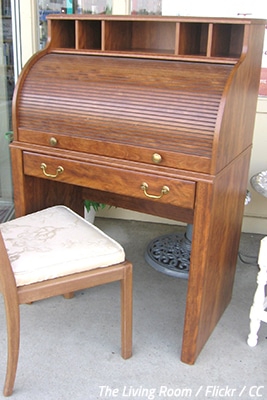
First of all, the furniture pieces you wish to sell should look presentable so that you can sell them for more money and more quickly.
Be sure to use furniture polish on wooden pieces, vacuum upholsteries, and spot-clean any stains from their surface.
Also, take a closer look at the pieces you intend to sell and fix any minor problems, if any, such as tightening any loose screws or replacing any damaged hardware parts.
If some of the furniture items have more serious issues, then you should consider either selling them very cheaply (be sure to describe the issues in detail) or throwing them away for proper recycling.
As a rule of thumb, you shouldn’t waste precious time trying to make a profit from any items – in this case, furniture items – that are very unlikely to be of any use to anybody.
Step 2. Price your furniture reasonably
To assign the right sale price on each piece of furniture you own is not an easy task.
You definitely don’t want to undersell your used furniture and thus lose money. On the other hand, if your price is too high, you will run the risk of not getting any money at all.
There are two major factors that will undoubtedly influence the correct number you put on the price tag.
1. Value
The first thing you need to do is try and get a rough idea of how much your furniture is worth.
Check if it was made by a famous manufacturer – inspect all its sides for a logo, a stamp, a label, or just about anything that may hint at the name of the company that produced it.
If the specific furniture piece is old enough and you think it could already be considered antique, you can consult with a used furniture dealer.
Another way to understand what your furniture may be worth is to take advantage of the comparative method – browsing through the Internet and newspaper ads for similar items to see their pricing will help you get a good idea about the value of your old furniture.
2. Current condition
The current condition of your furniture pieces will be the ultimate deal maker, or deal breaker for interested customers.
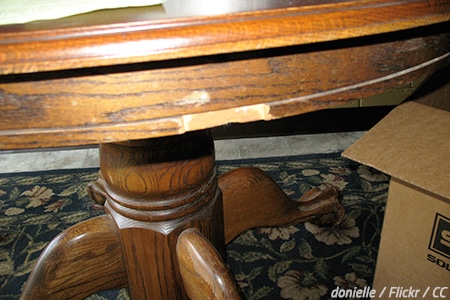
When trying to come up with the right price for your item, you should look for possible scratches, dents, stains, or any other signs of wear and tear. If you find any, lower the price accordingly – it’s not fair to pretend such flaws don’t exist and hope that people will somehow not notice them.
Be certain of one thing – any potential buyer will inspect each furniture piece thoroughly before making up their mind to purchase it.
On the other hand, if your furniture items are in a very well-maintained or even mint condition, then it’s only normal that you increase the sale price a few notches.
Furthermore, there are a couple of fundamental things you should be aware of when pricing your furniture for sale:
3. Sentimental value
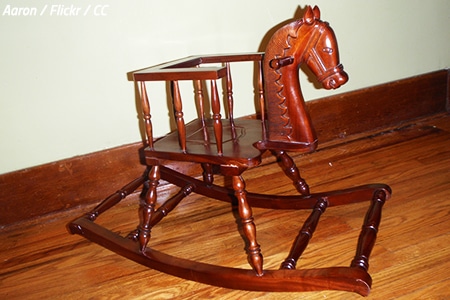
Buyers will not really care about any special memories you may have linked to a certain furniture piece.
Not very surprisingly, they will be greatly interested in the price and quality of the item, as well as whether it will be practical, comfortable, usable, and stylish.
If a piece holds considerable sentimental value for you, then you shouldn’t be thinking about parting with it in the first place.
4. Original price
How much you originally paid for your furniture provides no additional value to potential buyers.
They will be interested in getting a good bargain – the best possible value for their money.
And who could blame them: won’t you be doing the same thing once you’ve sold your used furniture and moved to your new house?
What to Do With Furniture When Moving: 7 Great Options
Where to sell furniture when moving
Now that you have a much better idea of how to price it appropriately, you may ask yourself, Where can I sell my used furniture?
The good news is that you have several good options here and it’s time to decide what approach to take to sell it fast and profitably.
What’s the best way to sell furniture when moving?
Option 1. Sell furniture to the new tenant or home buyer
The easiest, zero-lifting way to sell furniture before moving is right where it already sits: offering pieces to the incoming tenant taking over your apartment or the buyer purchasing your house. They already know the items fit the doorways, wall dimensions, and decor, and both sides skip truck loading and delivery fees.
- Pitch items that fit the exact space: Patio sets, washer/dryer pairs, wardrobes in bedrooms without built-in closets, custom-sized dining tables, entryway benches, AC units, and mounted shelving are especially attractive to incoming renters and first-time buyers.
- Send a simple one-page photo price sheet: Ask your landlord, property manager, or real estate agent if you may share an itemized list with clear photos, dimensions, individual prices, and a discounted bundle price for taking multiple items.
- Price fairly for convenience (30% to 50% of current retail): Factor in the time and moving labor you save by leaving a heavy sofa or bed frame in place.
- Put the agreement in writing separately: On a home sale, keep any personal furniture sale on a separate written bill of sale (or fixtures-and-fittings addendum approved by your agent/lender) so personal property does not complicate the mortgage appraisal. For rentals, get written sign-off from both the incoming tenant and the landlord so you are not charged a removal fee out of your security deposit.
Option 2. Sell your furniture online (best 2026 marketplaces)
Local online marketplaces reach thousands of nearby buyers who can pick up bulky furniture with their own van or truck within 24 to 72 hours. Match the platform to the type of furniture you are selling:
- Facebook Marketplace & local Buy/Sell groups: Highest buyer volume in most cities for everyday sofas, bed frames, desks, dining sets, and dressers. Free for local pickup listings.
- OfferUp & Nextdoor: Great for fast neighborhood pickups where buyers live minutes away and have verified local profiles.
- AptDeco, Kaiyo, or Chairish (for brand-name, mid-century, & vintage pieces): Curated resale platforms work best for West Elm, Crate & Barrel, Restoration Hardware, or authentic antique pieces when you want higher payouts or coordinated white-glove pickup.
- Craigslist & eBay (Local Pickup): Still effective for solid-wood furniture, garage/patio sets, and collectible vintage decor.
How to make your online furniture listing sell in days, not weeks:
- Shoot bright daylight photos: Clear clutter off surfaces and photograph the front, sides, back, brand label, and close-ups of any scratches or wear.
- Include exact L x W x H dimensions: Buyers hesitate when they cannot tell whether a couch or dresser fits their SUV or stairwell. Note whether it comes from a smoke-free or pet-free home and which floor pickup is on.
- Stay safe on payment and pickup: Accept cash or verified in-person payment at pickup. Never accept overpayment checks, courier pickup schemes, or requests for verification codes. Have another adult home when strangers collect large pieces.
Option 3. Host a moving sale (garage or yard sale)
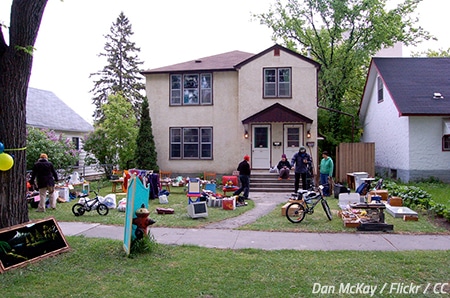
A weekend moving sale or yard sale works well when you have two or more weeks before moving day and plenty of smaller household goods, kitchenware, tools, and decor to sell alongside your furniture.
Promote the sale 3 to 5 days ahead on Facebook community groups, Nextdoor, and Craigslist with photos of your best anchor furniture pieces, and place bold, legible directional signs at busy neighborhood intersections. Price items clearly with removable painter’s tape and be ready to bundle smaller tables, lamps, and chairs during the final two hours.
How to Organize a Garage Sale Before Moving Out
Option 4. Offer your furniture to friends and family
Share a quick photo album with friends, coworkers, and relatives first, especially anyone furnishing a first apartment, college rental, or guest room. You skip vetting strangers and know your favorite pieces are going to a good home. Just state the asking price clearly upfront so nobody assumes you are giving the items away for free.
Option 5. Contact a consignment store or used furniture dealer
Local consignment shops, estate buyers, and vintage dealers are great time-savers for solid-wood, antique, or designer furniture when you do not want to manage individual buyer appointments. Expect the shop to keep a 30% to 50% commission (or offer a wholesale buyout price), so email clear photos two to four weeks before moving day to confirm they have showroom space.
Option 6. Donate unsold furniture for free charity pickup
If moving day is days away and a few clean, usable pieces have not sold, schedule a free charity pickup with organizations like Habitat for Humanity ReStore, The Salvation Army, Goodwill, AMVETS, or Furniture Bank networks. You clear out heavy items without paying junk-removal fees and can request an itemized receipt if you itemize charitable tax deductions.
With some happy cash in your pockets and much fewer (or maybe none at all!) heavy and bulky old furniture pieces to worry about, Moving day is much lighter, and you can compare free quotes from licensed movers based on your trimmed-down inventory.
You’re probably a little excited too, for you can now use the money from your used furniture sales to buy modern and fashionable pieces that will meet your high standards and fit much better in your new place of residence.
Or you can use that same money to cover some of the inevitable relocation expenses which, coincidentally enough, will be much less thanks to having much less furniture to move.
It’s a win-win situation for you, don’t you think?
Must-read: How to Sell Everything You Own and Move
Also Read

Moving Antique Furniture: Time-Tested Furniture Moving Tips
Do you like riddles? If you do, here’s a fairly challenging riddle for you: What has served you stoically in your... Read More

What’s the Cheapest Way to Move Furniture to Another State?
Shipping furniture across the country is a very tough task, and you should do the right thing—rely on experienced... Read More

How to Move a China Cabinet: Step-By-Step Guide
What will happen if you accidentally drop a book on the floor? Will it break into hundreds of small pieces? No.... Read More
More about the author

Joshua is a moving expert and author who dedicates his time to helping people move quickly and safely. Writes for MoveAdvisor, formerly MyMovingReviews.com.

Martin is a moving expert and online marketer who’s been involved in the moving industry since 2004. Writes for MoveAdvisor, formerly MyMovingReviews.com.
Posted on
We need to move from California, and we cannot take all our Furnitures so I would like to sell them most of them. How can one do it? Can you help?