A decade ago, batteries probably weren’t high on your list of moving-day concerns.
These days, however, a surprising number of items contain batteries.
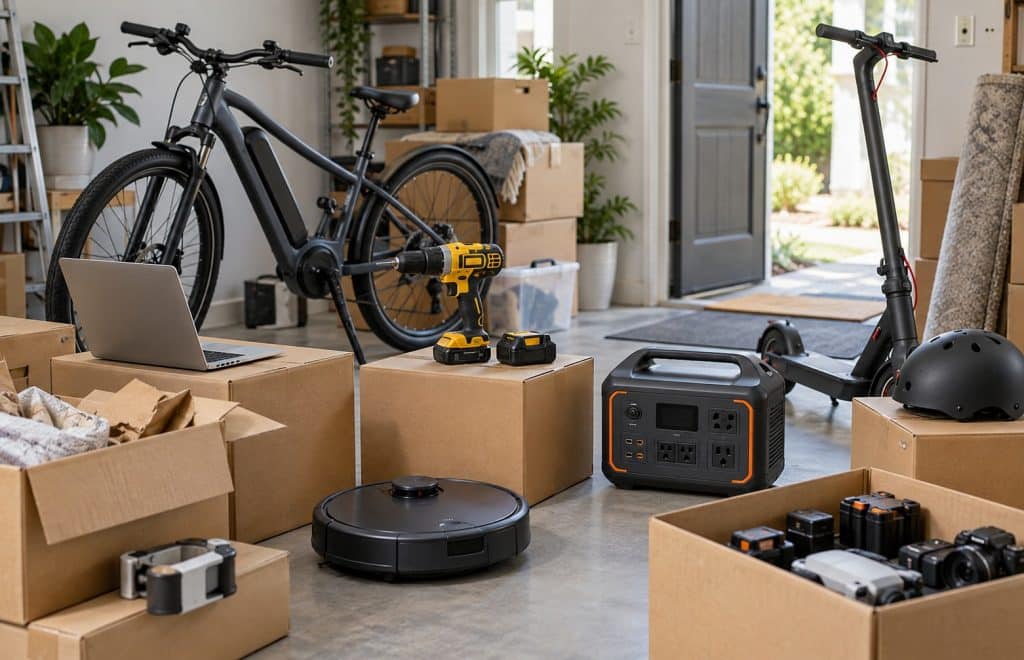
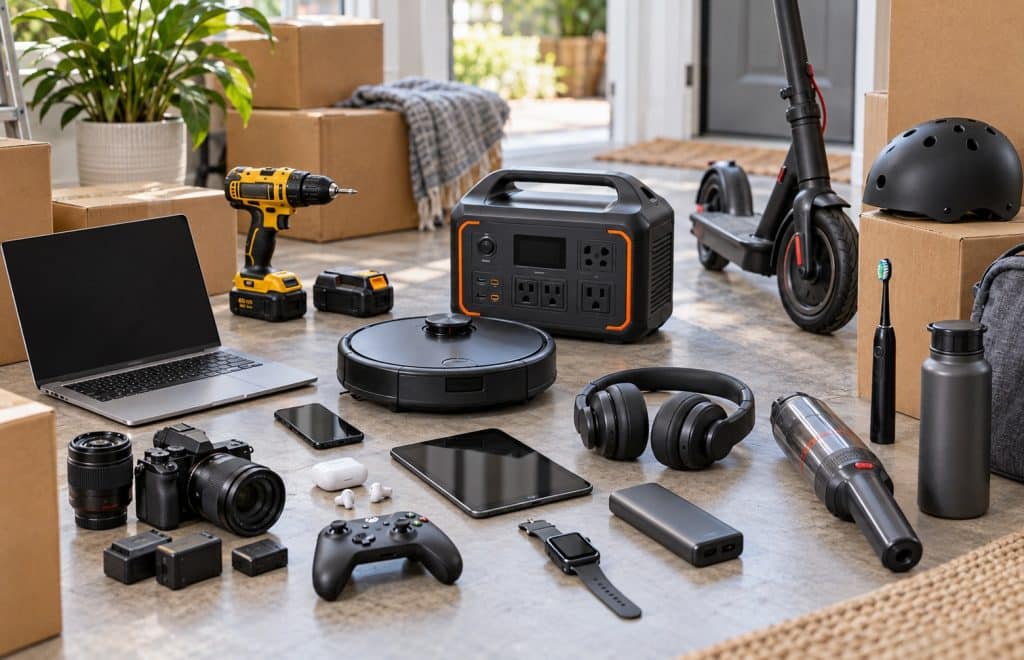
There may be lithium-ion batteries inside your laptop, robot vacuum, cordless drill, lawn mower, leaf blower, e-bike, electric scooter, camera, portable jump starter, and backup power station.
Some are small enough to fit in your pocket. Others store enough energy to power appliances for hours.
You have probably not given it a second thought during your moving preparations, but:
Can your movers actually take all of them?
Yes, some moving companies can transport lithium batteries and battery-powered devices, but acceptance depends on the battery’s size, condition, how it is installed, applicable DOT rules, and the mover’s own policy.
Lithium batteries are regulated as hazardous materials when transported commercially in the United States, so additional transportation requirements may apply.
This article primarily relates to U.S. federal transportation rules. Interstate household-goods moves are regulated federally, while additional state or local requirements may apply to intrastate moves.
So, before your e-bike or 2,000 Wh power station gets packed into a moving box, there are a few things you need to know.
At a Glance
Item
Why it matters
What to do
Laptop/phone
usually less problematic
ask mover if unsure
Cordless tool battery
removable battery
disclose/ask mover
E-bike/scooter
large lithium battery
confirm before moving day
Portable power station
potentially hundreds/thousands of Wh
give mover make/model/Wh
Swollen/damaged battery
do not pack
arrange appropriate disposal/handling
How Much do Movers Cost?
Save up to 40% on your upcoming move and get a quote from reputable moving experts.
Lithium-ion batteries pack a large amount of energy into a relatively small space. That’s exactly what makes them useful, and what can make them dangerous when something goes wrong.
In rare cases, a lithium-ion battery can enter thermal runaway; a chain reaction in which the battery rapidly generates heat and can release flammable gases or ignite. Damage to one battery may also cause problems for nearby batteries or combustible materials.
That’s a much bigger concern inside a packed moving truck than it is when a battery is sitting on a shelf in your garage.
A professional mover may be able to transport some lithium batteries and battery-powered devices, provided the shipment complies with applicable hazardous-material transportation rules, and the mover accepts the item.
Other movers may have policies that are more restrictive.
It is always better to err on the side of caution, so always tell your moving company about large lithium batteries before moving day and ask what it will and will not accept.
Don’t assume that because an item is an ordinary consumer product, it can automatically go onto the truck.
Federal Motor Carrier Safety Administration guidance also warns consumers not to place dangerous or hazardous materials in their household-goods shipment without informing their mover.
Ignoring the problem or trying to hide the batteries is not an option. Failing to disclose hazardous materials can limit or reduce your mover’s liability if something goes wrong.
And always communicate with your mover in writing so that there can be no ambiguity as to what you told the mover and what they told you about transporting batteries.
You should also check out our guide to what movers can and cannot generally take on the moving truck for health and safety reasons, but you should always ensure you have an up-to-date list of prohibited items from your mover.
The Lithium Batteries You May Not Realize You Own
Modern homes can contain powerful rechargeable batteries:
Item
What to look for
E-bike
Large lithium-ion battery, often removable
Electric scooter
Large built-in or removable battery
Portable power station
High-capacity lithium-ion or LiFePO4 battery
Cordless drill or saw
Removable lithium battery pack
Battery lawn mower
One or more large removable batteries
Leaf blower or trimmer
Rechargeable battery pack
Robot vacuum
Built-in rechargeable battery
Laptop or tablet
Built-in lithium-ion battery
Camera
Removable rechargeable battery
Drone
Removable lithium-polymer batteries
Portable jump starter
Lithium battery
UPS or battery backup
Lithium-ion or lead-acid battery, depending on model
Electric wheelchair or mobility device
Battery type and size vary
Cordless vacuum
Built-in or removable battery
PHMSA specifically identifies products such as cordless tools, portable electronics, wheelchairs, motor vehicles, scooters, and electrically powered bicycles within its lithium-battery transportation guidance.
Before packing, make an inventory of anything rechargeable in your home; particularly items in the garage, basement, and workshop.
You may find far more batteries than you expected.
Can Movers Take an E-Bike?
Possibly, but don’t treat an e-bike exactly like an ordinary bicycle. The battery is usually the part that requires the most attention.
Under DOT hazardous-material guidance, electrically powered bicycles can fall within the definition of battery-powered vehicles for transportation purposes.
Before your move, give your mover the make and model of the e-bike and ask:
Can you transport the e-bike with its battery installed?
Do you require the battery to be removed?
Will you transport a removed battery separately?
Do you have a battery-capacity limit?
Do you require any special preparation or packaging?
What happens if I have a spare e-bike battery?
Do this well in advance of moving day and always in writing.
An expensive e-bike sitting in your driveway because the crew won’t load its battery is not the kind of surprise you want on moving day.
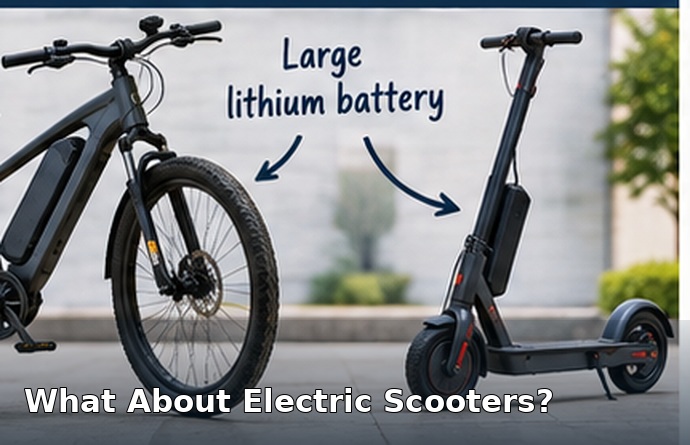
Can Movers Take Electric Scooters?
Electric scooters create many of the same issues as e-bikes.
Some use relatively small batteries; others have very high-capacity battery packs. Some batteries are removable, while others are built into the scooter.
The important point is that removing a battery does not automatically make the transportation problem disappear.
A loose battery is still a lithium battery and may itself be subject to specific commercial transportation requirements.
Ask your mover whether it wants the battery installed, removed, specially packed, or transported some other way.
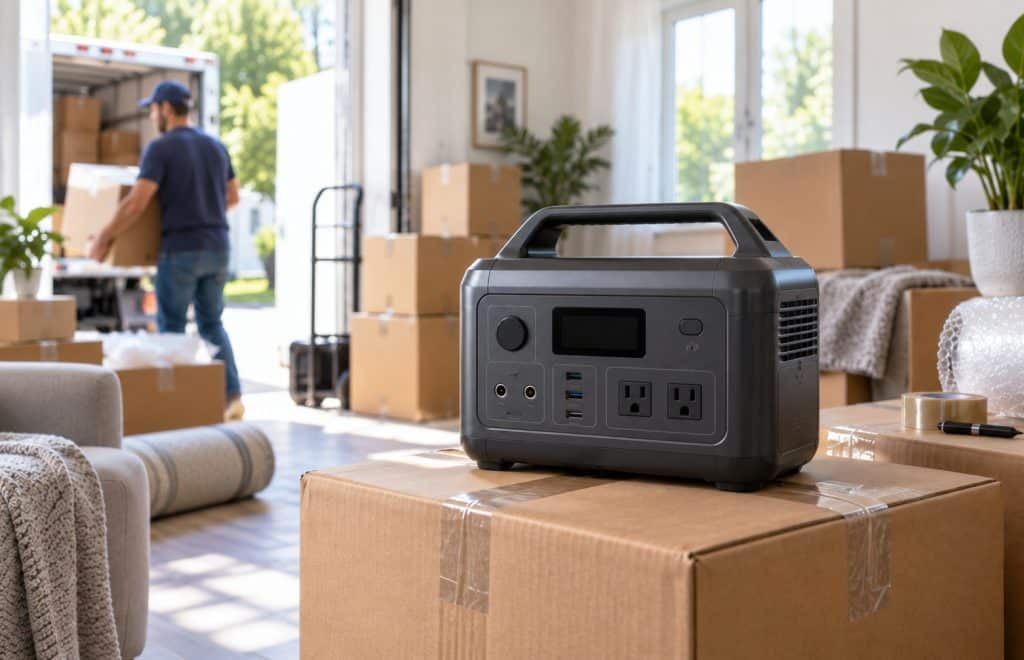
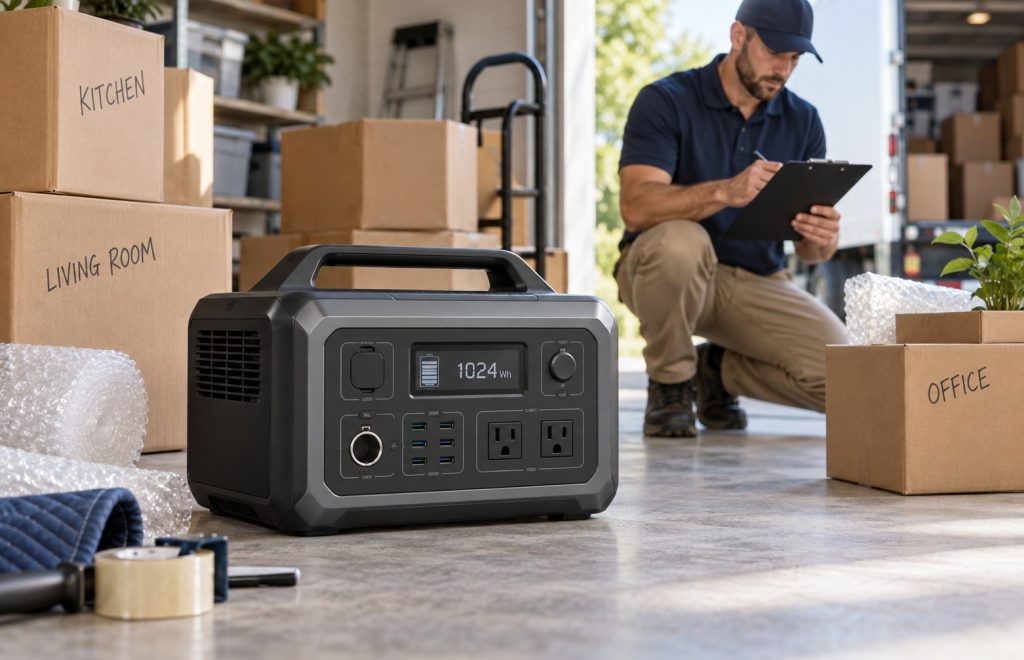
Can Movers Take Portable Power Stations?
This is one of the easiest battery-powered products to overlook.
Portable power stations from brands such as Jackery, EcoFlow, Anker, Bluetti, and others have become common for camping, emergency backup power, and home use.
But these aren’t just oversized phone chargers.
Many contain batteries rated at several hundred watt-hours, while larger models can exceed 1,000 or even 2,000 Wh.
That number is important.
Watts vs. Watt-Hours
You’ll often see several numbers printed on a battery or power station.
The two most useful are:
Watts (W) tell you how much power the device can deliver at a given moment.
Watt-hours (Wh) tell you approximately how much energy the battery can store.
For transportation purposes, the watt-hour rating of a lithium-ion battery is particularly important.
Current PHMSA guidance uses battery size and configuration to determine which transportation requirements and exceptions apply. Lithium-ion batteries are generally required to have their Wh rating marked on the outside of the battery case.
So, if your mover asks how large your battery is, look for the Wh figure on the unit or in the manufacturer’s specifications.
The 100 Wh Rule: Does It Apply to Moving Trucks?
No.
This is important to know because the 100 Wh figure is commonly misunderstood.
It is used in several transportation rules and exceptions, particularly for smaller lithium-ion batteries. It is also familiar from airline baggage rules.
But it does not mean that anything larger than 100 Wh is universally prohibited from a moving truck.
Larger lithium batteries can sometimes be transported commercially, but additional hazardous-material requirements may apply.
For a household move, just give your mover the battery information and let the company determine whether it can legally and safely transport it.
Can Movers Take Cordless Power Tools?
The battery is usually the part that requires the most attention.
Your drill, impact driver, circular saw, or cordless vacuum may contain or use rechargeable lithium battery packs. The same is commonly true for lawn mowers, chainsaws, leaf blowers, and other garden equipment.
Before packing them:
Check whether the battery is removable.
Inspect it for damage.
Find the Wh rating if available.
Ask your mover whether it accepts the battery.
Follow the mover’s instructions for installation, removal, and packing.
Never put a pile of loose tool batteries into a box where the terminals can contact metal objects or one another.
PHMSA specifically emphasizes preventing lithium batteries from short-circuiting and from being damaged or shifting during transportation.
The Battery You Definitely Shouldn’t Hide From Your Mover
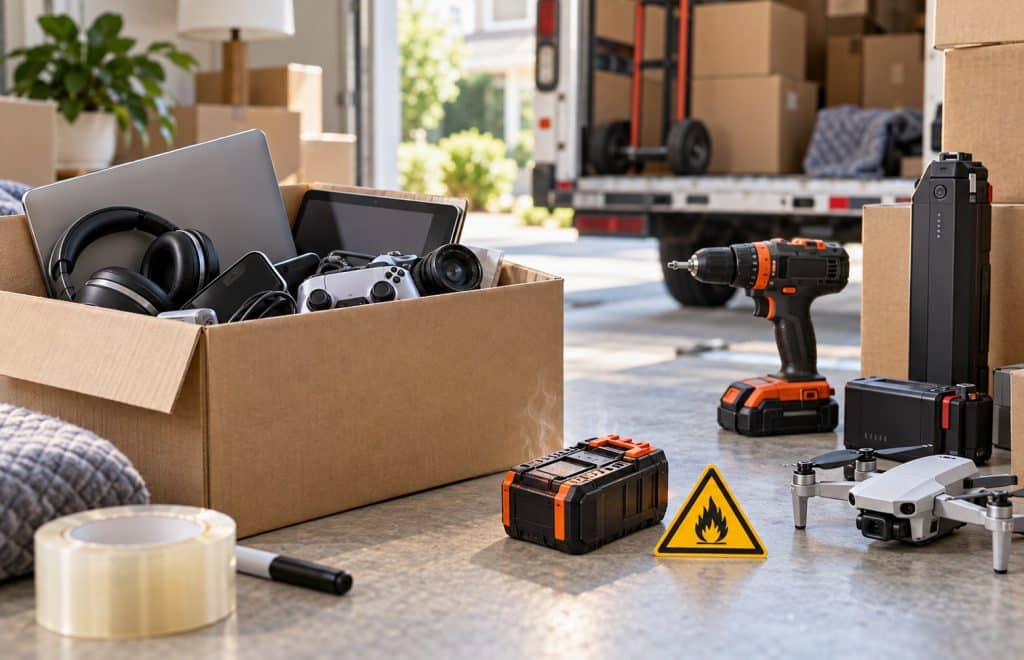
There’s a world of difference between a healthy battery and one that is:
swollen;
cracked;
punctured;
leaking;
unusually hot;
corroded;
giving off an unusual odor;
visibly damaged; or
subject to a manufacturer recall.
Damaged and defective lithium batteries present a greater transportation risk.
PHMSA says batteries capable of producing dangerous heat, fire, or short circuits are subject to additional transportation requirements. Damaged or defective batteries also face much stricter rules than ordinary functioning batteries.
The EPA similarly warns that swelling is an indication that a lithium-ion battery has been damaged and may represent a potential fire hazard.
Never hide a swollen or damaged battery inside a moving box.
If you discover one while packing, stop using it and contact the manufacturer, retailer, local household hazardous-waste program, or another qualified disposal service for guidance.
And don’t automatically put it in the trash.
The EPA recommends that lithium-ion and other rechargeable batteries not be placed in household trash or municipal recycling bins.
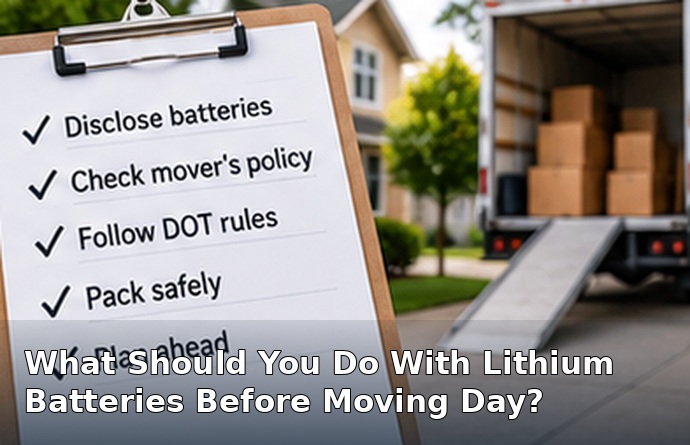
What To Do With Lithium Batteries Before Moving Day
You don’t need to become a hazardous-material shipping expert, but you do need to know what you own.
A few weeks before moving, go through your house and make a battery inventory.
Pay particular attention to the garage, basement, utility room, and home office.
For larger devices, record:
device type;
manufacturer;
model;
battery chemistry, if shown;
watt-hour rating;
whether the battery is removable;
whether you have spare batteries; and
whether there is any visible damage.
Then send the list to your moving company.
For example:
E-bike — removable 672 Wh lithium-ion battery Portable power station — 1,024 Wh LiFePO4 battery Lawn mower — two 56V lithium battery packs Cordless tools — four removable battery packs
That’s far more useful to a mover than just saying, “I have some electronics.”
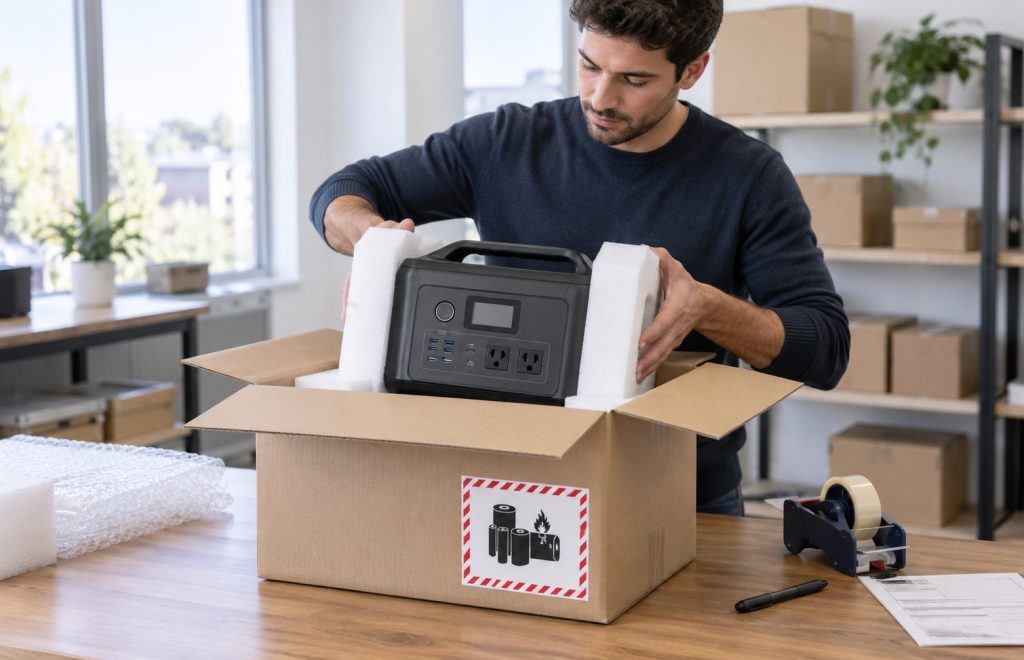
How to Pack Lithium Batteries Safely for a Move
Only pack a lithium battery for the moving truck after your mover has confirmed that it accepts the battery and told you how it should be prepared.
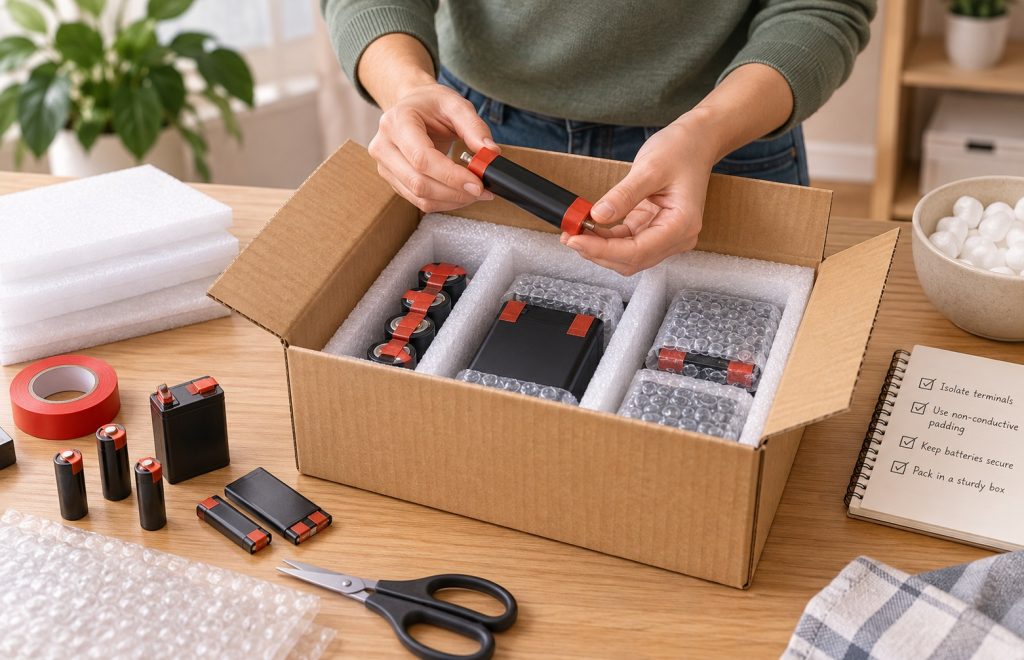
If it is accepted, use these basic precautions:
Inspect the battery first. Do not pack a battery that is swollen, cracked, punctured, leaking, unusually hot, corroded, recalled, or otherwise damaged.
Protect exposed terminals on loose batteries so they cannot touch metal objects, other batteries, or anything else that could create a short circuit.
Pack loose batteries so they cannot shift around inside the box. Use sturdy packaging and non-conductive cushioning to protect them from impact.
Keep batteries away from tools, keys, screws, and other metal objects that could bridge the terminals.
Protect batteries from crushing, puncturing, and other physical damage during loading and transportation.
Keep them away from extreme heat, including prolonged exposure inside a vehicle or container sitting in direct sunlight.
Before sealing the box, photograph the battery label and note the make, model, and watt-hour (Wh) rating so you can provide the information to your mover if needed.
Do not improvise around a mover’s restrictions.
Battery size, condition, and configuration can change the transportation requirements, so if your mover gives you specific packing instructions, follow those instructions instead of treating every lithium battery the same way.
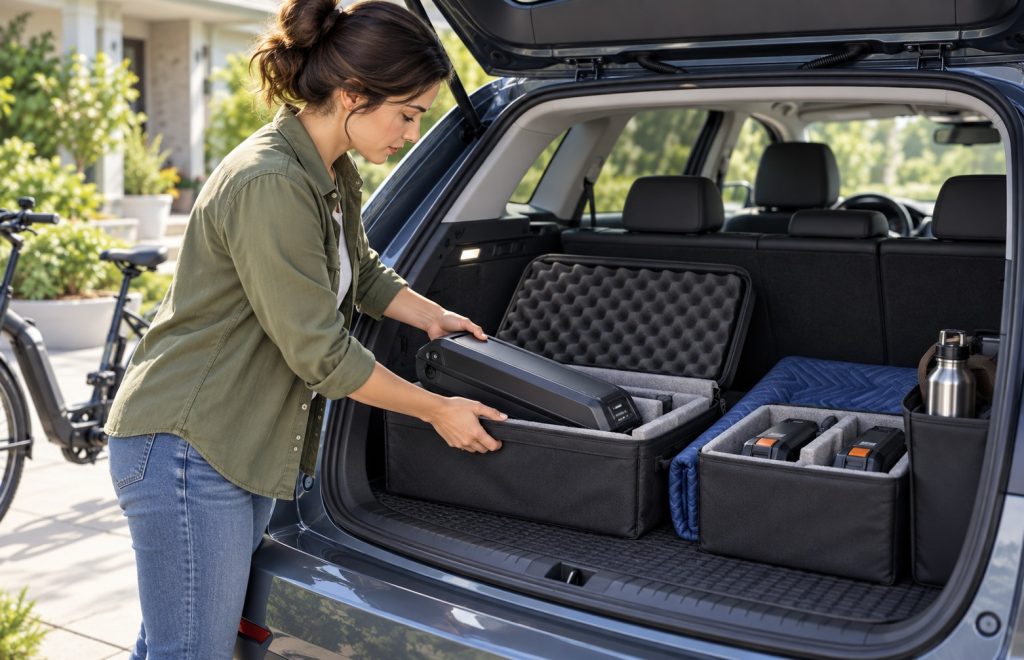
Can You Put Lithium Batteries in Your Own Car?
This is where moving rules become significantly different.
DOT’s Hazardous Materials Regulations generally apply to hazardous materials transported in commerce.
PHMSA states that hazardous materials transported by a private individual in a private motor vehicle for personal, non-commercial use are not subject to the federal Hazardous Materials Regulations. Its current guidance says this can also include personal transportation in a leased or rented vehicle.
That means driving your own household battery to your new home is not subject to the same regulations as giving that battery to a commercial moving company.
But “not subject to those federal commercial shipping rules” does not mean “no safety precautions necessary.”
When transporting batteries yourself:
Protect exposed terminals from accidental contact.
Prevent loose batteries from moving around.
Keep batteries away from metal objects that could bridge the terminals.
Protect them from crushing, puncturing, and impact.
Don’t leave them for long periods in extreme heat, such as inside a vehicle parked in direct sunlight.
Don’t transport a battery that is swelling, overheating, or otherwise showing signs of failure without obtaining qualified advice first.
The EPA specifically cautions against prolonged exposure of lithium-ion batteries to extreme temperatures, including leaving them in a vehicle in direct sunlight.
State and local requirements may also apply, so check the rules where you live when dealing with unusual, damaged, or particularly large batteries.
What About Moving Containers?
Using a portable moving container doesn’t necessarily get around the lithium-battery issue.
Companies that transport containers have their own lists of prohibited and restricted items, and those policies can be different from the rules followed by a traditional moving company.
So don’t assume that because you load the container yourself, anything that fits inside can travel in it.
PODS, for example, currently prohibits items with non-removable lithium batteries, including e-bikes, power tools, children’s toys, electronics, and appliances. Its guidance says lithium batteries must be removed from those items before they are placed in the container.
But removing the battery from a device does not automatically answer the next question: what should you do with the battery itself?
A large removable e-bike battery, scooter battery, or power-tool battery is still a lithium battery.
Before putting a loose battery into any portable moving container, check directly with the container company to find out whether it accepts the battery and, if so, how it must be prepared.
Policies also vary between providers. U-Haul’s U-Box guidance, for example, prohibits hazardous materials and a range of flammable, combustible, and compressed-gas items, while U-Pack maintains its own “Do Not Ship” list.
Neither should be assumed to have the same battery policy as PODS.
If you’re using a portable container, check the provider’s current prohibited-items list before loading and specifically ask about:
· e-bikes and electric scooters; · portable power stations; · cordless-tool and lawn-equipment batteries; · spare lithium batteries; and · devices with batteries that cannot be removed.
Get the answer before the container is picked up, preferably in writing.
Discovering that a battery isn’t permitted after everything else has already been packed can leave you scrambling to make alternative transportation arrangements.
Can You Fly With the Battery Instead?
Don’t assume that putting the battery in your luggage is easier.
Airline rules are generally more restrictive.
The FAA requires spare lithium batteries and power banks to travel in carry-on baggage rather than checked luggage. Battery-size restrictions also apply, and individual airlines can impose additional limitations.
Large e-bike batteries and many portable power-station batteries are far bigger than ordinary consumer electronics carried by airline passengers.
Damaged or recalled lithium batteries that could create dangerous heat or sparks must not be carried aboard an aircraft unless they have been removed or otherwise made safe under applicable rules.
So, if you’re flying to your new home, check the battery’s Wh rating and the airline’s policy before arriving at the airport.
Can You Just Ship the Battery?
Maybe, but don’t just put it in a box and mail it.
Commercial shipments of lithium batteries are subject to rules that depend on factors such as:
battery chemistry;
battery capacity;
whether the battery is installed in equipment;
whether it is packed with equipment;
whether it is shipped by road or air;
whether it is new or used; and
whether it is damaged or recalled.
USPS, for example, imposes additional restrictions on lithium batteries and battery-powered electronics, including limits on air transportation for certain pre-owned devices and strict rules on damaged, defective, and recalled batteries.
Private carriers have their own acceptance procedures as well.
For a large e-bike battery or portable power station, contact the carrier first rather than assuming you can send them by ordinary parcel shipping.
What If Your Mover Refuses to Take the Battery?
You still have several options.
1. Transport it yourself
For an undamaged personal battery, taking it in your own vehicle may be the simplest solution.
2. Ask about specialized shipping
Some batteries can be shipped through carriers that accept properly prepared hazardous materials.
This may involve specific packaging, labeling, and documentation, so check the requirements carefully.
3. Ask the manufacturer or dealer
Manufacturers and authorized dealers sometimes have transportation or battery-return procedures that ordinary consumers don’t know about.
This is particularly useful for e-bike, mobility-device, and large power-station batteries.
4. Recycle it before moving
Sometimes the economics decide for you.
Paying for special transportation of an old $60 tool battery that is nearing the end of its useful life may make little sense.
The same cannot be said for a $1,000 e-bike battery or an expensive home backup system.
Check the battery’s replacement value before deciding whether moving it is worthwhile.
5. Replace it after the move
For some older equipment, selling or recycling the battery before the move and buying a replacement afterward may be simpler and cheaper than arranging specialized transportation.
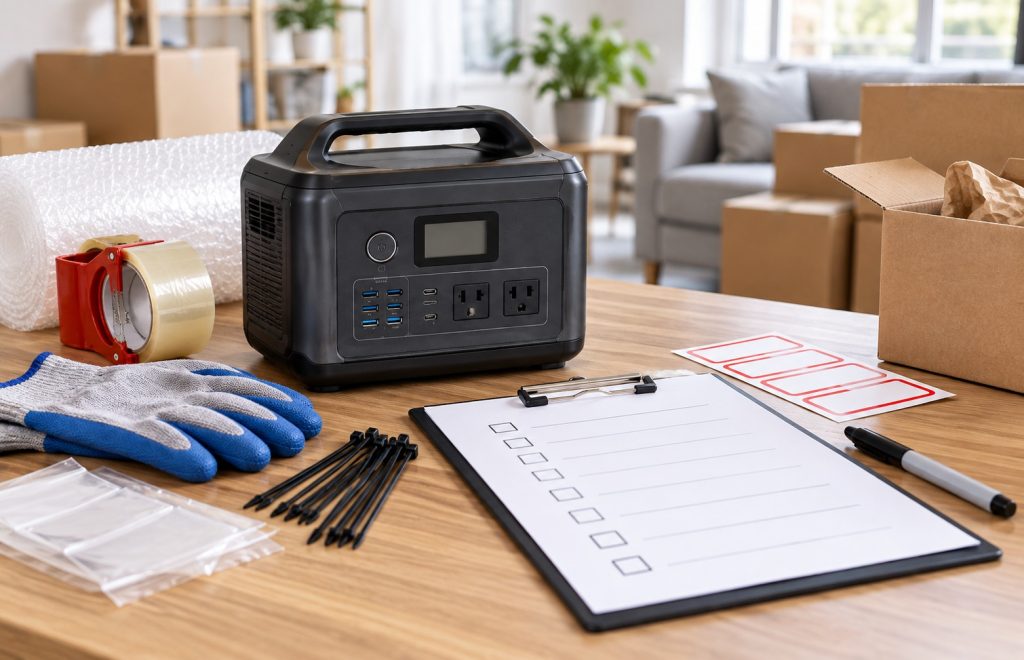
A Lithium Battery Moving Checklist
Before moving day, use this quick checklist:
Identify all rechargeable devices in your home.
Pay special attention to e-bikes, scooters, lawn equipment, power tools, and power stations.
Find the Wh rating on larger batteries.
Check every battery for swelling, cracks, leakage, or other damage.
Check whether any battery or device has been recalled.
Create a list of large batteries for your mover.
Ask which batteries the mover will accept.
Ask whether batteries should remain installed or be removed.
Follow the mover’s packing instructions.
Keep loose battery terminals protected from short circuits.
Make separate arrangements for batteries the mover refuses.
Never hide a questionable battery inside a moving box.
Frequently Asked Questions
Do movers take lithium-ion batteries?
Some do. Lithium batteries are regulated as hazardous materials when transported commercially, so acceptance depends on the type, size, condition, and configuration of the battery as well as the moving company’s policy. Ask your mover before packing large rechargeable batteries.
Can movers take an e-bike?
A mover may be able to transport an e-bike, but the lithium battery can require special attention. Tell the mover the bike model, battery capacity, and whether the battery is removable.
Can movers take electric scooters?
Possibly. Electric scooters use lithium batteries that vary significantly in size. Ask your mover specifically about the scooter and its battery rather than treating it like ordinary sporting equipment.
Can movers take cordless tool batteries?
They may be able to, depending on their policies and the batteries involved. Don’t pack loose lithium batteries together where their terminals can short-circuit.
Can movers take a portable power station?
Possibly, but large portable power stations can contain batteries with hundreds or thousands of watt-hours in capacity. Provide the model and Wh rating to the moving company before moving day.
Is a lithium battery over 100 Wh illegal to move?
No. The 100 Wh threshold affects various transportation requirements and exceptions, but it is not a universal ban on transporting larger batteries by moving truck.
Can I take lithium batteries in my own car when moving?
Federal DOT hazardous-material regulations generally do not apply when a private individual transports hazardous materials for personal, non-commercial use in a private vehicle. You should still protect batteries from short circuits, damage, and extreme temperatures and follow any applicable state or local requirements.
Can I put lithium batteries in a PODS or moving container?
It depends on the provider. PODS, for example, prohibits items with non-removable lithium batteries and requires the batteries to be removed. Other container companies have their own prohibited-item policies, so check directly with the provider before loading large or loose lithium batteries.
What should I do with a swollen lithium battery before moving?
Do not put it into an ordinary moving box or household recycling bin. Stop using it and contact the manufacturer, retailer, or local household hazardous-waste program for safe handling and disposal guidance. Swelling can indicate battery damage and a potential fire hazard.
These days, a household is more like a battery warehouse.
Before moving day, identify every large rechargeable battery you own, photograph its label, note its Wh rating, and send that information to your mover in writing.
*At MoveAdvisor we will connect you with a professional moving company. Please note that we may not be affiliated with
and you may be speaking with another licensed provider.
We use cookies to optimise your experience.Accept and close or Learn more















Share your thoughts by leaving a comment