

- Step 1. Gather the garage-packing materials
- Step 2. Sort out all garage items
- Step 3. Do NOT pack items forbidden for transport
- Step 4. How to pack hand tools and rolling tool chests
- Step 5. How to pack power tools, lithium batteries, and gas equipment
- Step 6. How to pack garden tools and long-handled yard tools
- Step 7. Pack your lawn or patio furniture
- Step 8. Pack miscellaneous garage items
- Final words of garage-packing wisdom
Highlights: Garage and Tool Packing Checklist
- Separate prohibited hazmat first: Movers cannot load gasoline, propane tanks, motor oil, paint thinner, fertilizers, pesticides, or car batteries onto a moving truck.
- Pack hand tools in small, reinforced boxes: Pad inside metal toolboxes so tools cannot rattle, lock or tape latches shut, wrap sharp blades in cardboard sheaths, and keep boxes under 40 to 50 lbs.
- Prep power tools and lithium batteries: Remove saw blades and drill bits, detach rechargeable lithium-ion batteries (carry them in your own car rather than a hot moving van), and drain every drop of fuel and oil from gas lawn equipment.
- Bundle long-handled garden tools: Clean soil off shovels, rakes, and hoes, sheath sharp edges, zip-tie handles by height, and wrap bundles in a moving blanket.
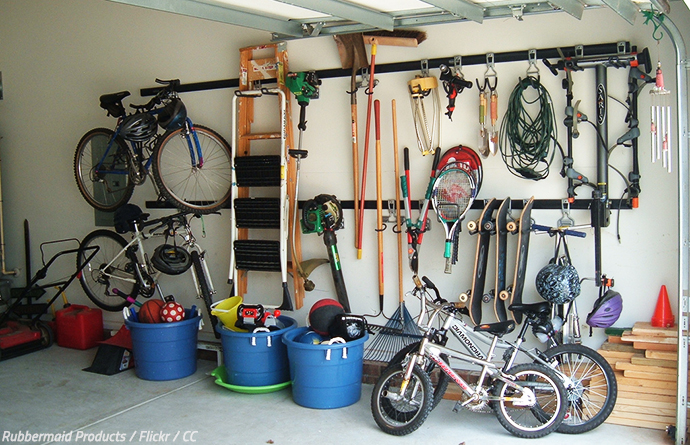
If you think you’ll have the fun of your life while packing your garage for a move, you may be the only one. The truth is that few people would actually enjoy the garage packing process because it is nothing but hard work over a long period of time.
Packing a garage for moving is a big project that surely needs to get underway as soon as you know your move-out date.
Be sure to mark packing your garage as a high-priority task on your moving calendar.
Also, do your best to complete it before you’re mentally and physically exhausted by all the other move-related jobs.
Read on to learn the best way to pack a garage when moving to another house.
Step 1. Gather the garage-packing materials
The very first thing you need to do before getting down to sorting your garage is to get hold of suitable packing materials.
Obviously, you can’t pack up your garage for a move without sturdy cardboard boxes of various sizes, a huge roll of bubble wrap, packing paper (newsprint will also do the trick), heavy-duty packing tape, a large assortment of resealable zip lock bags, cable ties, and markers.
Also, look around the house for any old towels and rags because they will prove to be much handier than you can imagine.
Before you start placing your garage belongings into the moving containers, make sure you have secured their bottoms with several layers of packing tape for added protection. Why? Most items that can be found in a garage or a tool shed are quite heavy, oddly shaped, and often have sharp edges or protruding parts.
Also, keep in mind that your biggest expense when packing for a move will be purchasing all the cardboard boxes you need. This is why you should know that you can get some or even all of your moving boxes for free as long as you have enough time to go look for them.
Follow the link below to learn where you can find free moving boxes near you. This is especially critical when you’re moving on a budget and you’re trying to spend as little money on your move as possible.
Where to Get Free Moving Boxes Near You
How Much do Movers Cost?
As Featured On:

Step 2. Sort out all garage items
The sheer number of things in garages and storage sheds is usually overwhelming. It’s where people often store two bipolar types of items: either very useful or very… worthless.
Therefore, you’ll need a clear strategy before you start sorting through all the odds and ends that can be found in your garage.
Instead of handling things randomly, divide mentally the entire storage space into several logical segments, and sort one area at a time for better results.
Also, designate two large zones within your garage space: one zone for the things you are taking with you (and will pack soon) and another zone for the stuff you don’t want anymore, won’t use in the foreseeable future, or is forbidden to be transported to your next place of residence.
And here’s the big question when packing your garage for moving: what should you do with all the garage items that you have chosen not to take with you?
Basically, you have several good options to get rid of the garage items you no longer need:
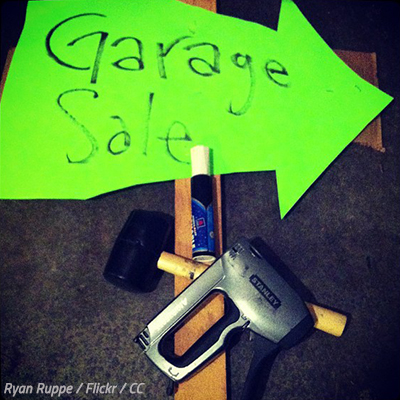
- Organize a moving sale to try to sell all the garage stuff you won’t move to the new house. Provided that you have enough time until Moving day, hosting a profitable garage sale is an excellent choice for you because you’ll be able to get rid of all the needless things in your garage and pocket some cash at the same time.
- Gift some of the still usable garage items to friends, neighbors, or even strangers. Due to the increasing transportation charges, sometimes it’s not worth moving some of the things found in garages, especially when it comes to items that are not allowed to be transported in the first place – see below for more information.
- Throw away any garage items that you can’t sell and nobody wants even as gifts. In most cases, those are things that are too old or too broken – worthless stuff that you should simply dispose of in an environmentally friendly way.
How to Declutter Your Home Before Moving: 10 Decluttering Steps
Step 3. Do NOT pack items forbidden for transport
Be mindful that almost all garages have a certain number of hazardous materials that can’t be moved due to safety reasons.
Moving companies forbid fuel, motor oils, antifreeze, paint and paint thinners, charcoal, propane tanks, fertilizers, pesticides, chemicals, car batteries, cleaning supplies, and the like to be loaded on their moving trucks due to their hazardous nature.
As a result, you’ll have to decide how to properly dispose of every flammable, explosive, or corrosive item that you have in your garage. Don’t forget to ask your chosen mover for a complete list of those non-allowable items.
Don’t waste your time packing any items that your interstate mover won’t agree to transport for safety reasons.
Below you will find more important information about all the dangerous items that professional movers won’t move, including a detailed explanation of why those items are prohibited and how you should dispose of them properly.
What Movers Won’t Move: What Not to Pack When Moving
Step 4. How to pack hand tools and rolling tool chests
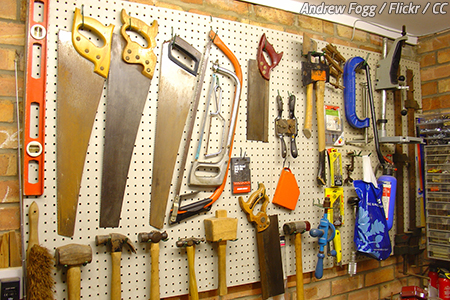
Knowing how to pack tools for moving prevents punctured cardboard, bruised fingers, and crushed items in the moving truck. Steel wrenches, hammers, sockets, and chisels pack dense weight fast, so never dump loose tools into a large carton.
- Use your metal or plastic toolbox first: Arrange sockets, ratchets, pliers, and screwdrivers inside your existing toolbox. Stuff crumpled packing paper or old shop rags into any empty space at the top so tools cannot slam around if the box tips, then padlock the latch or wrap heavy-duty packing tape twice around the case.
- Roll wrenches, chisels, and files in heavy fabric: If you have more hand tools than your toolbox holds, lay wrenches, screwdrivers, and chisels side by side on a canvas tool roll or thick old towel, fold the bottom edge over the tips, roll tightly, and secure with zip ties or twine.
- Guard sharp blades and points: Slip folded corrugated cardboard sleeves over handsaw teeth, utility knives, putty knives, and awls, then tape the cardboard guard snugly in place before wrapping in bubble wrap.
- Pack in small, double-taped book boxes (max 40 to 50 lbs): Reinforce the bottom seam and corners of small heavy-duty boxes using the H-taping method, line the base with folded cardboard or a towel, place heaviest iron tools flat on the bottom, and fill every gap with crumpled paper.
- Prep rolling mechanics tool chests: Remove tools from the drawers of heavy rolling cabinets and pack them in small boxes so drawer slides do not bend on road bumps. Lock the cabinet drawers with the key, wrap stretch wrap and moving blankets around the chest, and unlock or remove swivel casters if the manufacturer recommends it for transport.
Step 5. How to pack power tools, lithium batteries, and gas equipment
Corded and cordless power tools have triggers, exposed arbors, lithium-ion battery packs, and vents that need extra care when packing tools for a move:
- Detach blades, bits, and accessories: Remove drill bits, circular saw blades, jigsaw blades, router bits, and grinder discs before packing. Wrap blades flat between two squares of stiff cardboard, tape the edges, and label the sleeve clearly so nobody reaches onto bare teeth while unpacking.
- Handle lithium-ion tool batteries safely: Slide rechargeable battery packs off cordless drills, impact drivers, and leaf blowers. Cover exposed metal battery contacts with electrical tape so they cannot short-circuit, and carry lithium-ion batteries with you in your air-conditioned car rather than inside a moving trailer that can exceed 120 degrees Fahrenheit in summer.
- Coil cords and use original hard cases: Blow sawdust out of motor vents, coil power cords neatly alongside the handle with Velcro straps or zip ties (never wrap tightly around the cord strain-relief boot), and place tools in their original molded cases. Without original cases, wrap each tool in bubble wrap or a thick towel inside a small heavy-duty box padded on all sides.
- Secure benchtop and stationary shop tools: For miter saws, table saws, and drill presses, lock the cutting head or fence in its transport position, lower saw blades below the table surface, bag loose fences and miter gauges in labeled Ziploc bags taped to the base, and bleed all air and moisture out of air-compressor tanks.
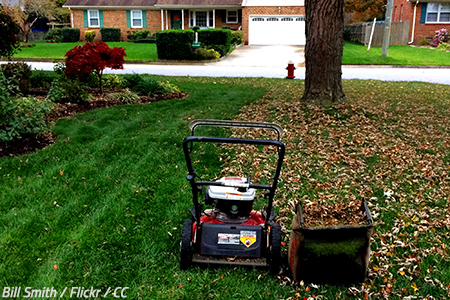
- Drain 100% of fuel and oil from gas-powered tools: Lawnmowers, chainsaws, string trimmers, pressure washers, and snow blowers cannot legally ride on a moving van with gasoline in the tank. Siphon remaining fuel into an approved container with a hand pump, run the engine outdoors until it stalls dry, disconnect the spark plug wire, and drain oil if the manual requires it to prevent leaks onto furniture.
How to Move a Lawn Mower to a New House
Step 6. How to pack garden tools and long-handled yard tools
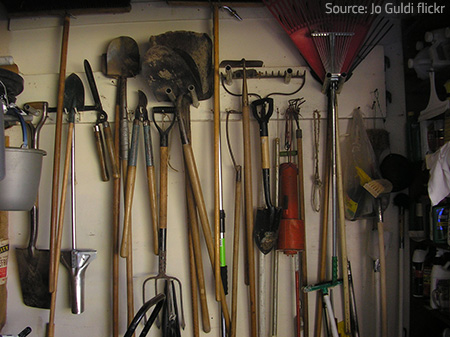
Awkward shapes, dirty tines, and sharp steel edges make yard gear tricky to load safely. Here is how to pack garden tools for moving without tearing furniture pads or violating state agricultural rules:
- Wash off soil, mud, and plant debris: Hose down spades, forks, trowels, wheelbarrows, and mower decks and let them dry completely. If you are moving across state lines, USDA and state agricultural inspectors check outdoor items for soil-borne pests and invasive weeds, and dry metal will not rust inside a closed truck.
- Sheath sharp garden blades and prongs: Wrap thick cardboard and bubble wrap over pruning shears, loppers, hedge clippers, axes, hoes, and metal rake tines, then secure the covers tightly with packing tape.
- Bundle long-handled tools together: Group shovels, rakes, brooms, and post-hole diggers into manageable bundles of four to six tools with all heads pointing the same way (or alternating if flat). Cinch the handles at both ends and the middle with heavy-duty zip ties or rope, then wrap a moving blanket or old towel over the metal heads.
- Drain hoses and box small hand tools: Disconnect garden hoses early so every drop of water drains out, coil them neatly inside a clean plastic trash can or heavy plastic tote alongside sprinklers and nozzles, and pack hand trowels, gloves, and kneelers in a medium box.
Step 7. Pack your lawn or patio furniture
Any outdoor pieces of furniture need to be thoroughly cleaned and then dismantled as much as possible for easier transportation.
Remove cushions and stack chairs together.
After making sure they are dry, fold umbrellas or parasols and place them in plastic covers or bags.
Be extra careful when handling easily breakable items, such as glass from table surfaces, flower pots, bird baths or feeders, decorative pieces, and so on – make sure you wrap them well in bubble wrap or thick cloths so that they survive the move across the country in one piece.
How to Protect Furniture When Moving
Step 8. Pack miscellaneous garage items
Here are some more tips on how to best prepare and move more items usually found in and around garages, tool sheds, and storage sheds:
- Car and/or motorcycle. If you don’t plan on driving your own vehicle to the new home, contact a reputable car transportation company to arrange for its preparation and transportation. The same is also true for your motorcycle. If you’re unsure how to get your motorized vehicles ready for a safe relocation, your selected auto movers will gladly help you in that regard as well;
- Bicycle. Bicycles are usually dismantled and packed in a special way and moved in dedicated shipment boxes designed specifically for that purpose. Refer to these great detailed instructions on how to pack a bicycle for moving. The proper packing of your bike is a must when shipping it long distance by air or land. However, if your move is within driving distance from your current and soon-to-be-old home, then your bicycle can be loaded directly into the moving vehicle;
- Grill and barbecue. If your grill is equipped with a propane tank, the latter is not permitted to be loaded into a moving truck regardless of whether the container is full or empty. So, it’s best to leave it behind and buy a new one at your new house. Unless you’re performing a DIY move, you can’t take with you the charcoal from your barbecue either, so give it away to your neighbors;
- Satellite dish/TV antenna. Call the company that installed the antennas in the first place and ask for some useful guidelines on how to pack them in the best possible way.
Packing Timeline: What to Pack When for Moving
Final words of garage-packing wisdom
Did you know that there are 5 golden rules when packing a garage for a move?
- Don’t skimp on your black marker pen. Do label each box with GARAGE or FRAGILE, including a detailed description of the contents of the moving container.
- Before disassembling a certain item that you suspect you might have a hard time putting back together, take a photo of it for problem-free reassembly after the move.
- No matter what you’ve just disassembled, keep the small elements and auxiliary or spare parts in sealable plastic bags and make sure they travel in the same box with the main unit they came from.
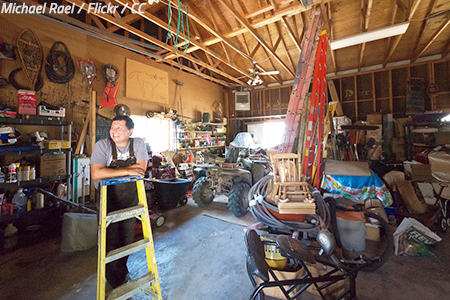
- Do not underestimate the time it takes to pack your entire garage area. Many moving experts believe garages and tools sheds are the hardest and most time-consuming areas to pack for a move. Start early and call a friend or two to help you during this transitional period.
- When things get really tough, keep in mind that top-rated movers are always nearby.
Also Read

How to Pack a Kitchen for Moving: Appetizing Guide
The mere thought of packing ALL your kitchen items for moving may be quite overwhelming… Don’t be quick to give up... Read More

How to Pack Pictures and Mirrors for Moving
There's no place like home. It is the small things that turn a residence into a home – charming details like house... Read More

Moving a Heavy Safe: What to Know Before You Try (and Why You Should Probably Hire Professionals)
When it comes to moving a safe, leave it to the professionals Moving house can be exhausting enough, but when you... Read More
More about the author

Joshua is a moving expert and author who dedicates his time to helping people move quickly and safely. Writes for MoveAdvisor, formerly MyMovingReviews.com.

Martin is a moving expert and online marketer who’s been involved in the moving industry since 2004. Writes for MoveAdvisor, formerly MyMovingReviews.com.
Posted on
Discussion 0 comments
Leave a comment