

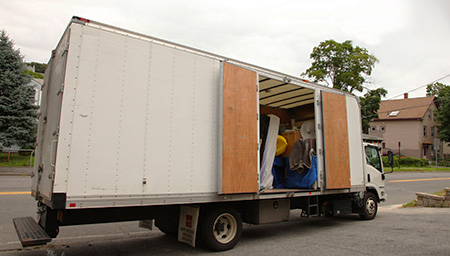
- 10 ft (400–450 cu ft): studio, dorm, or a partial move. About one room of furniture plus boxes.
- 12 ft (450–550 cu ft): a small 1-bedroom if you are disciplined about what you keep.
- 15–16 ft (750–900 cu ft): the default 1–2 bedroom apartment truck.
- 20 ft (1,000–1,200 cu ft): a 2–3 bedroom home, including a sofa, beds, and appliances.
- 26 ft (1,500–1,700 cu ft): a 3–5 bedroom house. Highest clearance, lowest mpg.
- Pricing lives on the cost guide. Local trucks run $30–$130/day + $0.69–$1.59/mi. One-way 1,000-mile rentals run $950–$3,200. Full company comparison: how much it costs to rent a moving truck.
The right truck is the smallest one that holds the move in a single trip without a circus stack. Too small and you pay for a second rental. Too big and you pay for empty air, a taller roof, and a harder drive. This page is the size decision. Dollar amounts, U-Haul versus Penske versus Budget, and the fee list are on the 2026 moving truck rental cost guide.
Choose by cubic feet and bedroom count
Rental sites label trucks by the length of the cargo box. What you actually pack is the cube: length times width times a usable height, minus the space a ramp, wheel wells, and a tied-down sofa steal. A “2-bedroom truck” that is already full of your couch, mattress, and fridge will not also swallow a dining table and 40 boxes.
- Count rooms you are moving, not rooms in the lease. A 2-bedroom you have decluttered can fit a 15–16 ft truck. The same apartment with a gym, a desk, and a patio set needs a 20 ft.
- Appliances are cubes with bad shapes. A fridge, washer, and dryer eat a slice of the box you cannot stack on. Put them on the size chart before you put them on the truck.
- Boxes beat loose goods. A truck packed in standard moving boxes holds more than the same truck packed with open bags. Use free or cheap boxes and keep each box under a weight you can lift.
- When you are between sizes, take the next one up if the date is a one-way or a single-day local with no time for a second trip. Take the smaller one only if you have already measured the furniture and you have a backup plan.
How Much do Movers Cost?
As Featured On:

Moving truck sizes: 10 ft to 26 ft
Interior dimensions vary a few inches by company. Treat cubic feet as the decision and the length as the name on the reservation.
| Truck | Typical interior | Cubic feet | Bedroom capacity | Ramp or liftgate | Road clearance |
|---|---|---|---|---|---|
| 10 ft | About 10′ × 6’3″ × 6′ | 400–450 | Studio or dorm | Short walk ramp. Liftgate is rare. | About 10 ft. Still too tall for many parking garages. |
| 12 ft | About 12′ × 6’5″ × 6’4″ | 450–550 | Small 1-bedroom | Walk ramp. | About 10–11 ft. |
| 15–16 ft | About 15′ × 7’6″ × 7′ | 750–900 | 1–2 bedroom apartment | Longer walk ramp. A few box trucks offer a liftgate. | About 11–12 ft. |
| 20 ft | About 20′ × 7’8″ × 7’2″ | 1,000–1,200 | 2–3 bedroom home | Walk ramp you should use. Liftgate only on some straight trucks. | About 12–13 ft. |
| 26 ft | About 26′ × 8′ × 8′ | 1,500–1,700 | 3–5 bedroom house | Long walk ramp. Confirm it before move day. | About 12–13.5 ft. Watch every bridge sign. |
A pickup or cargo van sits below this chart: fine for a partial load, not a substitute for a 10 ft when you have a mattress and a sofa. Prices for each row: truck rental cost by size.
Loading ramp vs. liftgate

Almost every consumer moving truck includes a walk-up loading ramp. You roll a dolly up it. That is the right tool for sofas, dressers, and stacked boxes on flat ground. It is a bad tool for a 300-pound fridge if the ramp is steep, wet, or short-handed.
A hydraulic liftgate is a platform that raises the load from the street to the box floor. It shows up on some Penske, Budget, and straight box trucks, usually as an extra fee, and it shortens the usable interior by the thickness of the gate and the space you must leave to close it. U-Haul’s common cargo trucks are ramp trucks. If you need a liftgate, say so when you reserve, and do not discover the difference at 8 a.m.
- Use the ramp for boxes on a dolly, lightweight furniture, and anything two people can control on an incline.
- Ask for a liftgate for appliances, a safe, a piano, or a building with no elevator and a tall truck bed. Price the fee next to hiring movers. Sometimes the crew is the cheaper lift.
- Never spin a dolly on a wet ramp. One person walks backward only if a second person has the load. Straps stay on until the appliance is in the box.
Driving and clearance tips
- Read the posted clearance, then subtract a margin. A 26 ft truck is often 12 to 13.5 feet tall. “12 ft” signs are not a suggestion. Garages, drive-throughs, hotel canopies, and old downtown bridges are where rental insurance stops paying.
- Overhead damage is usually excluded. Tree limbs on a residential street count. If you are unsure, get out and look.
- Turns are wider than the car you are used to. Swing out, watch the tail, and do not rely on a backup camera you have never used. A spotter is cheaper than a mailbox.
- Speed and wind. An empty 26 ft truck is a sail. A loaded one stops slowly. Leave more following distance than feels polite.
- Weigh stations. Some states pull rental trucks in. If the sign says all trucks, you are a truck that day.
- Fuel type. Many 10–15 ft trucks are gasoline. Many 20–26 ft Penske and Budget trucks are diesel. Putting gasoline in a diesel truck is a tow, not a funny story.
- Return condition. Photograph every side at pickup, note the fuel, and return it to the lot named on the contract. The full fee list is on the rental cost page.
Load the size you rented
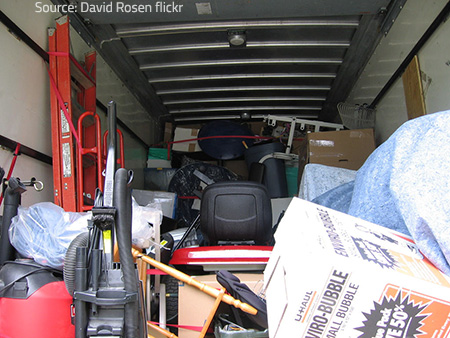
A 20 ft truck loaded badly holds less than a 16 ft truck loaded tightly. Treat the box as one big carton: heaviest freight against the cab wall, floor to ceiling, then the next row.
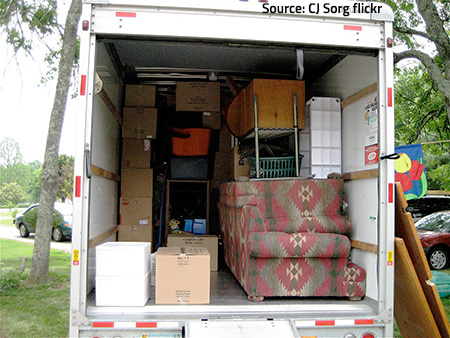
- Walk the rooms with a tape measure. If a sofa is longer than the interior width, it goes in on a different angle or it does not go.
- Disassemble what you can. Beds, tables, and legs consume cube when they stay assembled.
- Pad furniture with moving blankets and lock the pads with stretch wrap, not with tape on the finish.
- Load heavy boxes low. Load mattresses and sofas on their sides, tight to a wall, strapped.
- Fill gaps with soft goods. A load that can shift will shift, and the cubic feet you “saved” become broken furniture.
- Keep a path to the door only while loading. The last row should be flat enough that the door closes without force.
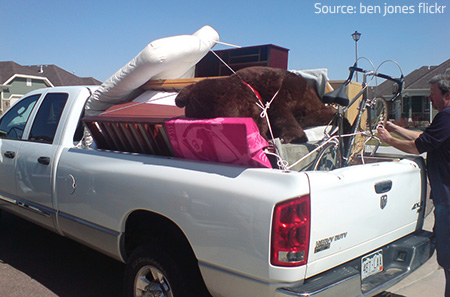
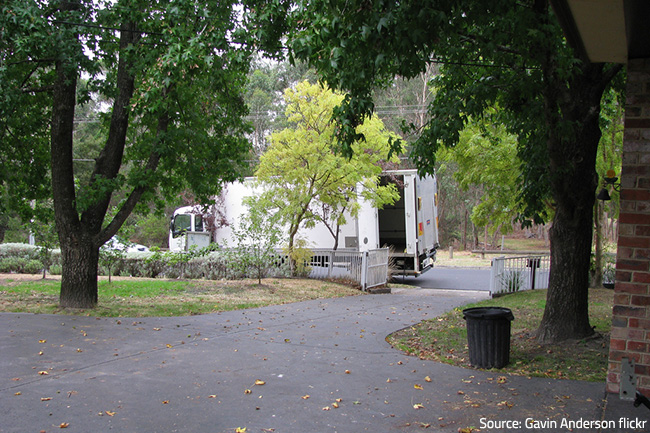
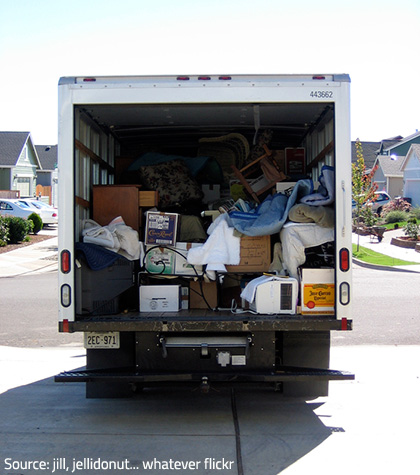
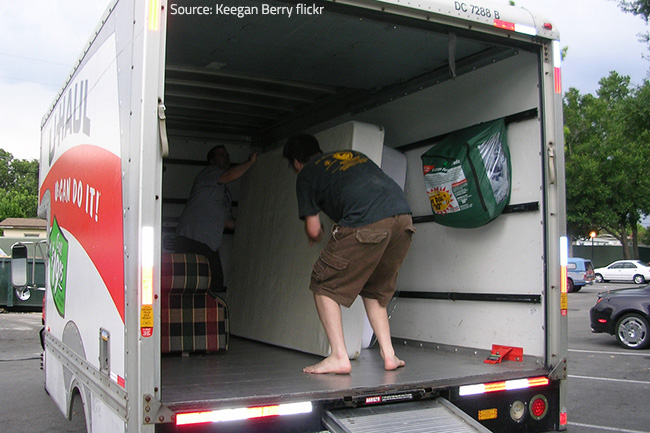
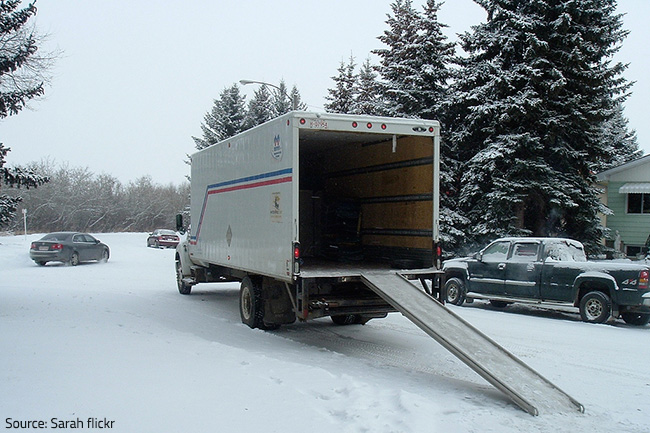
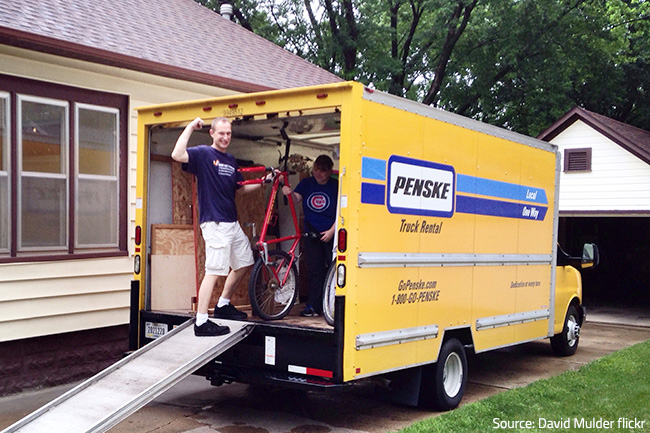
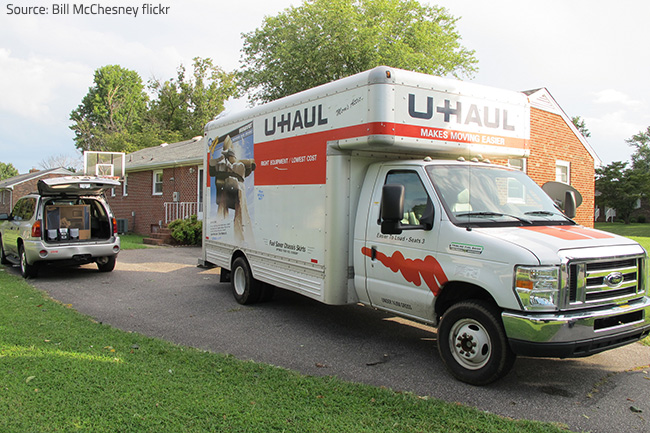
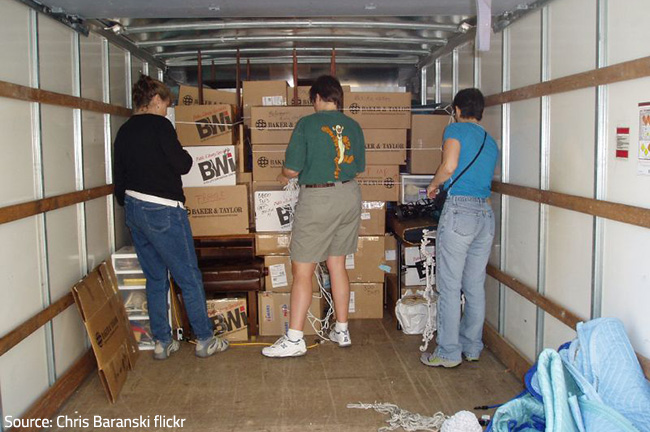
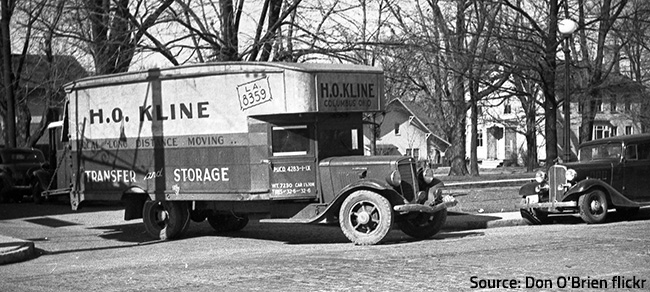
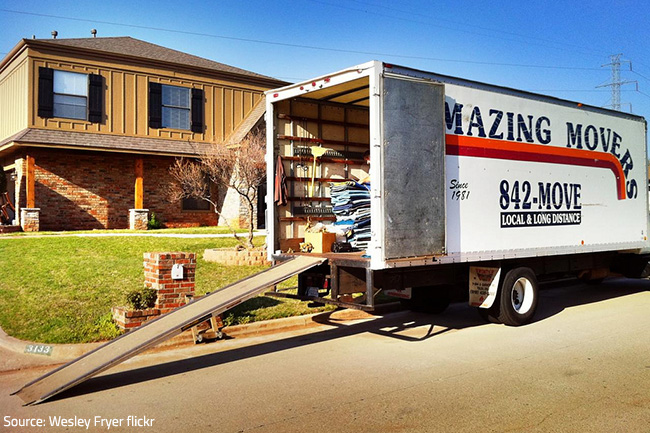
The photos below are the same lesson: a tight, upright load uses the truck you paid for. A loose pile means you rented the wrong size or you packed the right size the wrong way.


Moving truck size FAQs
Will a 15 ft truck hold a 2-bedroom apartment?
Often, if the apartment is a normal 2-bedroom without a second sofa, a gym, and a full patio set. If you are keeping the washer, dryer, and a dining table, price a 20 ft. The cost difference is on the rental cost chart.
Do I need a liftgate?
Not for boxes and ordinary furniture if you have a ramp and a dolly. Yes, or hire movers, for a fridge or safe you cannot control on a ramp.
Can I park a 26 ft truck in a downtown garage?
Assume no until you read the entrance sign and it clears your truck with room to spare. Many garages stop cars at 6 ft 8 in to 7 ft.
Where are the 2026 prices?
On How Much Does It Cost to Rent a Moving Truck in 2026, including U-Haul, Penske, Budget, Enterprise, and Home Depot.
Size, price, and the gear that makes the truck work
Also Read

To Pack or Not to Pack: Self-Packing vs. Professional Packing
If you’re planning a house move, then you probably have good reasons to relocate and dreams to follow - and you... Read More

Moving Labor: All You Need to Know About Moving Labor Services
Moving labor services fall somewhere between organizing a self-move and hiring full-service movers. In fact,... Read More

How to Move a Dishwasher: 20 Steps for a Clean Job
Thinking about moving your dishwasher to a new home? Many homes in the country have dishwashers pre-installed in... Read More
More about the author

Joshua is a moving expert and author who dedicates his time to helping people move quickly and safely. Writes for MoveAdvisor, formerly MyMovingReviews.com.

Martin is a moving expert and online marketer who’s been involved in the moving industry since 2004. Writes for MoveAdvisor, formerly MyMovingReviews.com.
Posted on
I like how you mentioned to always select a truck with more storage space. My wife and I are considering looking into renting a moving vehicle because we’re thinking about relocating our family to a city with more job opportunities. I think it’s a good investment to consider renting a truck with a lot of space if we decide to relocate.
It was helpful when you said that you should do an inspection of the truck. My husband and I are planning on moving soon. Thank you for the tips about renting a moving truck.
I am moving in a few months and I need to rent a truck to drive all of my belongings across the country. You make a great point that I need to think about how I load the truck and get the right equipment including an appliance dolly. This will make it so much easier and less stressful to load the truck so I appreciate your advice.
You made a great point when you said that you should stack heavier boxes on the bottom and lighter ones on top when filling a moving truck. My brother received a promotion that is going to require him to relocate to a different city. It might be a good idea for him to rent a U-haul so that he can move more stuff per trip.
Moving on my own is my best solution so I will perform a visual inspection before I rent a U-Haul truck. Since I am expected to return the truck with full gas, I’ll remind myself to gas up before I bring the truck back. I’ll also try to clean the truck so that I won’t be charged for it as you said.
My husband and I are moving to a bigger apartment across town and we are thinking about hiring a moving truck so that we can take all of our belongings in one trip. You make a great point that we should take the time to compare the prices and services of different companies so that we can find something affordable that is also high-quality. Also, in my opinion, it will be important for us to look at customer reviews and see if there are any complaints about the trucks or the professionalism of the companies before choosing one.
People out there. Had a similar experience with this company? There is strength in numbers. Contact me, maybe we can help each other?
Is allied Van lines/United Van lines/and national Van lines all under one umbrella these days. Kind Of hard to have a choice in choosing a company if this is in fact a reality. Hell what is a consumer to do? I can tell you from experience that national Van lines is not reputable.they say what they think you want to bear but then do nothing to help or alleviate your pain and financial due. Shame on them, the motto seems to be “TAKE the money” and run! Hell with the customer.