The First Challenge. Getting Your Belongings Across the Atlantic
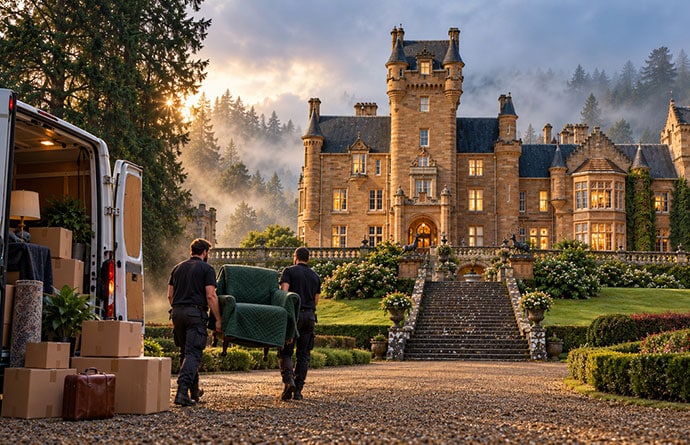
Let’s imagine an American family living in New York decides to exchange suburban life for a historic castle in the Scottish Highlands.
They have a conventional three-bedroom household: beds, sofas, dining furniture, clothing, kitchen equipment, electronics, books, and the usual collection of clutter.
Their possessions need to travel thousands of miles.
Unlike an interstate move, international relocation involves freight shipping, customs clearance, additional handling, and delivery arrangements at the destination.
One common option is sea freight, with belongings consolidated alongside other shipments or transported in a dedicated shipping container.
Viking International, a very experienced and reputable international shipper, told us that a 20ft container, door to door, including packing and unpacking, would be in the region of $10,250. Documentation would add another $175.
Insurance runs at 3.5% of the declared shipping value.
Of course, your move could be different depending upon several factors, including any special handling and exactly where your castle is located.
And exactly where your castle is could be particularly interesting.
Adross is within driving distance of Inverness and advertises access for large production vehicles, so it isn’t some inaccessible medieval fortress perched on an isolated cliff.
But access for film-production trucks doesn’t mean a loaded household container can be delivered straight to your portcullis.
A specialist mover would still need to examine access, unloading locations, doorways, staircases, floors, and fragile interior surfaces.
Moving a sofa into a conventional suburban house is one thing.
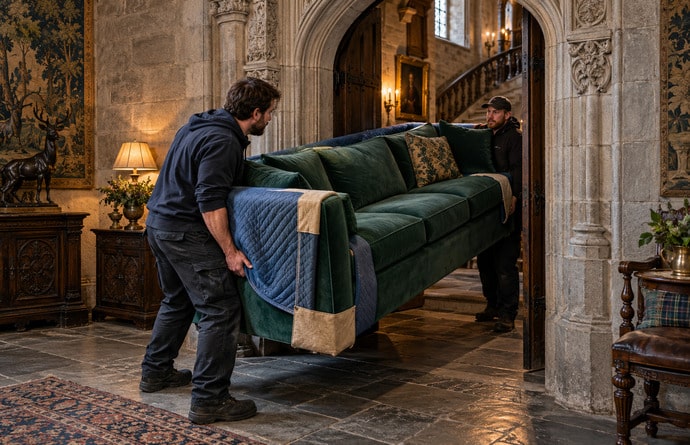
Maneuvering it through a historic building without damaging its architectural features is another entirely.
The Second Challenge. Your American Furniture Might Not Fit Your Scottish Castle
Here’s something television rarely makes you think about.
An enormous castle doesn’t necessarily have enormous doorways everywhere.
Historic properties may contain narrow staircases, awkward turns, unusual room layouts, and architectural features that complicate deliveries.
A large sectional sofa that fits comfortably through the front door of an American home could become a very expensive problem if it cannot negotiate a castle’s interior passages.
Even when an item physically fits, it may not belong there.
Imagine putting a giant modern entertainment center against centuries-old decorative woodwork. Or trying to arrange an oversized reclining sofa inside a room designed around a fireplace and antique furnishings.
Then there’s the question of electrical equipment.
The United States generally uses 120-volt household electricity, while the United Kingdom uses a 230-volt supply and different plugs. Some devices support both systems; others require suitable transformers or simply aren’t worth shipping.
Moving an American refrigerator across the Atlantic may sound impressive until you realize how much easier it could be to buy a compatible replacement locally.
Suddenly, the challenge isn’t just transporting everything you own.
It’s deciding which belongings you should actually take.
For our NY family, that could mean shipping sentimental furniture, valuable possessions, and personal items while buying much of the everyday equipment in Scotland.
The bigger the castle, the more important that becomes.
The Third Challenge. Furnishing a Castle Is Nothing Like Furnishing a House
A typical three-bedroom American house might have a living room, dining area, kitchen, three bedrooms, and perhaps a home office.
An estate like Ardross belongs to an entirely different architectural tradition.
Historical records indicate that approximately 30 rooms were added during its Victorian redesign. That does not establish its current bedroom count, and it would be wrong to assume that every room is a bedroom or that its historical layout remains unchanged.
But even a fraction of that scale presents a furnishing problem.
Suppose our imaginary castle contains 20 rooms we want to make comfortably usable.
How would we furnish them?
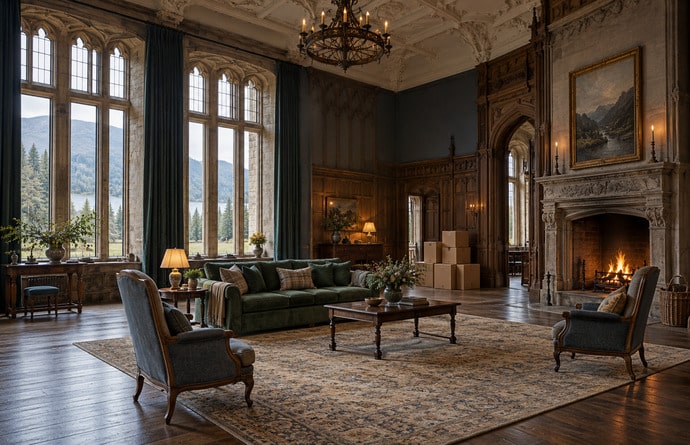
We could use mass-market furniture, but it is hardly in keeping with elaborate ceilings and grand stone fireplaces.
We could purchase antique or reproduction furniture, but costs would rise quickly.
Or we could combine existing historic furnishings with carefully selected modern pieces; a far more practical option if the property already has appropriate furniture.
To understand the potential expense, we can build a hypothetical furnishing budget.
What would it cost to furnish 20 rooms?
These are hypothetical spending allowances selected for our scenario, not market appraisals or quotes for Ardross Castle.
Average furnishing allowance per room
$3,000 — modest, practical
$10,000 — premium furnishing
$30,000 — extravagant furnishing
For example, furnishing 20 rooms at an average allowance of $10,000 each would mean spending $200,000.
Then there are taxes, specialist restoration, major installation work, and ongoing ownership expenses to factor in.
Add to that the cost of acquiring the property itself.
Suddenly, the international moving bill starts to look relatively small.
Of course, a furnished castle wouldn’t require starting from zero. The purpose of this exercise is to show how quickly costs can increase when the space you’re trying to make comfortable is dramatically larger than the home you left behind.
The Fourth Challenge. The Heating Bill Could Be the Real Villain
There’s something very romantic about a Scottish castle in winter.
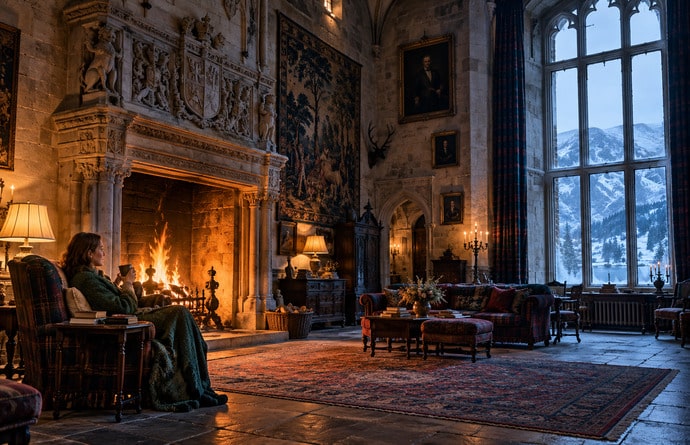
Snow dusts the surrounding hills. A fire crackles in an enormous stone fireplace. Rain beats against the windows.
And somewhere in the building, the heating system is working very, very hard.
Historic buildings can be challenging to heat efficiently because of their construction, size, windows, and ventilation characteristics.
Scotland’s national heritage agency, Historic Environment Scotland, explains that poor maintenance, damp masonry, drafts, and defective windows can all reduce the energy performance of traditional buildings.
But heating is only part of the problem.
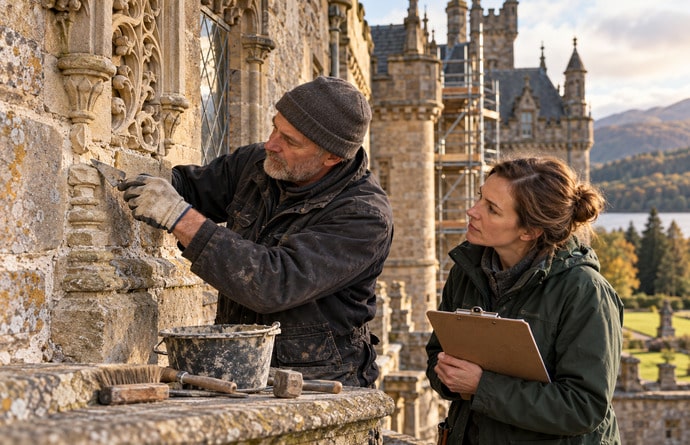
Historic properties need careful maintenance of roofs, gutters, drainage, masonry, windows, and interior finishes.
In a modern home, replacing a damaged component may be relatively straightforward.
In a historic castle, a repair might require specialist tradespeople, suitable materials, and potentially formal consents depending on the building’s legal protections.
And our imaginary family wouldn’t just be responsible for the castle.
They’d also need to care for the grounds.
Ardross Castle sits within more than 100 acres of parkland. That is a lot of grass, trees, pathways, and landscaping.
Maintaining an estate of comparable scale could involve groundskeepers, gardeners, contractors, equipment, and significant ongoing expenses.
Without actual utility bills, staffing agreements, property surveys, and maintenance records, nobody outside the ownership or management team could credibly determine Ardross Castle’s annual operating budget.
But one thing is clear: the purchase or rental price of a giant historic home would be only the beginning of its financial obligations.
The Fifth Challenge. You Can’t Just Move to Scotland Because You Found a Castle
Now for a plot twist that could banish our entire relocation plan.
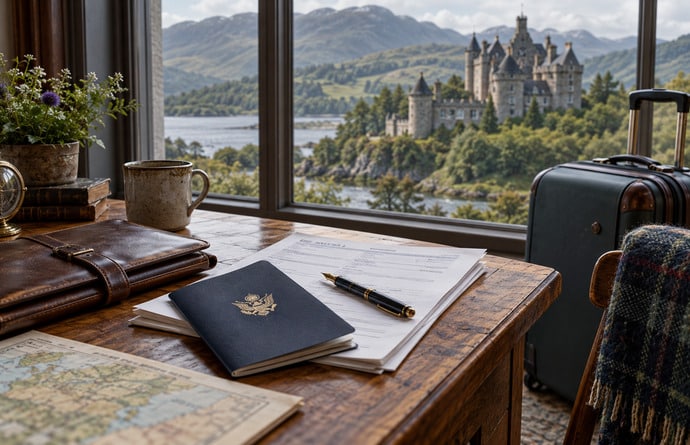
Even if our American family had the money, the furniture, and access to a suitable castle, they would still need the legal right to live in the United Kingdom.
Owning property does not automatically give a foreign national permission to reside in the country indefinitely.
Our family would need to establish an appropriate immigration route, depending on their personal circumstances.
Their belongings would also face customs procedures.
Fortunately, the UK has a system called Transfer of Residence relief that may allow eligible people to import personal belongings without paying certain import taxes and duties.
HM Revenue & Customs generally requires applicants to satisfy conditions concerning their previous residence, how long they have owned the goods, and when the belongings are imported.
This is one reason why hiring an experienced international moving company is important.
After all, nobody wants to arrive at their magnificent Scottish castle only to discover that their furniture is being held up at customs.
Especially when they still have to explain to their children why the nearest supermarket looks nothing like the one back in New York.
The Sixth Challenge. The Castle Isn’t Necessarily the Home You Imagine
Here’s perhaps the most surprising lesson of all.
The castle viewers see on television isn’t simply an untouched historic residence with cameras placed around it.
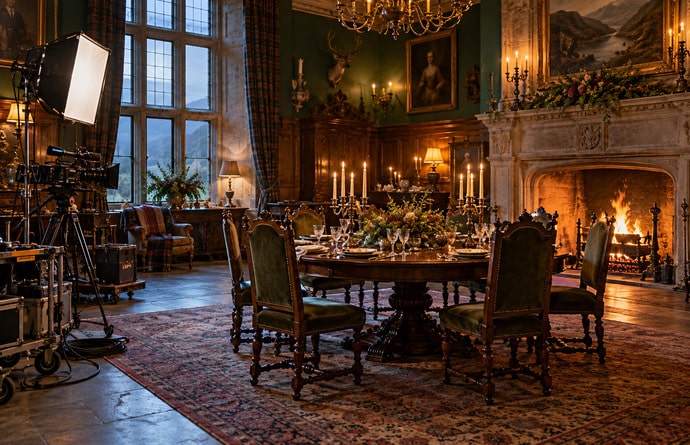
Television production designers transform spaces using furniture, lighting, artwork, and theatrical details to create the show’s atmosphere.
Architectural Digest has explored the carefully constructed visual world of The Traitors, including the influence of classic mystery films such as Clue and Knives Out.
So even if you could move into the real Ardross Castle, you shouldn’t expect to find the television version of the property waiting for you exactly as it appears on screen.
The famous atmosphere is partly architecture and partly production design.
This is a useful reminder that properties marketed through beautiful images, whether in television shows or real estate listings, can look quite different once the staging disappears.
And that’s before we consider what happens when the rooms are filled with everyday life: school bags, laundry baskets, phone chargers, and the inevitable pile of unopened moving boxes.
Perhaps living like royalty isn’t as glamorous as television makes it appear.
Americans Have Actually Bought Scottish Castles. Here’s What Happened.
Living in a Scottish castle may sound like an impossible fantasy, but a surprising number of Americans have turned that dream into reality.
And their experiences reveal something television rarely shows: the purchase price can be just the beginning.
Take Caroline and Lee Betsill, a couple from Chicago who purchased Balbegno Castle in Aberdeenshire in 2024.
According to The Scotsman, they paid £870,000 for the historic property and developed renovation plans estimated at approximately £1 million.
That meant the proposed renovation budget was larger than the reported purchase price.
Their ambition was to create a comfortable family home while respecting the building’s historical character. But restoring a protected Scottish castle involves more than simply hiring contractors and choosing paint colors.
The couple’s plans encountered delays in the local planning process before receiving approval in December 2025.
Meanwhile, thousands of miles away in Utah, David and Chelom Leavitt embarked on an even more ambitious project.
They paid £1.15 million for Knockderry Castle, overlooking Scotland’s Loch Long, and began restoring a building requiring extensive work.
On their own website, David acknowledged that they knew the renovation would cost considerably more than they paid for the property.
The couple faced the enormous logistical challenge of coordinating a historic restoration from approximately 4,500 miles away, including major heating, plumbing, electrical, and window work.
Their extraordinary adventure has since attracted a substantial audience online.
And then there’s Carbisdale Castle, purchased in 2026 by U.S.-based entrepreneurs Suzanne and Lance Holmquist for a reported sum of just under £3.9 million.
Rather than treating the building purely as a private residence, the new owners announced plans to develop it into a hotel.
Together, these stories reveal three different versions of the same dream: a family home restored from a historic building, an ambitious transatlantic conservation project, and a castle transformed into a commercial destination.
The common thread is that acquiring the keys is only the first step.
Renovation, maintenance, planning permissions, specialist craftsmanship, and financial sustainability can become even greater challenges than the purchase itself.
And there’s one particularly appropriate final twist.
In February 2026, The Traitors celebrity winner Alan Carr reportedly purchased the 17-bedroom Ayton Castle in the Scottish Borders for £3.5 million.
He’s even arranged to have the renovation documented for television.
Apparently, winning The Traitors can leave you wanting even more castle drama.
The Hidden Cost of Castle Life. What the Conservation Experts Say
Owning a castle might sound like a dream, but keeping one standing is an entirely different challenge.
According to the National Trust for Scotland, maintaining a historic castle involves far more than repairing the occasional leaking roof. The responsibilities can extend to specialist stonework, drainage systems, historic windows, delicate interior finishes, and managing humidity to protect the building and its contents.
Annie Robertson, a chartered surveyor featured in the Trust’s 2022 guide to castle conservation, described an important part of her work in rather unromantic terms:
“A lot of my work isn’t very glamorous and involves talking about roofs and drains!”
And the financial commitments can be substantial.
At Fyvie Castle in Aberdeenshire, the National Trust for Scotland has embarked on a multi-year conservation and regeneration program. Its first phase alone is estimated to cost approximately £5 million.
That figure isn’t an annual maintenance bill, nor does it represent the running costs of Ardross Castle. But it illustrates the enormous investment that major conservation projects can sometimes require.
Even routine care can be demanding. The Trust explains that historic interiors require monitoring for humidity, temperature, and insects, while deep cleaning may involve scaffolding and specialist movers to protect delicate furnishings.
In other words, moving your possessions into a Scottish castle is only the beginning.
Keeping the castle in good condition is a responsibility that can last a lifetime.
The Verdict. Would Moving Into The Traitors’ Castle Be Worth It?
Let’s return to our New York family.
After selling their American house, arranging international transportation, navigating customs, and securing the right to reside in the UK, they finally arrive at their imaginary Scottish castle.
The furniture is delivered.
The boxes are unpacked.
The fireplaces are ready.
And the family has an enormous new problem.
Now they have to live there.
The reality of moving into a castle isn’t simply a matter of transporting belongings across the Atlantic. It’s an entirely different approach to housing, maintenance, financial planning, and everyday life.
For someone with extraordinary resources and a passion for historic architecture, that might be a dream worth pursuing.
For an ordinary household, it’s probably an adventure best enjoyed from the sofa.
But our little investigation reveals something surprisingly universal about moving.
The cost of getting somewhere is not the same as the cost of living there.
Whether you’re relocating to a Scottish castle, a downtown New York apartment, or a larger suburban house, the real expenses often begin after the moving truck leaves.
And while The Traitors contestants must worry about whom to trust at the roundtable, anyone planning a real move has their own important decisions to make.
Who will transport their belongings? What services are included in the estimate? What might go wrong? And how can they avoid unpleasant surprises?
At least with those questions, nobody needs to be murdered or banished before the truth comes out.
Planning a move of your own? Before committing to a new address, compare moving options, examine the details of your estimates, and plan for the expenses that arrive after moving day. Start by visiting our home moving blog.
And if you ever do find yourself moving into a Scottish castle, we’d love to hear about it.
Just don’t forget to count the rooms before ordering your furniture.
Also Read










Share your thoughts by leaving a comment