Whether you are moving to a studio down the street or packing up a four-bedroom house to cross state lines, most people will want to get from point A to point B in the cheapest way possible.
The cost of moving is complicated, often with hidden fees and unexpected expenses, so in this post, we have broken down the absolute cheapest ways to move home in the United States.
This guide analyzes every size move, from a handful of boxes to a full family home, split by both local (under 50 miles) and interstate/cross-country (500+ miles) relocations.
What we have not done is take into account the physical and mental toll of each moving option. We will leave you to decide if saving a few bucks is worth it.
Ways to Move Home
Your options depend upon how much stuff you are moving, how far, your physical and driving capabilities, whether you have help, how valuable the things you are moving are, and your priorities.
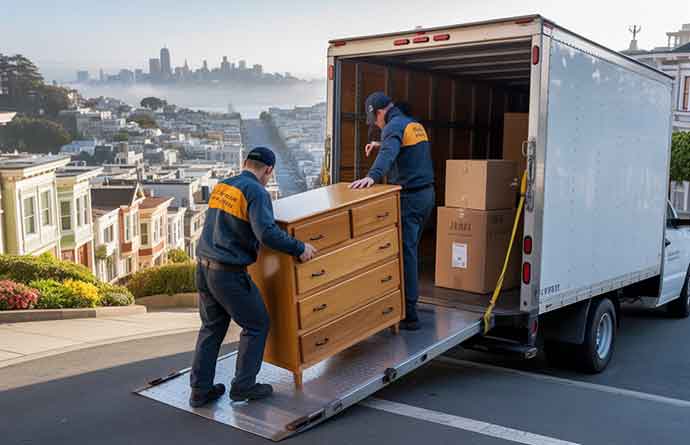
Hire Movers: In nearly every moving scenario, hiring movers is the most expensive option, but you get a physically easy move and none of the stresses of driving a large vehicle. Ensure that you get a ‘binding not to exceed’ quote so that you know what your final bill is likely to be.
DIY: Moving yourself would seem the cheapest option, but many hidden expenses make this type of move only suitable in certain circumstances. Not to mention the physical hardship and mental strain of doing a move yourself.
Hybrid: The middle route is to hire a container and labor help. It is far easier to control your expenses and your move in general.
Freight/Couriers: For the smallest moves, sending your boxes by carrier is often the most cost-effective route.
How Much do Movers Cost?
Save up to 40% on your upcoming move and get a quote from reputable moving experts.
Your ultimate cost is determined by two variables: How much stuff you have and how far it needs to travel. You can’t change the distance to your new home, but you can control the volume. De-cluttering, selling, or donating items before getting a quote is the single fastest way to substantially reduce your moving costs.
You may also like to read: How to Declutter for a Home Move. In this guide, we explain how to declutter each room of your home so that you only move the things that you really need and love.
Research
Compare every moving option thoroughly. What at first glance appears the cheapest option often has hidden expenses, so consider every single expense, not just the headline price. Ask as many questions as possible to drill down to the final cost.
Don’t underestimate the Hardships
Moving is physically and mentally demanding. Cheap nearly always means sacrifices. Only you can decide if saving money is more important than an easy and stress-free move.
You may also like to read: Moving Labor Only Services. Hiring labor has many advantages. In this guide, we explain all you need to know about hiring moving labor by the hour.
Moving Options by Home Size
Moving a Few Boxes Only
If you don’t have furniture and are only moving clothes, books, and basic household items, renting a traditional moving truck or hiring standard movers is the most expensive route.
Local Moves (Within 50 Miles)
For a small, local move, standard personal transport wins. Utilizing your own vehicle, or persuading a friend with a pickup truck in exchange for dinner and gas money, keeps your costs super low.
Interstate Moves (500+ Miles)
When crossing state lines with just boxes, traditional shipping carriers and specialized freight services are your best option.
Moving Option
Average Cost
Pros
Cons
USPS Media Mail & Ground Advantage
$40 – $150 total(Approx. $1.50-$2.50/lb)
• Media mail is incredibly cheap for books, electronics, and educational items.
• Predictable pricing.
• Strict rules on Media Mail contents (subject to inspection).
• Slow delivery times.
LugLess or ShipGo
$150 – $350 total(3-5 large boxes)
• Door-to-door pickup and delivery available.
• Uses FedEx/UPS networks at wholesale rates.
• Strict weight ceilings (typically 50-75 lbs per box).
• Oversize fees apply quickly.
Amtrak Express / Greyhound Package Express
$100 – $250 total
• Excellent for heavy, durable items.
• Very cost-effective terminal-to-terminal transport.
• Requires terminal drop-off and pickup.
• Route availability varies by station.
You may also like to read: What to Pack in Which Size Boxes. Not all boxes are suitable for all things. In this guide, we explain the right things to pack in the right-sized boxes.
Studio Apartment Moves
A studio apartment typically equates to about 1,500 to 2,500 lbs. This includes basic furniture (bed, dresser, small table) with 10 to 20 boxes.
Local Moves (Within 50 Miles)
A cargo van or a small 10-foot rental truck is the undisputed champion here. Because the distance is short, you do not need to worry about heavy fuel expenditure or driving a massive, intimidating commercial vehicle.
Interstate Moves (500+ Miles)
Driving a rental truck across the country for a studio apartment can become prohibitively expensive when you factor in gas (rental trucks get 8-12 MPG), hotel stops, and highway tolls. Small moving containers or shipping platforms are often cheaper.
Moving Option
Average Cost (Local vs Interstate)
Pros
Cons
DIY Truck / Cargo Van(e.g., U-Haul, Enterprise)
Local: $50 – $120
Interstate: $600 – $1,200
• Complete schedule flexibility.
• Cheapest baseline rate for short distances.
• Hidden costs: high fuel usage, mileage fees ($0.79-$0.99/mile locally).
• Physically exhausting.
Small Moving Container(e.g., U-Box, ReloCubes)
Local: $400 – $700
Interstate: $950 – $1,600
• No driving required.
• Includes up to 30 days of storage built-in.
• Requires a legal parking space for container placement.
• Slower transit times.
Peer-to-Peer / LTL Freight(e.g., uShip, TSI)
Local: N/A
Interstate: $500 – $1,100
• Bidding system secures lower rates.
• Utilizes empty space on existing trucks.
• Delivery dates are often broad windows.
• Quality of individual haulers varies.
You may also like to read: Tips for Moving Into a Studio. In this guide, we offer some tips for making moving into and living in a studio easier.
1 to 2 Bedroom Moves
Moves of this size range anywhere from 3,000 to 6,000 lbs. and typically require a 15-foot to 17-foot truck, or 1 to 2 small-to-medium moving containers.
Local Moves (Within 50 Miles)
A DIY truck rental remains the cheapest choice. However, if you lack physical help, look into “hybrid moving’; renting the truck yourself but hiring local laborers by the hour to do the heavy lifting.
Interstate Moves (500+ Miles)
For a 1-2 bedroom cross-country move, costs are not so clear-cut between driving a rental truck and booking a moving container. When calculating the truck cost, add roughly $250-$400 for fuel, plus hotel and food costs.
Moving Option
Average Cost (Local vs Interstate)
Pros
Cons
Pure DIY Truck Rental(15ft – 17ft truck)
Local: $80 – $180
Interstate: $1,200 – $2,200
• Most direct cost-to-capacity value.
• You maintain constant custody of your items.
• Driving a large vehicle is stressful.
• Physical liability if items are damaged during transit.
Moving Containers(PODS, U-Pack ReloCube)
Local: $600 – $1,100
Interstate: $1,700 – $2,900
• Pack at your own pace over several days.
• Professional driver handles transport.
• More expensive than DIY.
• Street permits may be required for the pods.
Hybrid Moving(DIY Truck + Independent Labor)
Local: $250 – $500
Interstate: $1,500 – $2,700
• Saves your back from heavy lifting.
• Significantly cheaper than full-service movers.
• Requires coordinating two separate entities.
• Laborers may not carry comprehensive insurance.
You may also like to read: One-Way Truck Rental. Hiring a truck often means that you have to return it to where you hired it from. The answer for long-distance moves is one-way truck rental. This guide explains all you need to know.
3 to 4 Bedroom Moves
A 3 to 4-bedroom house involves substantial volume, shifting anywhere from 7,000 to over 12,000 lbs of furniture and personal effects. This requires a 22-foot to 26-foot commercial-style truck or multiple moving containers.
Local Moves (Within 50 Miles)
While renting a 26-foot truck is the cheapest path, driving it is not for the faint hearted. For homes of this size, a licensed local moving company with a flat hourly rate can be the best value when you calculate the sheer physical effort and potential time off work required for a DIY move.
Interstate Moves (500+ Miles)
Driving a 26-foot truck cross-country is not anyone’s idea of fun and can be incredibly expensive on fuel (often getting less than 8 MPG loaded). This is where freight trailer sharing (like U-Pack) becomes a good option for budget-conscious movers.
Moving Option
Average Cost (Local vs Interstate)
Pros
Cons
Freight Trailer Space(e.g., U-Pack 28ft Trailer)
Local: N/A
Interstate: $2,800 – $4,500
• You only pay for the linear feet you actually use.
• Professional transit for heavy commercial volumes.
• Requires massive parking clearance for a 28-foot ramp trailer.
• Completely self-service loading.
DIY Truck Rental(22ft – 26ft Truck)
Local: $150 – $300
Interstate: $2,200 – $3,800
• The lowest raw dollar price for a massive move.
• Immediate delivery control.
• Extreme physical labor required.
• Massive fuel expenditure (hundreds of dollars added).
• Risk of rogue brokers or delayed delivery dates.
You may also like to read: DIY Moving Mistakes. In this guide, we explain the top 10 mistakes people make when trying to move home without professional help, so that you can avoid making the same mistakes.
Ways to Lower Moving Costs
Choose your moving date carefully: Avoid moving during the summer peak (May to September), on weekends, or at the start/end of the month. Rental truck rates and container costs can drop by 30% to 50% on a Tuesday in mid-November compared to a Saturday in July.
Sourcing Free Boxes: Visit local liquor stores (their boxes are heavy-duty and have dividers perfect for glassware), large grocery chains, or look through local Facebook Marketplace and Buy Nothing groups where recent movers are desperately trying to give boxes away.
Optimize the Trucks’ Footage: Pack items tightly right up to the ceiling of the trailer and use ratchet straps. Saving just 3 linear feet by stacking efficiently can save you $300 to $500 on your final bill.
Decline Rental Company Insurance (Safely): Check your homeowner’s or renter’s insurance policy, as well as your premium credit cards. Many provide built-in coverage for personal property in transit, allowing you to avoid the costly add-on insurance packages offered by truck rental companies.
You may also like to read: Home Moving Insurance. One of the biggest mistakes people make is trying to save money in the wrong places. Moving insurance is one place you should never cut corners. This guide explains all you need to know about insuring your home move.
What is the Absolutely Cheapest Way to Move?
For local moves for all home sizes, a DIY truck rental paired with your own labor is unbeatable.
For interstate moves, use specialized shipping (LugLess/USPS) for box-only moves, and moving containers or freight trailers (U-Pack/ReloCube) for full households. This eliminates the stress and hidden costs of driving heavy commercial trucks across the country, while protecting your budget from full-service moving rates.
But never eliminate the full-service movers option, when everything else is taken into consideration, they often work out just as cheaply as other moving options, and they save your sanity.
Good luck with your move, and be sure to visit our home moving blog, which is packed with guides to make every aspect of your home move easier, cheaper, and safer.
*At MoveAdvisor we will connect you with a professional moving company. Please note that we may not be affiliated with
and you may be speaking with another licensed provider.
We use cookies to optimise your experience.Accept and close or Learn more












Share your thoughts by leaving a comment