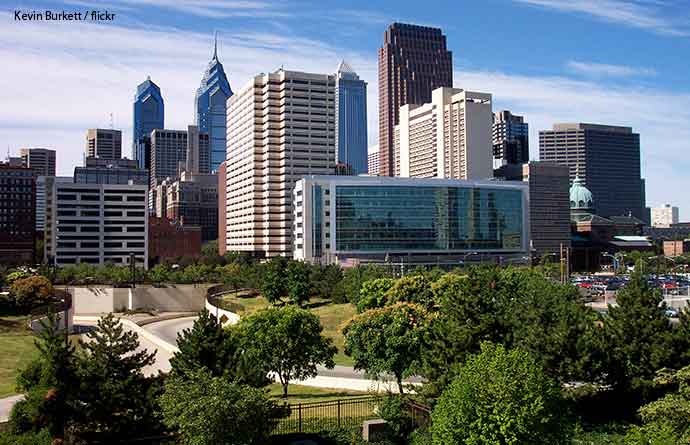
Philadelphia offers something hard to find on the East Coast: the culture, employment opportunities, and amenities of a major city without the New York City or Boston housing prices.
Residents have access to good universities, comprehensive healthcare, historic neighborhoods, professional sports, lots of parks, and direct rail connections to New York and Washington, D.C.
Philadelphia also has drawbacks, though.
Housing prices can vary enormously from one neighborhood to another.
Residents pay a city wage tax, public school quality is inconsistent, parking can be frustrating, and safety can vary significantly within just a few blocks.
Philadelphia at a Glance
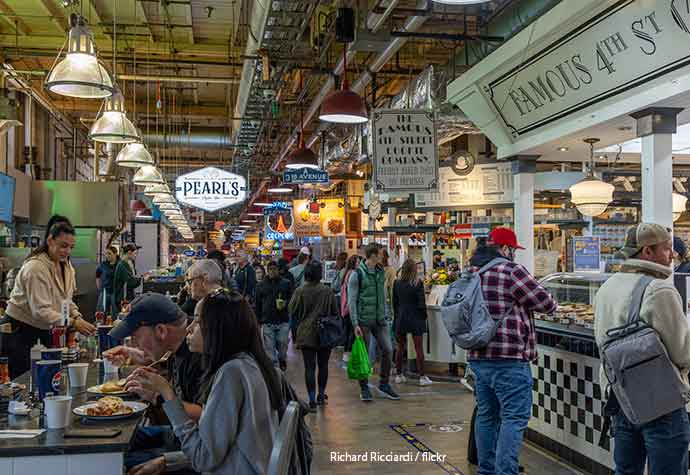
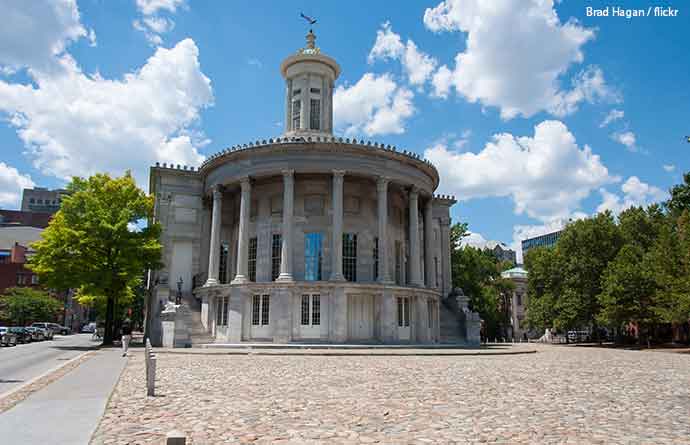
Reading Terminal Market
Category
Currently
Typical home value
$237,459
Median home sale price
$260,333
Average rent
$1,814 per month
Living wage for one adult
$23.34 per hour
Basic gross income for one adult
About $48,554 per year
Metropolitan unemployment rate
4.1%
Standard SEPTA bus and Metro fare
$2.90
Philadelphia resident wage tax
3.735%
Pennsylvania income tax
3.07%
Philadelphia sales tax
8%
Real estate tax rate
1.3998% of assessed value
Housing figures are citywide Zillow measures from June 2026. Actual prices depend on the neighborhood, property type, and condition.
Philadelphia is a good choice for people who want an urban lifestyle at a lower cost than many other large Northeastern cities.
It is especially appealing to:
Healthcare, education, research, and life-sciences professionals
Buyers seeking a rowhouse or condominium at a relatively good price
People who want to live without driving every day
Students, academics and medical professionals
Families willing to research schools carefully
Residents who value museums, restaurants, sports and historic architecture
People who travel frequently along the Northeast Corridor
Philadelphia may be less suitable for someone seeking consistently low crime across the entire city, uniformly high-performing public schools, easy street parking or low local taxes.
Choose your exact neighborhood carefully. Your experience in Rittenhouse Square, Roxborough or Chestnut Hill may be very different from your experience in another part of Philadelphia.
Cost of Living in Philadelphia
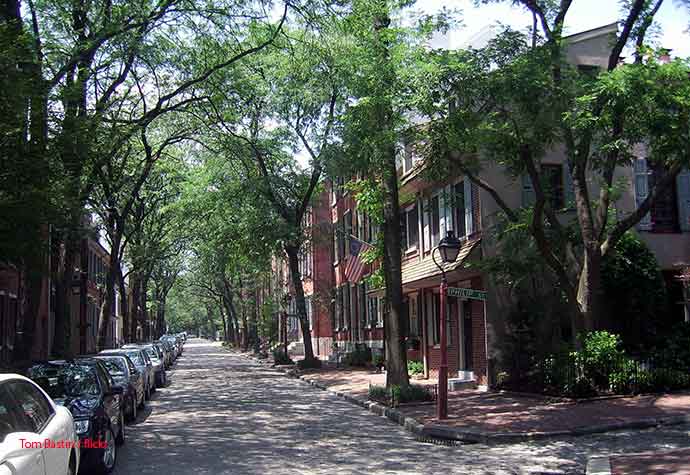
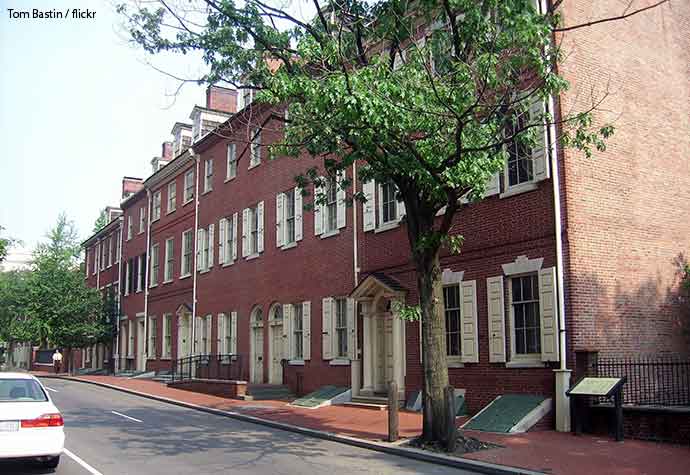
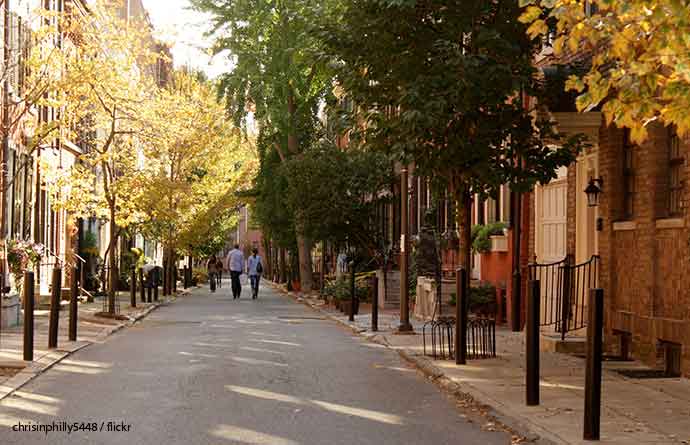
Society Hill
Philadelphia is not a cheap city, but it is affordable by major East Coast standards. Housing can be affordable, while taxes, childcare, and transportation can add significantly to a household budget.
Homes were reaching pending status in a median of 18 days, although market speed differs by neighborhood and property condition.
Philadelphia’s citywide property figures can be misleading because the market is extremely varied. A renovated house near Rittenhouse Square, Society Hill or Chestnut Hill may cost several times more than a property in an outer neighborhood.
Renters should also compare:
Whether heat or water is included
Laundry availability
Parking costs
Pet fees
Building age and insulation
Air-conditioning
Basement moisture
Access to public transportation
Philadelphia has a large stock of historic and early-20th-century rowhouses. These properties can be full of character, but prospective buyers should pay particular attention to roofs, masonry, plumbing, electrical systems, sewer lines, basement water, and previous renovations.
How Much Money Do You Need to Live in Philadelphia?
Estimated annual expenses for that person include:
Expense
Annual cost
Approx. monthly cost
Housing
$15,299
$1,275
Food
$4,627
$386
Medical care
$4,053
$338
Transportation
$5,831
$486
Internet and mobile service
$2,168
$181
These figures represent basic needs rather than a comfortable lifestyle with substantial savings, frequent dining out, or expensive entertainment.
For two working adults with one child, MIT estimates a combined required gross income of approximately $101,573 per year.
Childcare accounts for an estimated $17,118 of annual expenses in that household model.
A single renter should need:
Around $50,000 for a basic budget
Around $65,000–$80,000 for more flexibility
More than $90,000 for a newer apartment in a premium neighborhood, frequent entertainment, and more savings
Lifestyle and housing choices matter more than the citywide average. Sharing an apartment, living farther from the Center City, or not owning a car can reduce expenses considerably.
Philadelphia Taxes
Taxes are one of the biggest disadvantages of living in Philadelphia.
City wage tax
Beginning July 1, 2026, Philadelphia’s wage-tax rates are:
3.735% for city residents
3.425% for nonresidents earning wages in Philadelphia
Philadelphia residents generally pay the resident wage tax even when they work outside the city.
Pennsylvania income tax
Pennsylvania imposes a flat 3.07% personal income tax.
Sales tax
Philadelphia purchases are generally subject to:
6% Pennsylvania sales tax
2% Philadelphia local sales tax
8% total sales tax
Property tax
Philadelphia’s current real estate tax rate is 1.3998% of assessed value. The city states that this rate will remain unchanged for the 2027 tax year.
Property taxes may look modest compared with parts of New Jersey, but buyers must verify the property’s current assessment, exemptions, and expected post-sale valuation.
The best neighborhood depends on your budget, commute, school requirements, nightlife preferences, and willingness to own a car.
Rittenhouse Square and Fitler Square
Best for: Professionals, affluent renters, walkability and upscale city living
Rittenhouse Square offers high-rise apartments, historic side streets, restaurants, shops and one of Philadelphia’s best-known public squares. It is highly walkable and close to Center City offices, the Schuylkill River Trail and major cultural venues.
Fitler Square, directly west, has a quieter and more residential atmosphere while remaining close to the same amenities.
The major disadvantages are high housing costs, limited street parking and smaller living spaces.
Old City and Society Hill
Best for: Historic surroundings, walkability and Center City access
Old City combines historic attractions, restaurants, art galleries, nightlife and access to the Delaware River waterfront. It is served by buses, the Market–Frankford Line and PATCO.
Society Hill is quieter and more residential, with cobblestone streets, brick homes, courtyards and access to Washington Square and Penn’s Landing.
Housing can be expensive, visitor traffic is heavy around major attractions and parking may be difficult.
Washington Square West, Midtown Village and the Gayborhood
Best for: Central location, LGBTQ+ culture, nightlife and car-free living
Washington Square West sits between Rittenhouse Square, the Historic District and South Street. Midtown Village and the Gayborhood offer restaurants, bars, theaters, shops and a central location near several transit lines.
This area is convenient for residents who want to live in the thick of the action. But that can mean more street noise, nightlife traffic and higher rents.
Queen Village, Bella Vista and East Passyunk
Passyunk
Best for: Restaurants, rowhouses, families and neighborhood character
These parts of South Philadelphia offer traditional rowhouse streets, independent restaurants, markets and strong neighborhood identities.
Queen Village and Bella Vista are close to Center City and the Italian Market. East Passyunk is known for its restaurant corridor and community atmosphere.
Homes often provide more space than central high-rise apartments, although parking and narrow streets can cause problems.
Fairmount, Spring Garden and Logan Square
Best for: Museums, parks and Center City access
Fairmount and Spring Garden appeal to residents who want residential streets near the Philadelphia Museum of Art, Kelly Drive, Fairmount Park and the Benjamin Franklin Parkway.
Logan Square combines offices, apartments, museums and historic homes near Center City.
The area works particularly well for museum employees, healthcare workers and downtown commuters.
Fishtown and Northern Liberties
Best for: Nightlife, restaurants, music and a younger urban atmosphere
Fishtown is one of Philadelphia’s best-known dining and entertainment districts, with restaurants, bars, music venues and boutiques.
Northern Liberties connects Fishtown with Old City and combines converted industrial buildings, newer apartments and independent businesses.
Both neighborhoods have experienced substantial development. Buyers and renters should expect construction, weekend activity and higher housing costs.
University City, Spruce Hill and Cedar Park
Best for: Students, university employees, researchers and healthcare workers
University City is home to major hospitals, universities, laboratories and employment centers. Spruce Hill and Cedar Park offer more residential streets and larger historic houses nearby.
These neighborhoods are particularly practical for people working at the University of Pennsylvania, Drexel University, Penn Medicine or Children’s Hospital of Philadelphia.
Housing and street conditions change quickly as you travel west, so inspect the exact block and commute rather than relying only on the neighborhood name.
Manayunk, Roxborough and East Falls
Best for: More space, outdoor access and a semi-suburban atmosphere
Manayunk offers a riverside setting, restaurants and a compact commercial district with a small-town feel.
Roxborough is more residential and hilly, while East Falls provides access to the Schuylkill, trails and Regional Rail. East Falls is approximately five miles from Center City and is served by the Manayunk/Norristown Regional Rail line.
These areas are popular with residents who want additional space without leaving Philadelphia, although travel to some parts of the city may take longer.
Chestnut Hill and Mount Airy
Best for: Greenery, larger homes, families and a quieter lifestyle
Chestnut Hill is known for historic architecture, shops, restaurants and easy access to Wissahickon Valley Park. The neighborhood combines a village-like commercial district with Regional Rail service.
Mount Airy is generally more varied and may offer lower prices while still allowing access to Northwest Philadelphia’s parks and rail lines.
Northeast Philadelphia
Best for: More space, driveways, families and car-oriented living
Northeast Philadelphia covers a large area containing rowhouses, twins, detached homes and apartment communities. Many sections feel more suburban than Center City.
Housing may be more accessible, but households often depend more heavily on driving or bus services. It is recommended to test commutes during actual rush-hour conditions.
You may also like to read: How to Choose the Best Neighborhood. In this guide, we suggest things to take into consideration when choosing a new neighborhood to move to.
Education in Philadelphia
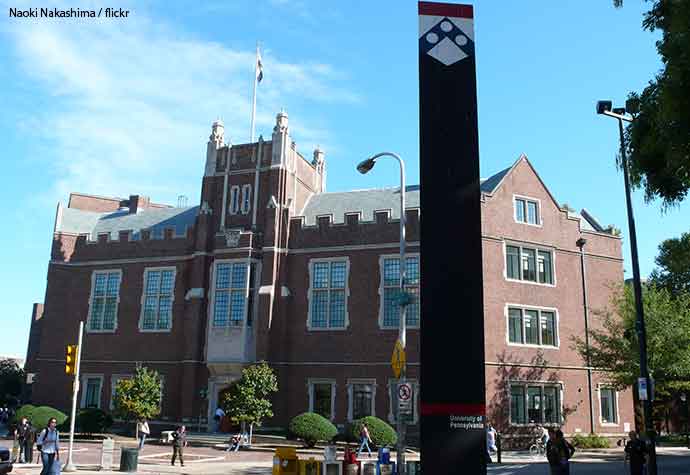
University of Pennsylvania
Philadelphia offers district, charter, criteria-based, cyber, private, and parochial school options. School quality and admission procedures vary significantly.
As of October 2025, Philadelphia had 198,405 public-school students, including:
113,735 in district schools
64,469 in Philadelphia charter schools
14,844 in cyber charter schools
3,163 in alternative schools
For the 2024–25 school year, the four-year graduation rate was:
84.4% at district schools
88.5% at charter schools
33.9% at alternative schools
80.6% across all Philadelphia public high-school sectors combined
What Families Should Know
Some Philadelphia schools serve defined neighborhood catchments, while others use citywide or criteria-based admissions. A desirable neighborhood does not automatically guarantee school placement.
Before signing a lease or purchasing a home:
1. Confirm the property’s assigned catchment school.
2. Review individual school performance.
3. Understand charter-school lotteries and deadlines.
4. Research criteria-based admissions well in advance.
5. Verify transportation arrangements.
6. Consider private-school tuition in the household budget when relevant.
Philadelphia is also a major higher-education center. Institutions include the University of Pennsylvania, Temple University, Drexel University, Thomas Jefferson University, Saint Joseph’s University and several smaller colleges.
Their presence supports employment, research, healthcare and cultural programming throughout the region.
You may also like to read: How to Choose a New School. In this guide, we suggest things to take into consideration when choosing a new school for your kids.
Healthcare in Philadelphia
Healthcare access is one of Philadelphia’s strong points.
Penn Medicine operates several city hospitals, including the Hospital of the University of Pennsylvania, Penn Presbyterian Medical Center and Pennsylvania Hospital.
Other major providers include:
Jefferson Health and Thomas Jefferson University Hospital
Jefferson Einstein Philadelphia Hospital
Temple Health
Children’s Hospital of Philadelphia
Community hospitals and outpatient networks throughout the city and suburbs
Jefferson provides hospitals, outpatient facilities, medical practices and virtual-care options across Greater Philadelphia and South Jersey.
Children’s Hospital of Philadelphia provides pediatric primary, specialty, emergency, urgent and inpatient care, with additional specialty locations throughout Pennsylvania and New Jersey.
Residents should still compare health-insurance networks carefully. A respected hospital may not be the most affordable option under every insurance plan, and primary-care or specialist waiting times can vary.
Is Philadelphia Safe?
Philadelphia has seen a major reduction in lethal violence since the pandemic, but safety and property crime continues to concern residents.
The city recorded 222 homicides in 2025, its lowest number since 1966. Shooting victims fell below 1,000 for the first time since at least 2007.
However, approximately 63,000 major crimes were reported in 2025, compared with around 50,000 annually before the pandemic.
Property offenses such as theft, vehicle crime, and burglary are not uncommon.
Philadelphia should not be considered either safe or unsafe. Conditions differ by:
Police district
Neighborhood
Individual block
Time of day
Proximity to transit stations or nightlife
Building security
Parking arrangements
Before moving, review recent Philadelphia Police crime data, visit the area during the day and after dark, test the walk to public transportation, and talk to residents on the specific block.
A large neighborhood may contain quiet residential streets, busy commercial corridors, and higher-crime pockets within a relatively short distance.
You may also like to read: Moving Alone to a New City. In this guide, we look at the challenges and solutions of moving to a new city on your own.
Jobs and Employment in Philadelphia
Philadelphia has a large and diverse metropolitan economy, with good opportunities in healthcare, education, professional services, logistics, government, and hospitality.
The Philadelphia metropolitan area had approximately 3.165 million nonfarm jobs and a 4.1% unemployment rate in June 2026. Total payroll employment was 0.6% higher than a year earlier.
Major employment sectors included:
Industry Metropolitan jobs, June 2026
Education and health services 759,600
Trade, transportation and utilities 538,900
Professional and business services 505,200
Government 353,000
Leisure and hospitality 296,900
Financial activities 227,700
Manufacturing 177,500
Education and health services grew by 2.2% over the year, making it both the metropolitan area’s largest sector and one of its better sources of employment growth.
Typical Philadelphia Salaries
MIT’s Philadelphia County data lists typical annual salaries of approximately:
$100,280 for computer and mathematical occupations
$97,430 for healthcare practitioners and technical occupations
$94,890 for architecture and engineering
$86,650 for business and financial operations
$67,240 for education and library occupations
$64,370 for construction and extraction
$50,110 for sales occupations
$48,410 for office and administrative support
$46,820 for transportation and material-moving occupations
Employment is distributed across several hubs:
Center City for offices, finance, hospitality and government
University City for universities, hospitals and research
North Philadelphia for Temple-related employment and healthcare
South Philadelphia for logistics, sports and hospitality
Navy Yard for offices, laboratories and industrial employers
Suburban corridors for pharmaceuticals, finance and corporate offices
A suburban job can change the best place to live. Someone commuting to King of Prussia, the Main Line or South Jersey should investigate highway and Regional Rail access before choosing a central neighborhood.
You may also like to read: Moving for Work. In this guide, we look at the pros and cons of moving to a new city for a job.
Getting Around Philadelphia
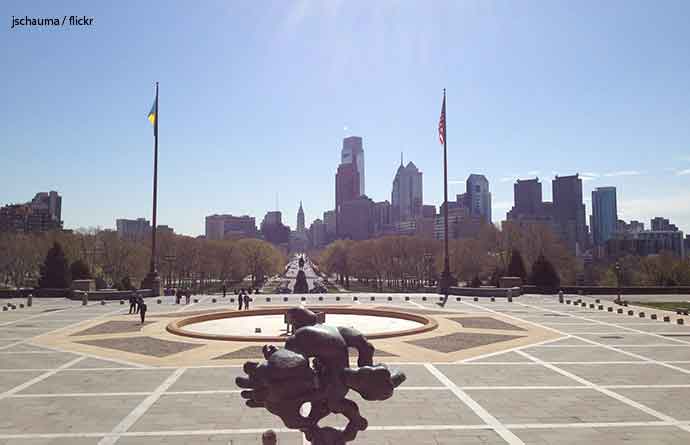
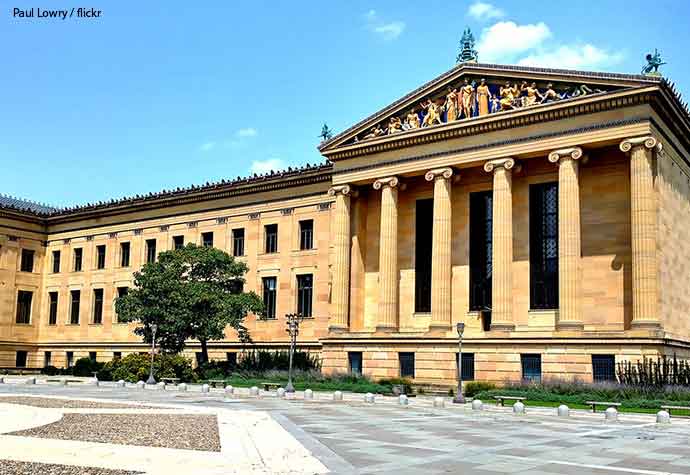
Philadelphia Museum of Art
Philadelphia is one of the better American cities for living without a car, particularly in Center City and adjoining neighborhoods.
SEPTA
SEPTA operates buses, Metro lines, trolleys and Regional Rail.
Current fares include:
$2.90 for a standard bus or Metro trip
$31 for a weekly TransPass+
$116 for a monthly TransPass+
Regional Rail fares begin around $5 and increase according to zone and payment method
Contactless credit cards, debit cards, smartphones and watches can be used on SEPTA.
The first two transfers on buses and Metro are free when using an eligible contactless payment method.
Center City, University City, South Philadelphia near Broad Street, Fishtown, Northern Liberties and neighborhoods near Regional Rail stations are easier without a vehicle than many parts of Northeast or Northwest Philadelphia.
Driving and Parking
A car is useful for outer neighborhoods, suburban jobs and regional travel, but parking can be a problem in the city.
Before renting or buying, determine:
Whether parking is included
Whether the block has permit parking
Garage or lot costs
Street-cleaning restrictions
Snow-emergency routes
Insurance implications
Whether the street is wide enough for a moving truck
Philadelphia’s Streets Department administers temporary parking-prohibition permits for moving trucks, containers and similar uses.
Ensure that you arrange the required parking before moving day.
Regional and Long-Distance Travel
Philadelphia’s 30th Street Station connects the city with Amtrak’s Northeast Corridor, including New York, Baltimore, Washington, D.C. and Boston.
Philadelphia International Airport listed 134 nonstop destinations, 95 domestic and 39 international, as of December 2025, with additional routes introduced during 2026.
This makes Philadelphia particularly convenient for people who need access to several East Coast business centers.
Parks, Recreation and Entertainment
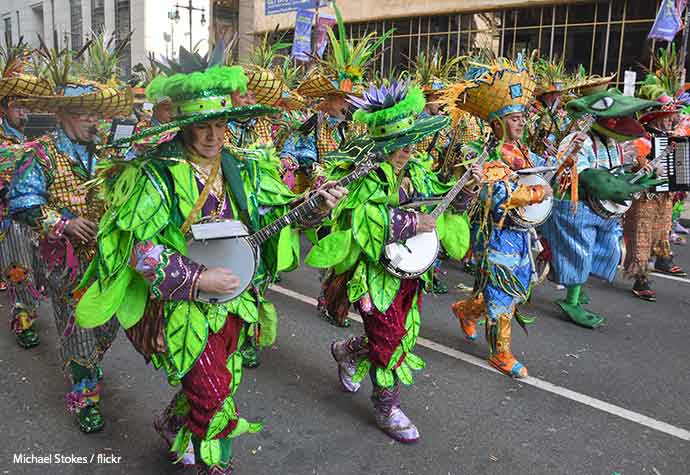
Mummers Parade
Philadelphia Parks & Recreation manages more than 10,200 acres of public land and waterways, together with recreation centers, environmental sites, gardens, trails and boat launches.
The city has more than 200 miles of trails, including routes through or along:
Wissahickon Valley Park
Fairmount Park
Kelly Drive
Martin Luther King Jr. Drive
Schuylkill River Trail
Pennypack Park
Cobbs Creek
Delaware River waterfront
Museums and Culture
Major cultural attractions include:
Philadelphia Museum of Art
Barnes Foundation
Rodin Museum
Franklin Institute
Academy of Natural Sciences
National Constitution Center
Museum of the American Revolution
African American Museum in Philadelphia
Pennsylvania Academy of the Fine Arts
Independence National Historical Park
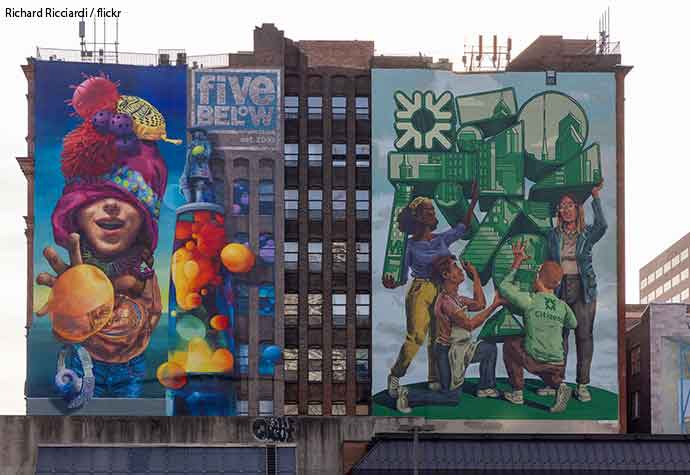
The city also has a large mural collection, neighborhood galleries, music venues, theaters and performing-arts institutions.
Sports
Philadelphia has major professional teams in football, baseball, basketball, hockey and soccer. The Eagles, Phillies, 76ers and Flyers play in the South Philadelphia sports complex, while the Union plays in nearby Chester.
Food and Nightlife
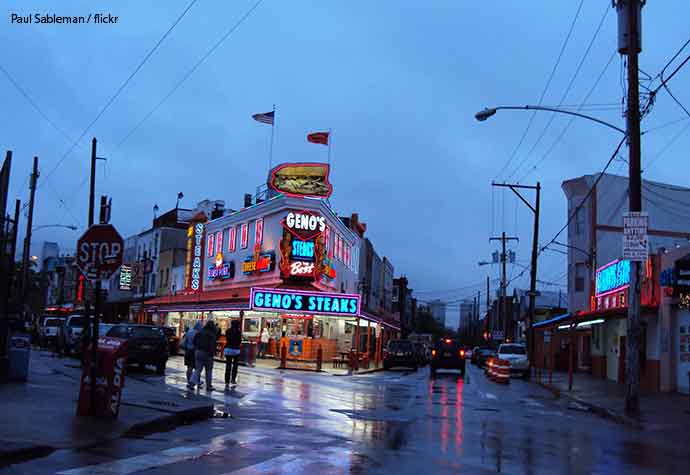
Philadelphia’s food scene is more than just cheesesteaks. The city is known for Reading Terminal Market, Italian-American food, roast pork sandwiches, soft pretzels, BYOB restaurants, Vietnamese and Cambodian communities, modern fine dining, and neighborhood restaurants.
Popular dining and nightlife areas include:
Center City
Fishtown
East Passyunk
Northern Liberties
Midtown Village
Old City
University City
Manayunk
Philadelphia Weather
Philadelphia has four distinct seasons.
Summers are generally hot and humid, with thunderstorms and occasional periods of extreme heat. Winters are cold, bringing rain, ice, and snow. Spring and fall are usually the best seasons.
Over a typical year, temperatures commonly range from the mid-20s in winter to the upper 80s in summer.
Older Philadelphia homes may not have the best heating or cooling. Ask about air-conditioning, heating type, insulation, and average utility costs before deciding on a property.
You may also like to read: Climate Migration. In this guide, we look at the climatic changes that are happening in our country and the best places to move to avoid climate change.
Moving to Philadelphia
Before choosing a home, research the property at the address and block level rather than relying on the neighborhood name.
Check:
Actual work commute at rush hour
Public-transportation frequency
School catchment
Recent crime data
Parking rules
Grocery and pharmacy access
Nighttime noise
Building condition
Flood and drainage exposure
Package security
Trash-storage arrangements
Advantages and Disadvantages of Living in Philadelphia
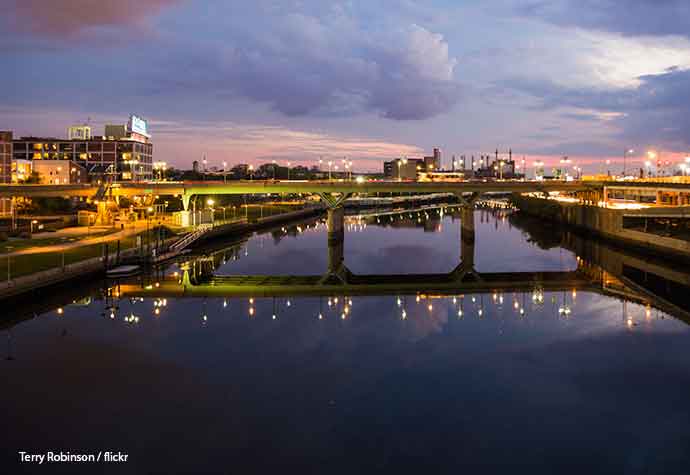
South Street Bridge
Advantages
Housing: Philadelphia home prices are far lower than most Northeastern cities.
Major employment sectors: Healthcare, education, research, professional services, and logistics provide a broad employment base.
Strong healthcare: Residents have access to several large academic and specialist medical systems.
Walkable neighborhoods: You don’t need a car in many central neighborhoods.
Regional location: New York, Washington, Baltimore, the Jersey Shore and the Pocono Mountains are all practical regional destinations.
Culture and recreation: Museums, historic sites, restaurants, professional sports and large parks provide extensive entertainment.
Distinctive housing: Historic rowhouses and traditional streets give the city real character.
Disadvantages
City wage tax: Philadelphia residents pay a substantial local tax in addition to Pennsylvania income tax.
Safety: Crime and street conditions vary considerably by block.
Inconsistent schools: Families must research individual schools and admission procedures carefully.
Parking: Street parking can be limited, regulated and stressful.
Older housing: Lack of maintenance, moisture, outdated systems and inefficient heating or cooling can create unexpected expenses.
Litter and infrastructure: Street cleanliness, road quality and municipal service conditions are not consistent across the city.
Humidity and weather extremes: Summers can be uncomfortable, while winter conditions may include snow, ice and cold rain.
Renting first is sensible for people unfamiliar with the city. A neighborhood tour may not reveal everything about noise, parking, commuting, or daily routines.
Consider renting when:
You are new to the region
Your employment situation may change
You are uncertain about schools
You want to test a car-free lifestyle
You do not have funds for repairs on an older property
Buying may be better when:
You plan to remain for several years
You understand the exact block
You have funds for inspections and maintenance
Your commute is stable
You have researched assessments and property taxes
The property’s major systems are in acceptable condition
Philadelphia’s typical home value of about $237,459 and median sale price of about $260,333 make ownership more attainable than in several other large Northeastern markets, but low asking prices usually reflect condition, location, or renovation needs.
Frequently Asked Questions About Moving to Philadelphia
Is Philadelphia expensive to live in?
Philadelphia is moderately expensive overall but comparatively affordable for a major East Coast city. Average rent was $1,814 in June 2026, while the typical home value was $237,459.
What salary do you need to live comfortably in Philadelphia?
MIT estimates that a single adult needs about $48,554 before taxes to cover basic expenses. A salary of $65,000 or more should cover housing, savings and entertainment, although the actual amount depends on debt, neighborhood and household size.
Is Philadelphia safe?
Philadelphia’s homicide and shooting totals fell substantially in 2025, but major property and violent crime are still concerning. Safety varies considerably between neighborhoods and even between nearby blocks.
Can you live in Philadelphia without a car?
Yes. Center City, University City, Fishtown, Northern Liberties and transit-accessible sections of South Philadelphia are practical for car-free living. Outer sections of Northeast and Northwest Philadelphia are generally easier with a vehicle.
What are the best Philadelphia neighborhoods for families?
The most popular options include Chestnut Hill, Mount Airy, Roxborough, East Falls, Fairmount, Queen Village and residential sections of Northeast Philadelphia. Families should choose only after confirming the exact school catchment, commute and block conditions.
What are the best Philadelphia neighborhoods for young professionals?
Rittenhouse Square, Washington Square West, Graduate Hospital, Fishtown, Northern Liberties, Fairmount and East Passyunk provide good transit, restaurants, nightlife and access to employment centers.
Does Philadelphia have good job opportunities?
Yes, particularly in healthcare, education, research, professional services, government, finance, logistics and hospitality.
Does Philadelphia have good healthcare?
Philadelphia has several major academic and specialist healthcare systems, including Penn Medicine, Jefferson Health, Temple Health and Children’s Hospital of Philadelphia.
What is the biggest financial drawback of living in Philadelphia?
For many working residents, it is the city wage tax. The Philadelphia resident rate is 3.735% beginning July 1, 2026, in addition to Pennsylvania’s 3.07% personal income tax.
You may also like to read: How to Decide Where to Move. In this guide, we suggest things to take into consideration when choosing which city to move to.
Is Moving to Philadelphia Worth It?
Old City, Philadelphia
Moving to Philadelphia can be an excellent decision for someone looking for an established East Coast city with accessible housing, major employment sectors, good healthcare, strong cultural institutions, and convenient regional transportation.
The city’s greatest strength is the amount of urban life it provides for its housing cost. Philadelphia offers walkable neighborhoods, attractive homes, restaurants, parks, museums and employment opportunities at prices that remain below several comparable metropolitan areas.
Its greatest weakness is inconsistency. Schools, safety, cleanliness, transit and housing condition can change considerably in just a short distance.
A successful move therefore depends less on deciding whether Philadelphia as a whole is right for you and more on finding the right Philadelphia neighborhood, block, and property for your budget and daily routine.
Good luck with your move, and be sure to check out our home moving blog, which is packed with guides to make every aspect of your move easier, cheaper, and safer.
*At MoveAdvisor we will connect you with a professional moving company. Please note that we may not be affiliated with
and you may be speaking with another licensed provider.
We use cookies to optimise your experience.Accept and close or Learn more





Yeah idlo e to be sent a map of Philadelphia … Is that possible ? I am not familiar with the entire city. Thanks .