

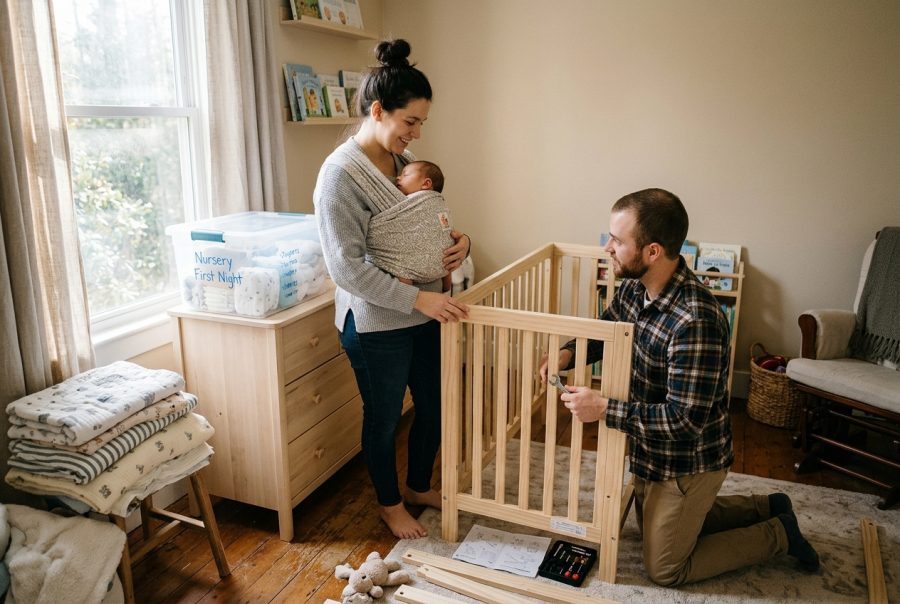
Move the safe sleep setup and the feeding routine before you move the rest of the house. In 2026 the families who cope treat moving day as a childcare problem with a truck attached:
- One adult is off duty for the baby the entire loading and unloading day. That person is not also the one directing movers.
- The nursery is safe before the first nap: firm crib mattress, bare crib, anchored dressers, a washed sheet, and a monitor that works.
- Feed what you already feed. Do not switch formula, start solids, or drop a night feed on moving day.
- Records ride with you, not on the truck: insurance card, vaccine list, and a pediatrician visit booked for the first 1–2 weeks.
A baby does not experience a move as a fresh start. They experience a missing crib, a late bottle, and a parent who is too busy to pick them up. You can still move. You just stop pretending it is an ordinary packing day. This is practical planning, not medical advice. Ask your pediatrician before you change sleep, vaccines, or feeding.
Start with the family list in the family moving checklist, then use the age table below to decide what has to be finished before the truck leaves.
Age-by-age moving plan
The same house move is a different job at 6 weeks, 6 months, and 2 years. Match the plan to the child you have this month, not the child you will have next year.
| Age | Sleep and feeding | Set up first | Moving day | Book ahead |
|---|---|---|---|---|
| 0–3 months | Feeds every 2–3 hours. Sleep is short. Protect the current formula or nursing plan. No sleep training experiments. | Crib or bassinet, blackout, sound machine, nursing or bottle station, diaper spot within arm’s reach | Baby leaves the home with an adult before loading noise peaks. Another adult meets you to assemble the crib. | Pediatrician who will see a newborn transfer within days. Lactation visit if nursing just started. Washer hookup if you use cloth. |
| 4–7 months | Longer nights are possible and easy to wreck. Keep the same bedtime order: feed, book or song, crib. Solids only if you already started them. | Crib (drop the bassinet if they are rolling), monitor, blackout, high chair only after the kitchen is safe | One familiar nap place: pack-and-play in a quiet room that is already clean. Movers stay out of that room. | Records transfer. A sitter or grandparent for a 4-hour loading window. Same formula brand in the new store. |
| 8–12 months | Cruising and putting things in their mouth. Separation is louder. Meals are messy and not optional. | Anchored furniture, outlet covers, stair gates, a floor that is clear of tools and hardware | Baby is out of the house for load-out. Snack and milk packed. Do not let them “help” around an open truck. | Pediatrician, dentist if you have one, and a childcare spot if a parent is returning to work after the move. |
| Toddler, 1–3 years | One nap or none. Big feelings. They need the same cup, the same blanket, and a short true explanation: “New house, same bed.” | Their bed, blackout, a gate plan, a box labeled OPEN FIRST with 6 toys they already love | A helper takes them to the park during the noisiest hours. Bedtime happens in the new room, not in a hotel if you can avoid it. | Daycare waitlist, preschool records, pediatrician, and any early-intervention or specialist letters. |
Ages overlap. A 3-month-old who is already rolling needs the 4–7 month safety setup. Follow your pediatrician over this table.
How Much do Movers Cost?
As Featured On:

Nursery setup before the first night
If you can sleep one night in the new place before the furniture arrives, do the nursery that day and bring the baby the next morning. If you cannot, the crib or pack-and-play is the first item off the truck, assembled before sofas, by someone who is not holding the baby.
- Safe sleep: a firm, flat mattress made for that crib, a fitted sheet, and nothing else in the sleep space. No pillows, blankets, bumpers, or positioners. Ask your pediatrician if you are unsure about a product marketed for newborns.
- The room itself: blackout curtains if you use them now, a sound machine with fresh batteries, a night light in the hall rather than a bright lamp in their eyes, and a comfortable place for the adult who will feed at 2 a.m.
- Anchor it: dressers and bookcases attached to studs before you open the drawers. Moving crews do not do this unless you hired them to. Outlet covers and cord hiders go on before the baby is on the floor.
- Temperature and air: confirm heat or cooling works the day before. A new filter and a working smoke and carbon-monoxide alarm are part of nursery setup, not a weekend project.
- Monitor: test the camera on your phone before the first nap. Keep the cord well out of the crib.
Wash the crib sheet and the sleep sack at the new place, or bring them clean in the parent bag. Do not trust that you will “find the linen box tonight.”
Feeding schedule on moving day
Write today’s feeds on a card and stick it on the diaper bag. The goal is the same calories at the same rough times, even if the room is different.
- Nursing: a private corner that is not the porch where the crew is staging dollies. Pack a cover if you use one, water for you, and snacks you can eat one-handed. A dropped supply this week is usually stress and missed feeds, not the new zip code.
- Formula: bring the opened can plus two sealed backups of the same brand. Confirm the new store stocks it before moving week. Bottles, a brush, and a way to wash them (even a dish tub) stay in the car.
- Breast milk in a cooler: frozen milk goes in a cooler with ice packs, last on the truck and first off, then straight into a freezer you have already turned on. If the drive is long, ask your pediatrician how they want you to handle thawed milk. Do not guess at the side of the road.
- Solids: pack the foods they already eat. Moving day is a bad day to introduce a new allergen.
- The adult schedule: if you are the feeding parent, you are not the person who skips lunch to tape boxes. Put someone else in charge of signing the inventory.
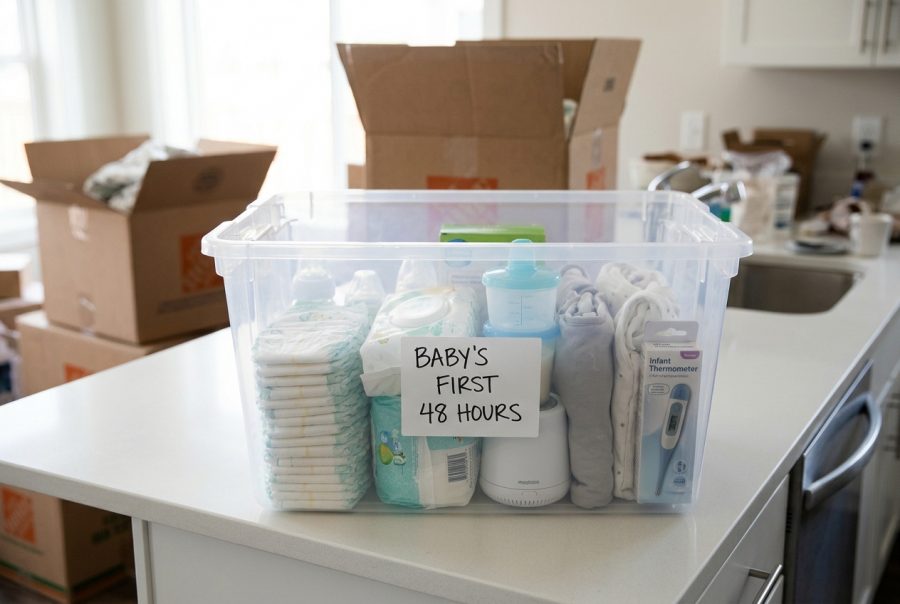
First-night essentials box
Keep this box in the car, not on the truck
Label it BABY – TONIGHT. If the truck is late, this box is still enough for one safe night.
- Diapers and wipes for 3 days, plus a change of clothes and a waterproof bag for dirty ones
- The current formula or your nursing setup, bottles, a brush, and the usual night feed
- Sleep sack or swaddle you already use, pacifiers, and the one lovey that is allowed in their routine (not loose in a newborn crib)
- A washed crib sheet and a portable crib if the nursery will not be ready
- Sound machine, night light, and a monitor with a charged phone
- Medications, dosing tool, thermometer, and the pediatrician’s after-hours number
- Insurance card, vaccine record, and a paper copy of any specialist note
- Two familiar books or toys, snacks for a toddler, and a charger and water for you
Pediatrician and medical records timeline
Insurance networks and vaccine schedules do not move themselves. Start before you pack the clothes.
- 6–8 weeks before: request the vaccine record, growth chart, problem list, and any referral letters. Ask for them as a file you can download, plus a paper copy. If you are due for a shot in the next month, ask whether to get it before you leave.
- 4 weeks before: pick an in-network pediatrician who is accepting transfers. Call, do not only use the insurance website. Ask how soon they see a newborn or a child mid-series.
- 2 weeks before: send records. Book the first visit for within 7–14 days of arrival, sooner if your baby is under 2 months, has a medical condition, or is due for vaccines.
- Moving week: the parent bag holds the insurance card and the record copies. The truck does not.
- Week 1: fill prescriptions at a local pharmacy, learn the after-hours line, and find the nearest urgent care that sees infants. Update the address on file.
- By day 30: set the new clinic as the primary care office with your insurer, and sign daycare or school health forms if a toddler is starting care.
Moving day plan
Hire help if you can. A parent carrying a baby should not also carry a dresser. Price a crew on the moving cost estimator, and tell them a room is off limits while the baby naps. The full sequence lives on the moving checklist; these are the baby-specific hours.
- The night before: crib sheet washed, formula or milk packed, car seat installed, address in your phone, and a neighbor or relative confirmed for the loud hours.
- Morning: a normal feed at home. Then the baby and one adult leave, or they stay in a closed room with a sign on the door.
- Midday: the other adult runs the movers. WATER and snacks for the crew are not the feeding parent’s job.
- Arrival: crib up, sheet on, monitor on, one lamp, then the baby. Furniture anchoring before floor time. Takeout for the adults.
- First bedtime: same order as last week, even if the room is half empty. Lights down, sound on, feed, bed.
If you are flying, the car seat, the first-night box, and the documents are carry-ons. Gate-check only what you can stand to lose for a day. If you are driving more than a few hours, plan feeds and diaper stops as the schedule, and never leave a baby in a parked car while you “just unlock the new place.”
Frequently asked questions
Should we move before the baby is born or after?
Before is usually calmer if you can finish the nursery and meet a pediatrician with a few weeks to spare. After is reasonable once feeding is predictable and you have an extra adult for moving day. The hardest window is the first two weeks postpartum. Avoid that week unless the housing situation is unsafe.
Can the baby ride in the moving truck?
No. The baby rides in a car seat in a regular vehicle with an adult. Car seats do not belong loose in a cargo area, and a moving truck is not a place for a nap.
What if we cannot assemble the crib the first night?
Use a safety-approved pack-and-play or bassinet you already know how to open, on a flat floor, with the same bare-sleep rules. Do not put a newborn on a couch, an adult bed with pillows, or a mattress on the floor surrounded by soft bedding. Call your pediatrician if you are unsure what you have is appropriate.
How do we transfer vaccines and insurance?
Request the record 6–8 weeks ahead, carry a copy, and book the new pediatrician before you move. Call the insurer to switch the primary care office in the first month so the visit is in network. Bring the card to the first appointment anyway.
Is a long-distance move with a toddler a bad idea?
It is tiring, not forbidden. Break the drive into short days, keep their cup and blanket in the car, and plan a helper at both ends. Tell them a simple version of what is happening and keep bedtime familiar. Use the age row for 1–3 years in the table above.
Family move tools
Also Read

Office Moving Checklist: How to Plan the Perfect Office Move
Moving to a new office can be a serious task for a business - an office relocation job that often proves to be... Read More

Boston Moving Guide – Info and Advice
History, culture, green open spaces, and a thriving economy await you in Boston Boston is one of the most... Read More

10 Hot Tips for Moving in the Summer
It’s no secret that summer is the most popular season to move house – the weather is usually nice (warm and dry),... Read More
More about the author

Martin is a moving expert and online marketer who’s been involved in the moving industry since 2004. Writes for MoveAdvisor, formerly MyMovingReviews.com.

Manuella is a moving expert featured in Forbes, USA Today, Zillow, The American Moving & Storage Association. Writes for MoveAdvisor, formerly MyMovingReviews.com.
Posted on
Discussion 0 comments
Leave a comment