Should you Move Before or After the Baby is Born?
There is no simple answer. It depends on the stage of pregnancy, the type of birth you may have, how much help you have, how far you are moving, and whether the new home is ready.
Moving before the baby is born
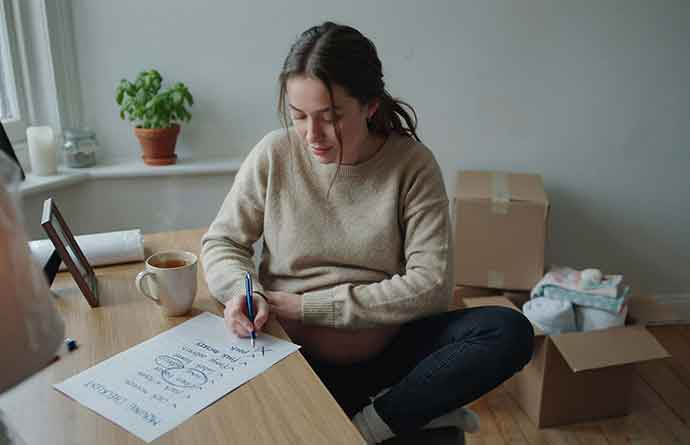
For many families, moving before the birth makes more sense. You can set up the nursery, register with local healthcare providers, organize the home, and avoid moving with a newborn.
Before the baby arrives, you are not yet working around feeds, nappies, crying, postpartum recovery, and a lack of sleep.
If you are still in the second trimester or early third trimester and the pregnancy is uncomplicated, this can be the most manageable window.
However, the later the pregnancy, the harder it becomes to bend, balance, sleep well, and recover from busy days.
Back pain, pelvic girdle pain, swollen ankles, Braxton Hicks contractions, and fatigue can all make moving harder. There is also the emotional pressure of trying to get everything finished before the due date.
Moving before birth may be better if:
- You are in the second trimester or early third trimester
- The pregnancy is uncomplicated
- You can afford professional movers or have reliable help
- The new home is safe, clean, and ready before you arrive
- The move is local or not too physically demanding
- You want to be settled before maternity leave or delivery
Moving before birth may be harder if:
- You are close to your due date
- You have a high-risk pregnancy
- You have been advised to restrict activity
- The move involves stairs, renovation, long-distance travel, or heavy DIY
- You are already dealing with severe fatigue, pelvic pain, or blood pressure concerns
You may also like to read: How to Handle the Stress of Moving Home. Stress can be very real and even harmful during a home move. In this guide, we explain how to identify the signs that you are stressed and what to do about it.
Moving after the baby is born
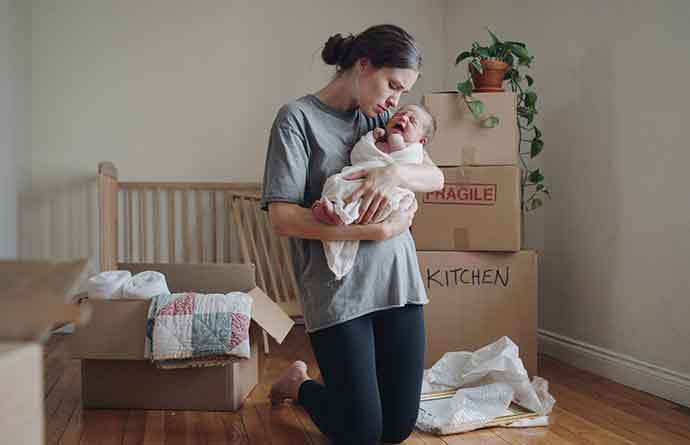
Moving after the baby is born has one obvious benefit: the pregnancy itself is over.
You no longer have the same concerns about lifting affecting the pregnant body, overheating in pregnancy, or being far from your maternity team near your due date.
But postpartum recovery is often underestimated. After giving birth, many women still deal with soreness, stitches, pelvic floor weakness, breast pain, exhaustion, and emotional swings.
After a caesarean section, you are more restricted as to what you can safely do.
The Mayo Clinic advises rest and avoiding lifting anything heavier than 10 to 15 pounds during the first couple of weeks after a C-section. Mayo Clinic’s C-section recovery advice.
Moving after birth may be better if:
- The pregnancy is high-risk, and your doctor advises rest
- The move cannot be done safely during pregnancy
- The current home is still suitable for the first few weeks with a newborn
- You have plenty of practical support after the birth
- You can delay the move until physical recovery is well underway
Moving after birth may be harder if:
- You have a C-section or a difficult birth
- You are breastfeeding and feeding frequently
- You have little sleep or limited help
- You also have older children to manage
- The new home needs cleaning, repairs, or furniture assembly
- You feel emotionally overwhelmed by change
The best time to move is often the second trimester or early third trimester, before the final weeks become uncomfortable and before the newborn stage begins.
If the move is unavoidable late in pregnancy, reduce the pregnant woman’s role to decision-making and light tasks only.
If the move must happen after birth, treat the first six weeks as recovery time, especially after a caesarean.
The move should be handled by professionals, family, or friends, not by the recovering mother.
You may also like to read: Tips for Moving with Children. Whether a toddler or a teenager, you will find some useful tips in this guide for making moving easier and less stressful for them and you.
Health Risks of Moving Home Whilst Pregnant
Moving house is not dangerous because of a single light box, but repetitive lifting and straining soon add up and then become risky.
Heavy lifting and awkward movement
Be very cautious when lifting during pregnancy.
The CDC’s NIOSH guidance says pregnant workers should speak with their doctor about safe physical demands, because what is safe depends on health, fitness and stage of pregnancy.
NIOSH-backed research on manual lifting during pregnancy also advises against lifting from below mid-shin level and overhead, because those positions put more strain on the body.
See the CDC page on physical job demands and reproductive health and the NIOSH paper on recommended weight limits for manual lifting during pregnancy.
When moving house, pregnant women should not carry heavy boxes, furniture, appliances, mattresses, or anything that requires bracing, twisting, or straining.
Even lighter boxes can become a problem if they are carried repeatedly, lifted from the floor, carried up stairs, or held away from the body.
Falls and balance problems
Pregnancy changes balance. As the bump grows, the center of gravity shifts. Add boxes on the floor, loose cables, wet entryways, stairs, pets, children, and poor lighting, and the risk of tripping increases.
Falls are one of the most avoidable moving-day risks. The pregnant woman should not be the person walking backwards with a sofa, standing on chairs to reach cupboards, or carrying items down stairs.
Stress and high pressure
Moving is emotionally demanding even without pregnancy.
March of Dimes warns that high levels of long-lasting stress during pregnancy can increase the chances of preterm birth or a low-birth-weight baby.
It also notes that stress can affect sleep, appetite, and blood pressure.
Read March of Dimes’ guide to stress and pregnancy.
This does not mean one stressful week will harm the baby, but the less stressful the move, the better.
Preterm labor concerns
Preterm birth means birth before 37 weeks.
The CDC reports that preterm birth affected about 1 in 10 infants born in the United States in 2022 and lists stress among the factors associated with higher rates of preterm birth.
See the CDC’s page on preterm birth.
A house move does not automatically cause preterm labor. But if a woman has risk factors such as a previous preterm birth, twins, high blood pressure, placenta problems, cervical issues, or if her doctor advises limited activity, seek medical advice before any physical work is planned.
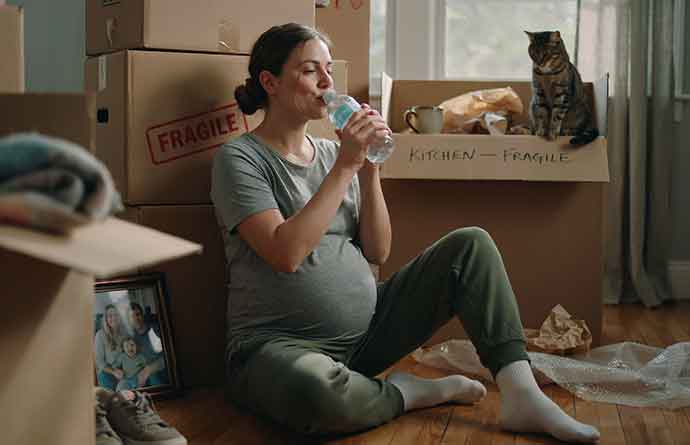
Dehydration, heat, and exhaustion
Moving day can often mean missed meals, too much coffee, not enough water, and hours of standing.
Pregnancy already increases the need to pace yourself. Dehydration can worsen headaches, dizziness, constipation, Braxton Hicks contractions, and general fatigue.
Keep water, snacks, and somewhere to sit available in both homes. Do not pack all the food, cups, and chairs too early.
Cleaning products, paint, and renovation dust
A move often involves deep cleaning, painting, sanding, new flooring, pest treatment, or minor renovation.
The CDC warns that common renovation activities such as sanding, cutting, and replacing windows can create hazardous lead dust in older homes, and says children and pregnant women should be kept away from homes undergoing renovation or activities that disturb old paint.
See the CDC advice on lead in paint.
ACOG also advises reducing prenatal exposure to toxic environmental agents where possible. You can read its guidance on toxic environmental agents in pregnancy.
If the home is older, do not sand, strip paint, or clean renovation dust while pregnant.
Use qualified contractors where lead, asbestos, mold, or major works may be involved.
For normal cleaning, use ventilation, gloves, and milder products, and avoid mixing chemicals.
You may also like to read: Is Hiring Professional Packers Worth It? The more help you have moving, the easier it will be. Packing is arguably the worst part of moving home, so in this guide, we find out if hiring professional packers is worth the cost.
When to Speak to a Doctor or Midwife Before Moving
A pregnant woman should speak to her midwife, doctor, or OB-GYN before moving if any of the following apply:
- previous miscarriage or preterm birth
- twins or multiples
- placenta previa or placental concerns
- high blood pressure or preeclampsia risk
- gestational diabetes with complications
- bleeding, contractions, or leaking fluid
- severe pelvic girdle pain or back pain
- cervical shortening or cerclage
- anemia, dizziness, or fainting
- doctor-advised bed rest or restricted activity
- long-distance move close to the due date
- move to a new healthcare area late in pregnancy
Warning Signs to Stop and Get Medical Advice
During packing, cleaning, or moving day, stop immediately and contact your healthcare provider if there is:
- bleeding
- leaking fluid
- regular contractions or strong cramping
- chest pain or shortness of breath
- dizziness or fainting
- severe headache
- swelling of the face or hands
- calf pain or one-sided leg swelling
- reduced baby movement
- severe abdominal pain
- unusual back pressure or pelvic pressure
Stop, sit down, drink water if appropriate, and get medical advice.
You may also like to read: How to Find a New Doctor after Moving Home. In this guide, we share tips for finding the right doctor when moving to a new area.
How to Make Moving Safer During Pregnancy
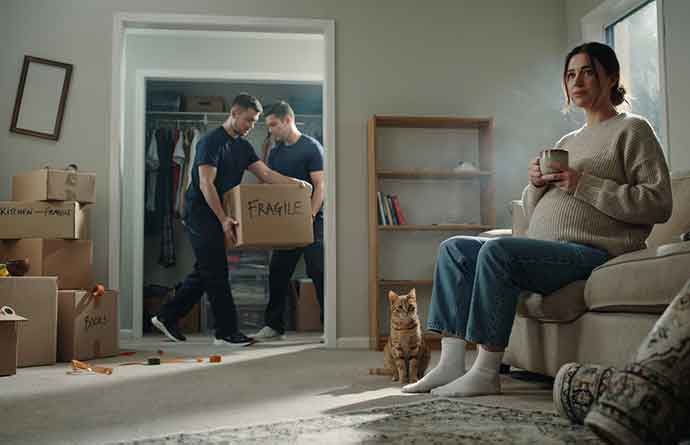
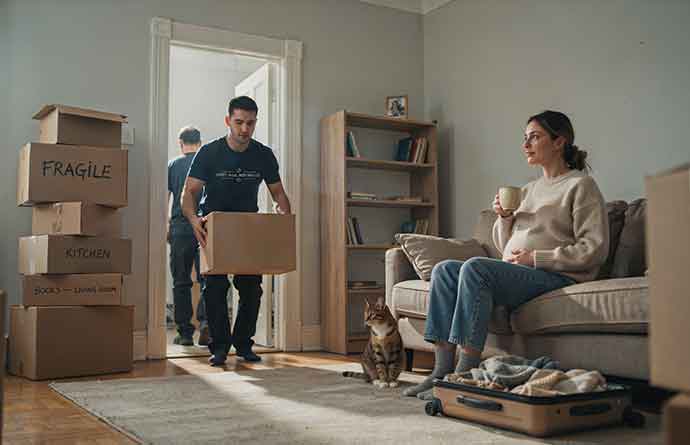
The safest move is for the pregnant woman to do less physical work than she thinks she should.
Hire movers
Professional movers are a necessity. If the full packing service is too expensive, pay for the heavy part: loading, furniture, appliances, beds, wardrobes, sofas, and boxes.
Tell the movers in advance that someone in the home is pregnant.
Ask them to keep walkways clear and to place essential furniture first: bed, sofa, cot, changing area, and kitchen basics.
Pack earlier than you think necessary
Pregnancy makes last-minute packing harder.
Start with items you rarely use: books, seasonal clothes, decorations, spare bedding, paperwork, and storage cupboards.
Leave the most often used items until the end and pack a separate first 72 hours kit.
That kit should include:
- maternity notes or medical records
- medications and pregnancy vitamins
- phone charger
- comfortable clothes
- toiletries
- snacks and a water bottle
- pillows
- basic kitchen items
- towels
- toilet paper
- cleaning wipes
- hospital bag if late in pregnancy
- baby essentials if moving near the due date
Use small boxes
Use smaller boxes and label them clearly. A pregnant woman may still move small, light items if her doctor has not restricted activity, but she should avoid repeated lifting and carrying.
A good test is that if a box changes your breathing, posture, or balance, it is too heavy.
Keep floors clear
Create one clear walking route in each room. Do not leave boxes on stairs, in hallways, or beside the bed.
Do not climb
No ladders. No chairs. No reaching high cupboards with both arms overhead. No balancing on steps to remove curtains or light fittings.
Let someone else do anything above shoulder height.
Avoid deep cleaning
Pregnant women often want to clean and prepare the new home. The instinct is only natural, but deep cleaning can involve fumes, bending, kneeling, scrubbing, and exhaustion.
Delegate oven cleaning, bathroom descaling, carpet cleaning, mold treatment, and anything involving strong chemicals.
If cleaning must be done, keep windows open, wear gloves, take breaks, and use mild products.
Plan food properly
Moving day food is usually whatever you can grab quickly, but pregnancy needs better food planning.
Prepare easy food in advance: sandwiches, fruit, yoghurt, nuts, crackers, soup, pasta, boiled eggs, smoothies or whatever feels manageable.
Keep snacks in a bag that does not go into the moving van.
Plan sleeping arrangements
Do not pack the bed too early, and do not leave the bedroom until last at the new place.
The pregnant woman needs somewhere to rest before the house is perfect.
Setting up a safe and comfortable bedroom is a priority.
Reduce decision fatigue
A pregnant woman should not answer 300 questions on moving day. So make things easy for the movers by labelling the boxes by room and priority:
- Kitchen — open today
- Bedroom — open today
- Baby — open first week
- Books — not urgent
- Storage — not urgent
You may also like to read: Hiring Movers for the First Time. From deciding what type of help you need to costs, to choosing a good mover, to avoiding scams, this guide is invaluable if you are thinking of hiring movers.
Moving by Trimester
First trimester
During the first trimester, there may be no bump yet, but nausea, vomiting, fatigue, dizziness, and smell sensitivity can be intense.
It is best to keep tasks short, avoid chemical smells, do not skip meals, and do not assume early pregnancy means unlimited energy.
Second trimester
For many women, the second trimester is the easiest time to move. Energy may improve, nausea may reduce, and the bump may not yet make movement too difficult.
Use this time for planning, decluttering, paperwork, packing non-essentials, and arranging professional help. Do not waste the better weeks and then leave the move until week 36.
Third trimester
The third trimester is when moving becomes harder.
Balance, stamina, sleep, and comfort are usually affected. There is also the risk that the baby arrives early.
Avoid lifting, avoid long days, keep hospital bags to hand, know the nearest maternity unit, and make sure the bed, bathroom, baby sleep space, and kitchen basics are ready first.
If moving after 36 weeks, act as though the baby could arrive at any moment.
You may also like to read: Moving During the School Year. If you have older children as well, then you will find the tips about moving during the school year useful.
Moving Long-distance While Pregnant
A long-distance move needs extra planning because it may affect healthcare, travel comfort, and emergency access.
Before moving:
- Request copies of maternity records
- Register with a new doctor, midwife, or OB-GYN as early as possible
- Check the nearest hospital or birth center
- Ask whether your insurance or healthcare coverage changes
- Plan rest stops if driving
- Avoid sitting still for long periods
- Keep maternity notes, medication, and hospital bag in the car, not the moving truck
If flying, check airline rules and medical advice as some airlines restrict travel late in pregnancy or require medical letters.
You may also like to read: How to Change Health Insurance When Moving Out of State. Discover all you need to know about health insurance when moving out of state.
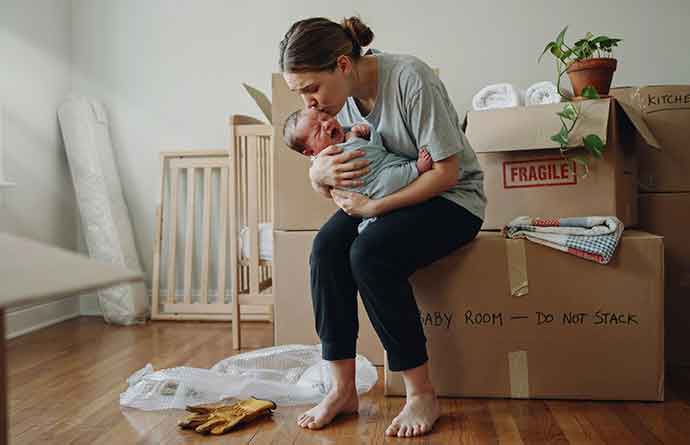
Moving After the Baby
If you delay the move until after the birth, then recovery is the main issue.
After a natural birth, you may still have bleeding, pelvic floor weakness, stitches, soreness, and fatigue.
After a C-section, lifting restrictions are more important. The Mayo Clinic advises avoiding lifting more than 10 to 15 pounds in the first couple of weeks.
That means a post-birth move should be planned around the mother doing none of the physical work.
The essentials after birth are:
- somewhere safe for the baby to sleep
- feeding supplies
- nappies and wipes
- clean bathroom
- easy food
- laundry access
- pain relief approved by your healthcare provider
- a comfortable place to sit and feed
- clear walking paths at night
Everything else can wait.
What to Prepare Before Moving into the New Home
Before the pregnant woman spends long hours in the new home, check:
- heating and cooling
- hot water
- safe stairs and handrails
- working smoke and carbon monoxide alarms
- clean bathroom
- mold or damp
- peeling paint in older homes
- strong chemical smells
- pest treatment history
- secure windows and doors
- nearest pharmacy, GP, midwife, OB-GYN, or hospital
- parking and access for movers
- space for baby furniture
If the property needs renovation, do the most important jobs first: Unsafe flooring, damp, heating, and sleeping arrangements are the priority.
You may also like to read: How to Baby Proof a New Home. In this guide, we explain, room by room, how to baby-proof your new home.
The Emotional Side of Moving While Pregnant
Pregnancy can make a house move feel even more emotional than usual.
Moving home is not just changing address. It may mean changing the place where you imagined bringing the baby home, leaving neighbours, changing schools for older children, or moving away from family support.
To make it easier:
- Keep one familiar corner set up quickly
- Unpack the bedroom before decorative items
- Take photos of the old home if it feels emotional
- Keep routines where possible
- Accept that the new home may not feel like home straight away
- Avoid hosting visitors too soon
- Ask for specific help, not vague help
You may also like to read: Moving Home as a Single Parent. Moving home is challenging enough, but moving on your own with children is a whole new ball game. This guide offers some invaluable tips to survive a home move as a single parent.
Checklist for Moving Home Whilst Pregnant
Four to eight weeks before moving
- Book movers.
- Declutter slowly.
- Ask your doctor or midwife about physical limits.
- Gather medical records. Create a folder for pregnancy notes, moving documents, and important contacts.
- Start packing non-essential items.
Two to four weeks before moving
- Confirm utilities.
- Arrange childcare or pet care for moving day.
- Pack a hospital bag if in the third trimester.
- Prepare the first 72-hour box.
- Arrange cleaning help.
- Make sure the new home is safe and ventilated.
Week of the move
- Pack in short sessions.
- Keep meals simple.
- Keep water available.
- Sleep as much as possible.
- Confirm who is lifting, who is driving, and who is managing movers.
Moving day
The pregnant woman should dress comfortably, wear supportive shoes, keep her phone charged, eat regularly, and take regular breaks.
She should not lift furniture, carry heavy boxes, climb, clean with strong chemicals, or manage everything alone.
First week in the new home
- Unpack the essentials first.
- Set up the bedroom, bathroom, kitchen basics, and the baby area.
- Leave books, decorations, storage boxes, and non-urgent rooms.
- The goal is safety and rest.
You may also like to read: Dido the Dragon Moves Home. If you have younger children, then they will love this book about a dragon and his family moving home. It will help them understand the changes that are happening and also has some useful tips to help you guide your children through the moving process.
Good luck with your home move, and be sure to visit our home moving blog, which is packed with guides to make every aspect of your move easier, cheaper, and safer.
Also Read






Share your thoughts by leaving a comment