California is like Marmite; you either love it or hate it.
It has beaches, mountains, world-class universities, huge job markets, great food, cultural diversity, and weather that makes much of the country jealous.
But it also has some of the highest housing costs in the United States, serious traffic, wildfire risk, high taxes, and some eye-watering everyday expenses.
So, is moving to California a good idea?
It depends on your income, your lifestyle, and your reason for moving. California can be an incredible place to live if you move to the right city with the right budget. It can also be a financial nightmare if you have not planned thoroughly.
Pros and Cons of Living in California
Mount Shasta, CA
Pros of moving to California
California has robust job markets, especially in technology, entertainment, healthcare, biotech, education, logistics, agriculture, tourism, and government.
The state also has some of the best public universities in the country, a massive community college system, and good private colleges.
The lifestyle is another major draw. You can live near the ocean, in wine country, in a mountain town, in a desert community, in a dense city, or in a quieter suburb. Outdoor recreation is part of everyday life for many residents.
California is also one of the most culturally diverse states in America. Food, language, music, art, and community life reflect that. For many people, this is one of the biggest quality-of-life benefits.
Cons of moving to California
Housing is the biggest downside. Whether you rent or buy, California is expensive. Even affordable California cities are often expensive compared with the national average.
Taxes are another complaint, especially for higher earners. Gas, insurance, utilities, groceries, childcare, and services can also be costly.
Then there are other issues too: traffic, parking, wildfire smoke, drought, earthquake risk, homelessness in some urban areas, a tough housing market, and it is where a good salary does not always mean an easy life.
You may also like to read: Moving to Sacramento, CA. If you are thinking of moving to the State Capital, then this guide looks in more detail at living in Sacramento.
How Much do Movers Cost?
Save up to 40% on your upcoming move and get a quote from reputable moving experts.
The cost of living in California is high, but it is high in different ways, depending upon where you choose to settle.
San Francisco, San Jose, parts of Los Angeles, Orange County, Santa Barbara, and coastal San Diego are expensive in different ways from inland cities like Fresno, Bakersfield, Modesto, Stockton, or parts of the Inland Empire.
Housing is the main reason. If you are thinking of moving to California, think less about “California prices” and more about the exact metro area, commute, school district, and housing type.
Housing costs
California’s average home value is around the high $700,000s, but it varies significantly city by city:
In San Jose and San Francisco, typical home values can be well above $1.3 million.
In San Diego, they are around the $1 million mark.
In Los Angeles, they are close to $950,000.
In Sacramento, the average is closer to the high $400,000s.
Fresno is much lower by California standards, around the high $300,000s to low $400,000s.
Rental costs also vary by city:
San Francisco and San Jose are extremely expensive.
San Diego is also costly.
Los Angeles is expensive but more varied because of its size.
Sacramento and Fresno are cheaper, although not cheap compared with many other U.S. cities.
Everyday expenses
It is not just housing that is expensive, expect higher prices for:
Gas and car insurance
Utilities in hot inland areas
Groceries
Childcare
Restaurants and services
Parking
State income taxes
Home insurance in wildfire-risk areas
One thing people underestimate is how much geography affects your budget. Living 15 miles from the coast can change the climate, rent, commute, and utility bill. Living 30 miles from your workplace can turn into a daily quality-of-life problem.
You may also like to read: How to Create a Moving Budget. In this guide, we suggest all the things to take into consideration when making a budget for your move.
California City Comparison
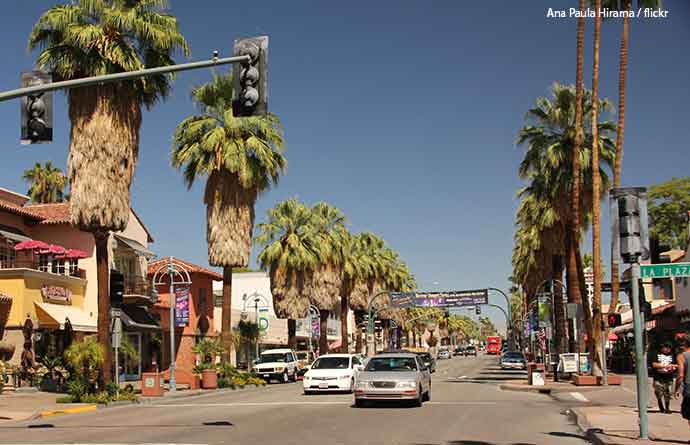
Palm Springs
Here is a comparison of major California cities for people thinking about moving.
City
Best for
Main advantages
Main drawbacks
Cost level
San Francisco
Tech workers, urban professionals, people who want a dense city
High salaries, walkability, culture, transit, access to Bay Area jobs
Very high rent, expensive homes, visible homelessness, high property crime in some areas
Very high
San Jose
Tech workers, engineers, families with high incomes
Strong job market, suburban feel, access to Silicon Valley
Extremely expensive housing, car dependence, and less nightlife than San Francisco
Very high
Los Angeles
Entertainment, media, creative work, entrepreneurs, people who want variety
Huge economy, beaches, culture, food, neighborhoods for every lifestyle
Traffic, sprawl, high housing costs, and safety vary by neighborhood
Families needing more space, commuters, and logistics workers
More house for the money, growing economy
Heat, long commutes, air quality, car dependence
Medium-high
You may also like to read: Moving to San Francisco. This is a comprehensive guide to living in SF, which will help you decide if SF is right for you.
Best Places to Live in California
Old Town, San Diego
Best for tech workers
San Jose, Mountain View, Sunnyvale, Palo Alto, Santa Clara, and San Francisco are the obvious choices. These areas are close to Silicon Valley and the Bay Area.
The downside is cost. A high salary can disappear quickly if you are paying Bay Area rent, childcare, and taxes. Remote workers may get better value by living in Sacramento, San Diego, parts of the Central Coast, or even inland communities if they do not need to commute often.
Best for families
Irvine, San Ramon, Pleasanton, Torrance, Thousand Oaks, Carlsbad, parts of San Diego County, parts of Sacramento suburbs, and some Orange County cities are popular with families.
Families’ top priorities are usually schools, safety, parks, commute, and housing size. In California, this becomes a balancing act. The best school districts are often where expensive housing is.
Best for young professionals
Los Angeles, San Diego, San Francisco, Oakland, and Long Beach are good options if you want restaurants, nightlife, dating, networking, and career opportunities.
San Francisco is best for tech and startups. Los Angeles is better for entertainment, media, design, fashion, and a broader creative economy. San Diego is better if you want a calmer lifestyle with beaches and outdoor activities.
Best for retirees
Palm Springs, Santa Barbara, San Diego County, parts of Orange County, the Central Coast, and some Sacramento-area suburbs are popular with retirees.
But for retirees, it is not only a lifestyle choice. It is taxes, healthcare access, insurance, heat, wildfire risk, and proximity to family. Coastal California is beautiful but expensive. Desert cities can be more affordable, but summers are very hot.
Best for people who want affordability
Fresno, Bakersfield, Stockton, Modesto, Riverside, San Bernardino, Lancaster, Palmdale, and parts of Sacramento are usually more affordable than coastal California.
The downsides include heat, air quality, commute time, or fewer high-paying job options. These cities can make sense if you work remotely, have a stable local job, or want more space for the money.
Best for outdoor lovers
San Diego, Santa Cruz, Marin County, Bishop, Mammoth Lakes, Truckee, Lake Tahoe communities, Santa Barbara, and the Central Coast are hard to beat.
California is exceptional for outdoor life. Surfing, hiking, skiing, cycling, climbing, camping, and national parks are all within reach depending on where you live.
You may also like to read: Moving to a New City Alone. In this guide, we look at the challenges and the solutions of moving to a new city on your own.
Crime and Safety in California
Oakland, CA
Crime in California varies by city, neighborhood, and sometimes even the block.
Some California communities are among the safest places in the country. Others experience property crime, car break-ins, theft, homelessness-related disorder, or violent crime.
A common mistake is judging an entire city by its reputation.
Los Angeles has very safe neighborhoods and neighborhoods where you need to be more careful.
Oakland has beautiful residential areas and areas with serious crime problems.
San Francisco has wealthy, scenic neighborhoods but also well-known issues with property crime and public disorder in certain districts.
Your safety checklist should include:
Check crime maps by neighborhood, not only city averages
Visit at night before signing a lease
Ask about car break-ins and package theft
Check parking security
Look at school-area safety if you have children
Consider wildfire evacuation routes in suburban and mountain areas
Talk to locals, not only real estate agents
California’s overall crime trends have improved recently, but safety remains very local. Do not move based only on a city name.
Healthcare in California
Saint Agnes Medical Center Fresno
California has good healthcare, especially in major metro areas. Los Angeles, San Francisco, San Diego, Sacramento and the Bay Area have major hospitals, specialists, children’s hospitals, research institutions and large medical networks.
The state also offers several health insurance options through Covered California, employer plans, Medi-Cal for eligible residents, and private insurance. Access is usually better in large urban areas than in rural or remote regions.
The main downsides are cost, appointment waiting times, and uneven access. In some places, especially outside major metros, it can be harder to find specialists or doctors accepting new patients. Premiums, deductibles, and out-of-pocket costs can also be high, depending on your plan.
If healthcare is a major reason for your move, choose the city around the medical network you need. Do not assume every city has the same level of care.
The quality of education varies across California.
At the higher education level, it is one of the best states in the country. The University of California system, the California State University system, and California Community Colleges give residents access to a large and respected public higher education network. The community college system is especially important for transfer students, career training, and affordable education.
K-12 education depends on district, neighborhood, and funding. Some California public schools are excellent and highly competitive. Others struggle with class sizes, performance gaps, and staffing challenges.
For families moving to California, school research should happen before choosing a home, not after. In many areas, school boundaries can change the price of a home or rent dramatically.
Good questions to ask before moving:
Which school district serves the exact address?
What are the school ratings, test scores, and graduation rates?
Are there charter, magnet, or private school options?
How long is the commute to school?
Are after-school programs available?
Is the neighborhood family-friendly outside school hours?
California can be a great state for education, but families need to choose the location wisely.
Weather in California
Climate change is a serious consideration
California’s weather is one of the main reasons people move there. But the weather is not the same for the whole state.
Coastal California usually has mild temperatures, cooler evenings, and less extreme heat.
San Diego, Santa Barbara, and parts of the Central Coast have some of the most comfortable weather in the country.
Los Angeles has mild winters and warm summers.
Inland parts of LA County can get much hotter than coastal neighborhoods.
The Bay Area has microclimates. San Francisco can be cool and foggy while nearby inland cities are hot and sunny.
Sacramento, Fresno, and the Central Valley have hot summers and cooler winters.
Desert cities like Palm Springs have pleasant winters but very hot summers.
Mountain areas have snow, wildfire risk, and seasonal access issues.
Climate change considerations
Anyone moving to California should think seriously about climate risk.
The biggest climate-related issues are:
Wildfires
Smoke and air quality
Extreme heat
Drought
Flooding from intense storms
Sea-level rise in coastal areas
Insurance availability and cost
Wildfire risk is important even if the home itself is not in a forest. Smoke can travel long distances and affect air quality in cities far from the fire.
Home insurance is another major issue. Some homeowners in wildfire-prone areas face higher premiums or difficulty finding coverage. If you are buying a home near hills, canyons, forests, or dry open space, insurance should be researched before you fall in love with the property.
For renters, climate risk still matters. Ask about air conditioning, insulation, wildfire smoke, evacuation routes, flood zones, and whether the building stays comfortable in heat waves.
You may also like to read: Climate Migration. In this guide, we suggest things to take into consideration and the best places to live to avoid the effects of climate change.
Jobs and Economy
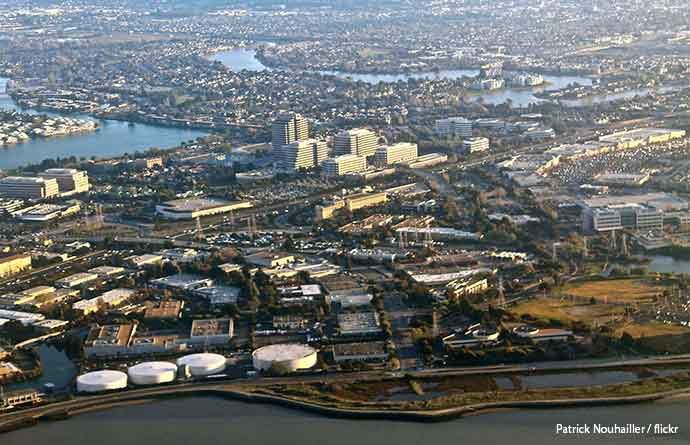
Silicon Valley
California has one of the largest economies in the world. The state is a major center for technology, entertainment, agriculture, trade, logistics, tourism, education, healthcare, biotech, and clean energy.
The best job markets depend on your field.
Tech is strongest in the Bay Area, Silicon Valley, and parts of Los Angeles, San Diego, and Irvine.
Entertainment and media are centered in Los Angeles.
Biotech is dominant in San Diego and the Bay Area.
Government jobs are concentrated in Sacramento.
Agriculture and food production are important in the Central Valley.
Logistics is centered in the Inland Empire and port areas.
The problem is that salaries vary a lot. A job offer that sounds excellent in another state may be only average in coastal California.
Before moving, compare the salary with rent, taxes, commute costs, and childcare, not just the headline number.
You may also like to read: The Pros and Cons of Moving for a Job. In this guide, we ask whether it is worth relocating for work and what the pros and cons are.
Transportation and Traffic
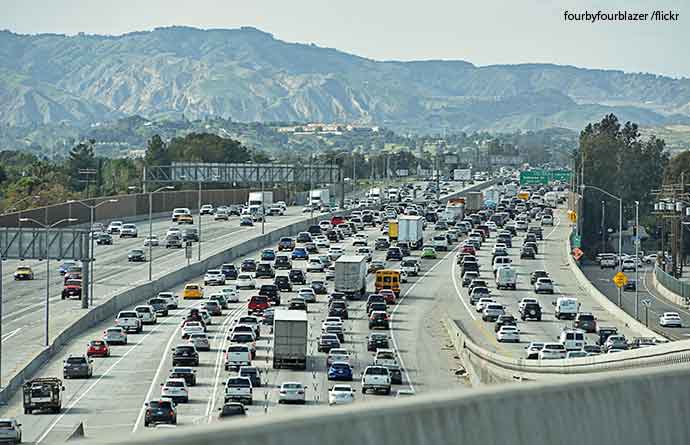
San Fernando Freeway
California is a car-centric state. San Francisco is the major exception, and even there, many people still own cars depending on their neighborhood and commute.
Los Angeles traffic is famous for a reason. San Diego, the Bay Area, Orange County, and Sacramento also have congestion. The Inland Empire can involve long commutes if you work closer to the coast.
Public transportation exists, but coverage depends on where you live. San Francisco and parts of the Bay Area have better transit. Los Angeles has improved rail and bus options, but the region is still very spread out. In most suburbs, a car is still necessary.
When choosing where to live, do not only ask how far the home is from work. Ask how long the commute actually takes during rush hour.
Taxes in California
California has high state income taxes, especially for higher earners. Sales tax is also high in many cities once local taxes are added.
Property tax rates are not necessarily high by percentage, but because home prices are so high, the actual annual tax bill can still be large.
For people moving from states with no income tax, California feels expensive. This is especially true for high-income professionals, business owners, and retirees with taxable income.
Before moving, estimate your after-tax income. Do not compare gross salary only.
Buying vs renting in California
Fresno Art Park
For many moving here, renting first is the smarter move.
California neighborhoods can feel very different in person than they look online. Traffic patterns, parking, school boundaries, microclimates, and noise can all change your experience.
Renting for a year gives you time to learn:
Which neighborhoods fit your lifestyle
Where you actually work or spend time
How traffic affects your daily routine
Whether you prefer coastal, inland, urban, or suburban life
How much housing can you comfortably afford
Buying immediately can work if you know the area well, but California is an expensive place to make a location mistake.
California is a good fit for people who value opportunity, climate, diversity, culture, nature, and career growth enough to accept higher costs.
It may be a good choice if:
You have a job offer with a salary adjusted for California costs
You work in tech, healthcare, entertainment, biotech, education, or government
You want access to top universities and major employers
You love outdoor living
You are comfortable with diversity and fast-changing cities
You can handle traffic and high housing costs
Who should think twice?
California may not be the best fit if:
You are moving without a job
You want to buy a large home on an average salary
You dislike traffic and dense urban areas
You are very sensitive to taxes
You need low-cost childcare
You want predictable insurance costs
You are uncomfortable with wildfire, earthquake, or climate risk
You expect beach living to be affordable
California is not impossible, but it is hard if your budget is unrealistic.
You may also like to read: Moving to San Diego, CA. If San Diego is on your wish list, then this comprehensive guide to living in San Diego will be invaluable.
FAQ
Kearsarge Lakes
Is California a good place to live?
Yes, California can be a great place to live if you can afford the housing costs and choose the right city for your lifestyle. It offers robust job markets, good weather, cultural diversity, major universities, and access to beaches, mountains, and national parks.
What are the biggest disadvantages of living in California?
The biggest disadvantages are high housing costs, high taxes, traffic, wildfire risk, expensive insurance in some areas, and safety, depending on the city or neighborhood.
What is the most affordable major city in California?
Among larger cities, Fresno and Bakersfield are usually more affordable than coastal cities. Sacramento is also more affordable than San Francisco, San Jose, Los Angeles, or San Diego, while still offering a large-city economy.
Is it better to live in Northern or Southern California?
Northern California is better for tech, cooler coastal weather, wine country, and access to the Bay Area. Southern California is better for beaches, entertainment, warmer weather, lifestyle variety, and industries like film, tourism, biotech, and logistics.
Should I rent before buying in California?
For most people moving here, yes. Renting first gives you time to understand neighborhoods, traffic, schools, microclimates, and real housing costs before committing to a very expensive purchase.
What should I know before moving to California?
Know your real after-tax income, housing budget, commute, school district, insurance situation, and climate risk. California can be a great move, but it is not a state where you should come without a robust financial plan.
You may also like to read: How to Decide Where to Move. In this guide, we suggest things to take into consideration when choosing where to live next.
Is moving to California a good idea?
Moving to California can be one of the best decisions you make, but only if you choose the right part of the state for your income and lifestyle.
The mistake is thinking of California as one place. San Francisco, Fresno, San Diego, Sacramento, Los Angeles, Irvine, and Palm Springs are completely different living experiences. Cost, weather, safety, schools, job options, and daily life can change dramatically from one city to another.
If you are moving for career growth, education, weather, culture, or outdoor lifestyle, California still has a lot to offer.
If you are moving mainly for affordability, it will be harder to justify unless you choose an inland city or already have a good income.
The best advice is: run the numbers, visit the neighborhoods, test the commute, and check housing carefully before you move. California can be amazing, but it rewards preparation more than optimism.
Good luck with your move, and be sure to visit our home moving blog, which is packed with guides to make every aspect of your move easier, cheaper, and safer.
*At MoveAdvisor we will connect you with a professional moving company. Please note that we may not be affiliated with
and you may be speaking with another licensed provider.
We use cookies to optimise your experience.Accept and close or Learn more
















Share your thoughts by leaving a comment