


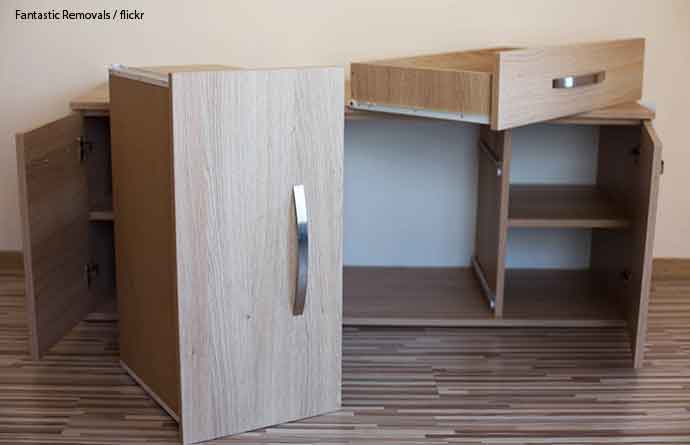
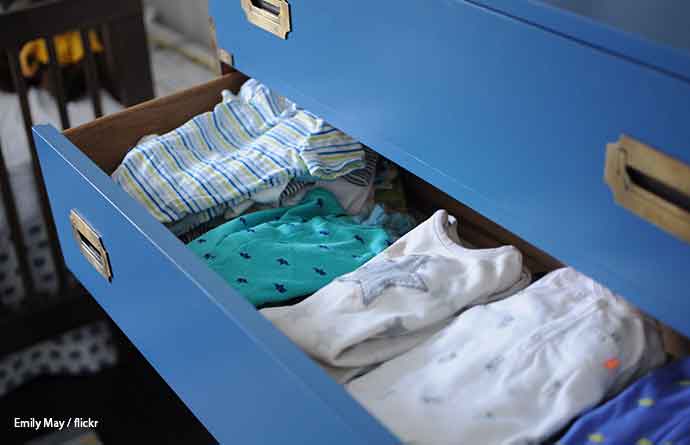
Can’t I just leave the clothes in the dresser and move the whole thing as it is?
It sounds like the ultimate moving hack. You save on boxes, you don’t have to unpack and fold everything on the other end, and you save precious time.
But is leaving drawers full during a move a genius shortcut or a fast track to broken furniture and a bad back?
It depends, is the short answer. Having moved numerous times, sometimes I leave them full, sometimes I don’t. How far you are moving, what type of furniture it is, how heavy the furniture is, and what the drawer contents are all matter.
So before you secure those drawers shut and call it a day, let’s look into the pros, cons, what the pros say, and how to decide what’s best for your specific move.
Moving with Drawers In vs. Out Compared
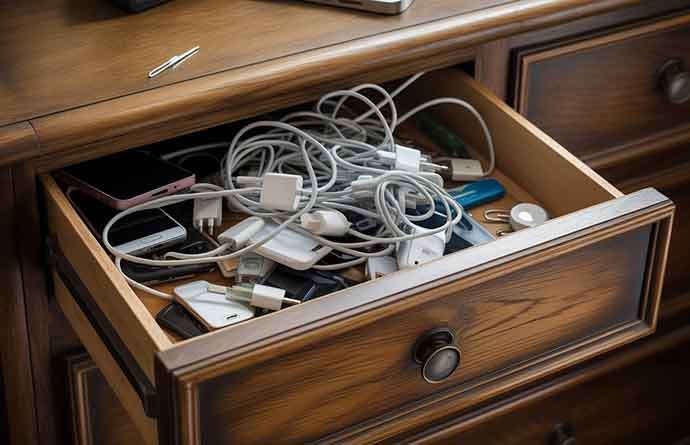
Most guides will give you two options: drawers in and drawers out. So here is a quick breakdown of how the two methods compare.
But life is never quite so black and white, so read on below for the 3rd, and my preferred, option.
| Factor | Leaving Drawers IN | Taking Drawers OUT |
| Packing Time | Fast (Zero packing required) | Slower (Requires boxing and labeling) |
| Furniture Weight | Very heavy and awkward to carry | Significantly lighter and easier to maneuver |
| Risk of Damage | Higher risk to drawer slides and frames | Lower risk to the furniture structure |
| Space Efficiency | Saves space in the moving truck | Takes up more physical space |
You may also like to read: How to Move a Dresser by Yourself. This is a step-by-step guide to moving a dresser without the help of professional movers.
Option 1. Leaving Drawers In
Leaving your drawers intact and filled is incredibly tempting. But while it saves you time on the front end, it comes with some risks.
The Pros:
- Massive Time Saver: You completely skip the packing and unpacking phase for a large number of items.
- Saves Box Space: You don’t need to buy, assemble, or tape extra cardboard boxes.
- Instant Setup: When you arrive at your new home, your drawer contents are already exactly where they belong.
The Cons:
- The Weight Penalty: A solid wood dresser is heavy on its own. Fill it with jeans, sweaters, and linens, and it can easily become too heavy to lift safely, especially up or down stairs.
- Structural Stress: Furniture isn’t designed to be tilted, bounced, and carried while carrying full weight. The extra load can warp the frame or break the drawer glides.
- The Avalanche Risk: If a drawer slips open during transit, it can shift the weight instantly, causing movers to drop the piece or damaging other items in the truck.
Packing Tips:
- Ensure that nothing can shift around inside the drawers. Add a layer of padding, ensuring that the drawer is not overfilled and cans till close fully.
- Close the drawers
- Use several pieces of masking tape to keep the drawers in place (do not use heavy-duty packing tape, as it may leave a sticky residue on the furniture surface and damage the wood finish)
- Wrap the entire furniture in moving blankets (the blankets will help keep the drawers in place)
- Use stretch wrap to secure the blankets in place.
Note also that some insurance policies will not cover furniture where items are left in the drawers, which will make the decision for you, so check carefully.
You may also like to read: 100 Packing Tips. No matter what you are packing, this guide explains how to pack it properly.
Option 2. Taking Drawers Out
This is the traditional route. You empty the drawers, pack the contents into boxes, and move the dresser with empty drawers secured in place or moved separately if it is a heavy dresser.
The Pros:
- Lightweight and Maneuverable: An empty dresser is infinitely easier to navigate around tight corners, narrow hallways, and steep staircases.
- Protects the Furniture: Without the internal weight pulling against the frame, your furniture is much less likely to warp, crack, or suffer broken tracks.
- Movers Will Thank You: It significantly reduces the risk of injury for whoever is doing the heavy lifting.
The Cons:
- More Packing Supplies Needed: You will need more boxes, packing paper, and tape.
- Double the Work: You have to unpack everything, box it, move it, and then unbox and refold it at the new place.
Packing Tips:
- Take out a full drawer and put it on the ground;
- Remove some of its contents if the drawer is overfull. If there is any space inside the drawer, fill it with small soft items
- Place several sheets of packing paper over the items in the drawer;
- Wrap the drawer with stretch wrap so that the top open part of the furniture compartment is completely covered, and the items in the drawer are safely contained inside;
- Wrap the entire drawer in a moving blanket and use packing tape to keep the protective covering in place.
You may also like to read: Alternative Packing Materials. In this guide, we explain how to use items commonly found around the house instead of expensive packing materials.
Option 3. The Hybrid Approach
Want the best of both worlds? I tend to use the hybrid approach for local moves or when I know the truck will not be unloaded again until the final destination.
It is not such a good idea to do this for international or interstate moves, where the items will likely be unloaded from the original truck onto a second truck for the final delivery leg.
I would also not recommend this for particle board furniture; they are not designed to be moved, and the added stress of weight whilst being moved will nearly always result in a damaged unit.
In such cases, I always empty the drawer contents and box them.
But here is what I prefer to do:
1. Remove the drawers
2. Load the empty dresser frame into the moving truck first.
3. Reinsert the drawers into the frame and secure them closed with a moving blanket.
4. Once at the new house, remove the drawers again
5. Move the frame to the bedroom and simply slide the full drawers back in.
This keeps the weight manageable while eliminating the need to pack clothes into boxes.
You may also like to read: The Biggest Packing Mistakes. In this guide, we highlight the most common packing mistakes and how you can avoid them.




Share your thoughts by leaving a comment