There are only a few downsides to moving to Denver, so let’s get those out of the way:
Housing and rents are higher than the national average, and it is a competitive market.
Summers are becoming hotter and drier than in the past, meaning wildfire smoke and drought are becoming real seasonal/long-term concerns.
Commuting and traffic can be bad if you live far from work hubs; public transit exists, but car use is the most popular.
The high crime rate in some areas can also be a concern, so take the time to research before deciding which neighborhood to move to.
Cost of living
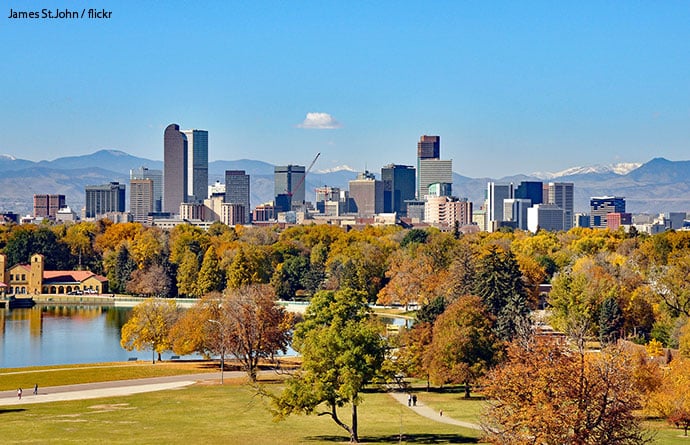
What price do you put on living in such a beautiful place?
Rent & housing
Recent rental averages vary by neighborhood, but Denver is above the national median.
ApartmentList and RentCafe report typical one-bedroom rents in the roughly $1,400–$1,900/month.
Single-family home prices and newer suburban developments often push median home prices well into the $600k–$700k range for the metro (and higher in popular neighborhoods).
Neighborhood prices vary widely.
Income & jobs
Median household and individual incomes in Denver are relatively high compared with many metros, driven by young professionals in tech, healthcare, and energy sectors.
Everyday costs
Groceries and utilities are slightly above U.S. averages, depending on the item.
Sales tax varies by municipality.
Use a cost-of-living comparison tool such as www.numbeo.com to compare your current hometown with Denver.
Denver is more expensive than many U.S. cities but typically cheaper than coastal tech hubs such as New York City or San Francisco.
You may also like to read: Why Move to Colorado? In this guide, we list the top 12 reasons why Colorado is a great place to live.
Career Opportunities and Industries
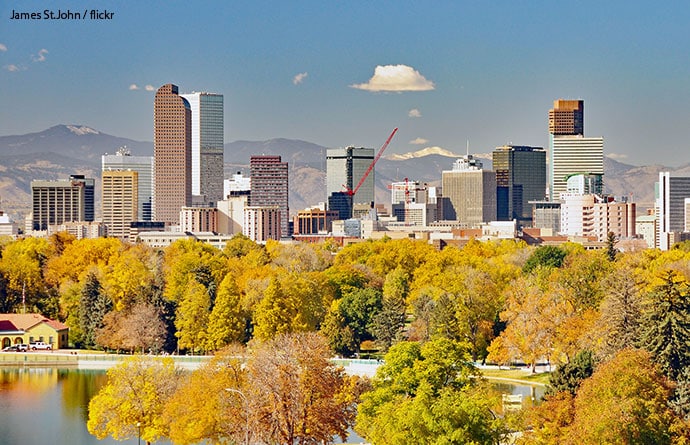
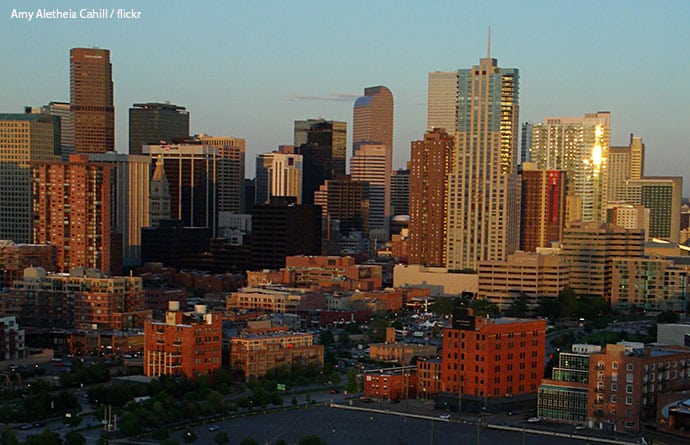
Down Town Denver
Denver’s economy is diverse and is growing in several fields:
Technology & startups: A rising tech hub with many mid-sized companies, remote opportunities, and a strong local ecosystem.
Aerospace & defense: Major employers and supply-chain firms operate in metro Denver. Healthcare & life sciences: Large hospital systems and biotech presence.
Energy & professional services: Traditional energy firms, renewables, plus consulting, and finance.
The city also attracts remote workers who value Denver’s lifestyle while working for employers elsewhere, which, whilst offering work flexibility, also adds to the housing demand.
You may also like to read: The Pros and Cons of Moving for Work. In this guide, we look at the pros and cons of moving to a new place for a job.
Best neighborhoods
Your choice of neighborhood hugely impacts cost, commute, and vibe.
For walkable urban life and nightlife
LoDo (Lower Downtown) / Union Station — historic core, restaurants, bars, very walkable, pricier condos.
For creatives, breweries, and dining
RiNo (River North Arts District) — art, breweries, new development; trendy and growing.
Boutique shopping & families
Cherry Creek — higher prices, boutique shopping, close to parks and good schools.
Family-friendly & parks
Washington Park (Wash Park) — leafy, big park, single-family homes, popular with families.
Value & lake access
Sloan’s Lake — lakeside recreation, new construction, but the market can be competitive.
New/Planned communities
Central Park (formerly Stapleton) — master-planned, family-oriented, nice parks, and newer housing.
Suburbs to consider if you want top schools or more space
Cherry Creek School District suburbs (e.g., Greenwood Village)
Parts of Douglas County
Boulder
You may also like to read: How to Choose the Best Neighborhood to Move to. In this guide, we suggest things to take into consideration when choosing which neighborhood would suit you best.
Schools
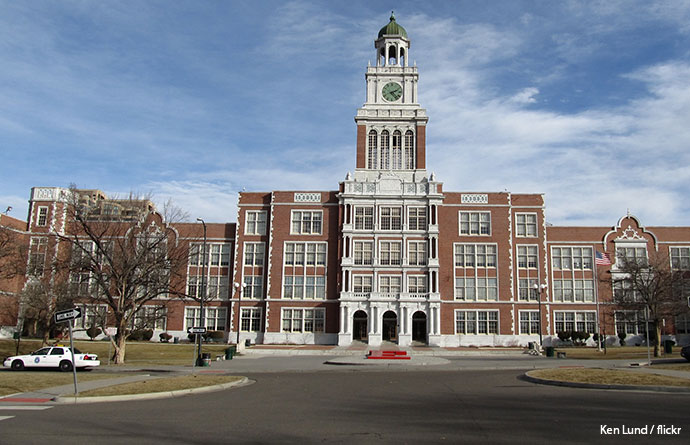
East High School, Denver
Denver has a wide range of school options: Denver Public Schools, strong charter networks (e.g., DSST), well-regarded suburban districts (Cherry Creek, Boulder, Douglas County), and private/independent schools.
Top public high school examples for metro Denver: Cherry Creek High School (Cherry Creek School District) and several DSST and magnet schools are frequently highly ranked.
Check GreatSchools and Niche for up-to-date ratings and the specific school boundary maps before you choose a neighborhood to move to.
In Denver, school quality often drives the neighborhood you will choose to live in. Research catchment boundaries, open enrollment policies, and charter lottery processes early if you have kids.
You may also like to read: Choosing a New School. In this guide, we suggest things to take into consideration when choosing a new school in a new area.
Climate
Type: Semi-arid continental / “high-plain” climate. Four seasons with low relative humidity. Elevation is ~5,280 ft (hence why Denver is known as the “Mile High City”), so sunshine is strong and days can be clear and bright.
Temperatures: Typically range from 22°F in winter to the high 80s°F in summer, although the mountain weather can be more variable. Snow is common in winter, but it often melts quickly in the city.
Air quality events: Summer wildfire smoke from nearby or regional fires can reduce air quality.
How Climate Change May Affect Denver
This is a crucial topic for anyone moving to Denver long-term.
Earlier snowmelt & water stress: Warming trends are shifting Colorado snowpack timing, causing earlier melt and lower late-summer flows. This will challenge the water supply for cities and agriculture. Denver Water and Colorado climate assessments highlight this as a major issue.
Increased drought & wildfire risk: Hotter, drier conditions increase drought frequency and wildfire severity. This leads to poorer air quality, and fires can threaten nearby forested areas.
Heat & public health: Heatwaves are projected to become more frequent and intense, which affects energy use, comfort, and vulnerable people such as the elderly or outdoor workers.
What the city is doing: Water utilities and city agencies actively plan adaptation measures such as reservoir management, conservation programs, and wildfire mitigation. But the long-term risks mean residents should consider water-wise landscaping, indoor air filtration for smoke events, and emergency preparedness.
You may also like to read: Climate Change and Moving Home. In this guide, we suggest the things to take into consideration with regard to climate change when choosing a place to live.
Transportation and Commuting
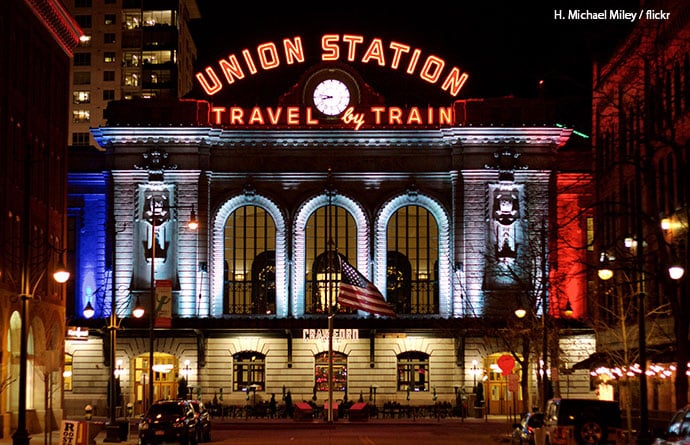
Union Station, Denver
Driving: Most Denver households use cars, so expect congestion on major arteries during peak hours.
Public transit: RTD light rail and buses serve many routes; central neighborhoods and the Denver Tech Center/airport are connected by rail. Transit coverage is improving, but car ownership remains common.
Cycling & walkability: Some neighborhoods (LoDo, Capitol Hill, Wash Park) are highly walkable/bikeable; bike infrastructure is growing.
Discover more about your commuting options in Denver at www.codot.gov
Health Care and Safety
Healthcare: Metro Denver has major hospitals and specialty centers.
Safety: Like many cities, crime rates vary dramatically by neighborhood. Car and home break-ins are common in some areas, so research local data, visit at different times of the day, and talk to residents.
You can view an interactive crime map for the city and county of Denver at www.denvergov.org
You may also like to read: Moving to a New City Alone. In this guide, we look at the challenges and solutions of moving to a new city on your own.
Lifestyle, Recreation, and Culture
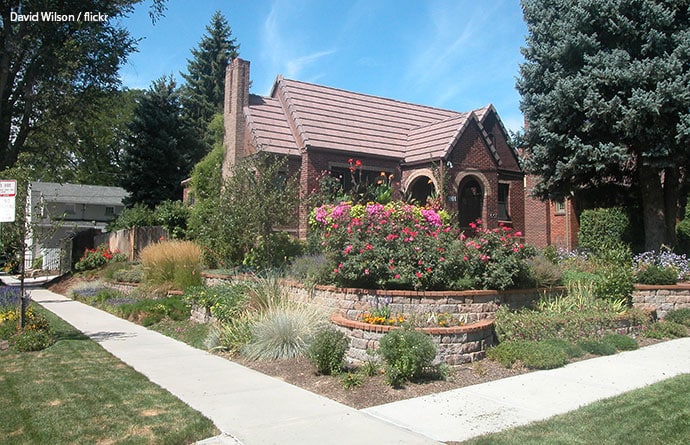
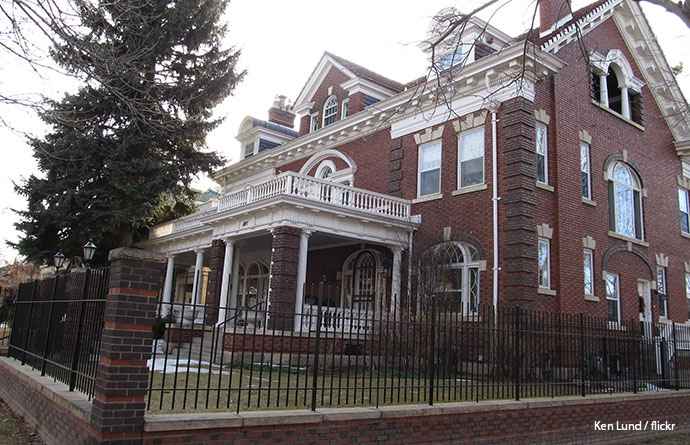
Humboldt Street Historic District
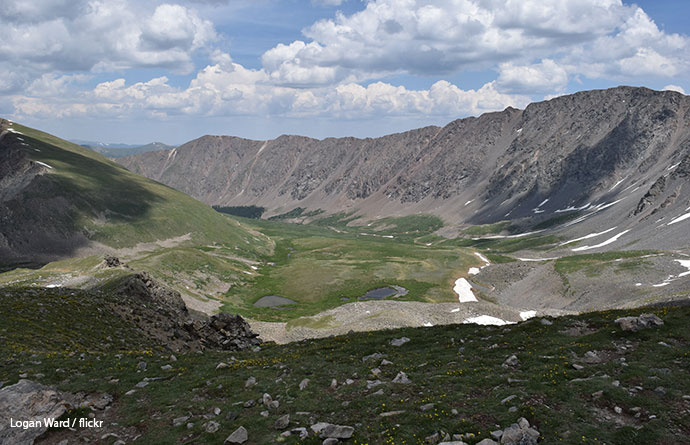
Outdoor access: hiking, climbing, mountain biking, and skiing are all close by. An outdoor lifestyle is why many people move here.
Food & arts: There’s a dynamic craft beer scene, with farm-to-table restaurants, arts districts (RiNo), and music venues (Red Rocks is an iconic nearby amphitheater).
You may also like to read: Moving Home After Retirement. In this guide, we look at the pros and cons of moving to a new place after you retire.
Practical Moving Tips
Budget for housing: Start your home searches 30–90 days before relocating, as property moves fast in desirable neighborhoods. Use local rental sites and broker listings to find the latest offers.
Visit neighborhoods in person: Spend a weekend here, walk the streets, test commute times, and check noise levels as neighborhood vibes vary a lot block-to-block.
Check school boundaries early if you have kids — they determine eligibility and can affect moves.
Prepare for altitude: Hydrate, plan easy first hikes, and expect slightly increased sun exposure.
Smoke/air quality plan: If you’re sensitive to smoke, budget for an air purifier and consider neighborhoods with good HVAC systems.
You may also like to read: How to Choose a Good Mover. Choosing a good moving company to do all the hard work for you will get you off to the best start in your new life in Denver. In this guide, we take you step by step through the process of choosing a good mover.
Quick Comparison — Denver vs Other Popular Moves
Vs SF/NYC: Generally cheaper housing than those coastal hubs (but catching up), more outdoor access, less public transit coverage.
Vs Austin/Portland: Similar creative/tech vibe; Denver has more winter and mountain recreation, but also more winter weather to plan for.
FAQ About Living in Denver
Q: Is Denver expensive to live in? A: Yes — especially housing and rent in popular neighborhoods. Expect to pay above the U.S. median for housing, though everyday goods run near or slightly above average.
Q: What neighborhoods are best for families? A: Washington Park, Cherry Creek, Central Park (Stapleton area), and some suburbs (Cherry Creek School District, Douglas County) are family favorites due to parks and schools.
Q: How bad is traffic / public transit? A: Traffic can be heavy during commutes; RTD rail and buses serve many corridors, but many residents still drive. Consider living closer to work or near a rail line to reduce commute stress.
Q: Will climate change make Denver unlivable? A: Not in the near term, but expect hotter summers, earlier snowmelt, increased drought, and more frequent wildfires. Planning and adaptation by utilities and residents are ongoing.
Our home moving blog is packed with guides on every aspect of moving home.
Should I Move to Denver?
Move if: you value outdoor access, a growing and diverse job market, and an active lifestyle.
Consider carefully if: you need inexpensive housing, rely on perfect air quality year-round, or can’t tolerate long commutes (unless you find the right neighborhood or suburb).
Climate plan: be proactive about water usage, wildfire and smoke preparedness, and heat mitigation when choosing a home.
Good luck with your move to Denver, and be sure to check out our home moving blog, which is packed with guides to make every aspect of your home move easier, cheaper, and safer.
Hello my friend! I wish to say that this post is amazing, great written and come with almost all significant infos.
I would like to see extra posts like this .
*At MoveAdvisor we will connect you with a professional moving company. Please note that we may not be affiliated with
and you may be speaking with another licensed provider.
We use cookies to optimise your experience.Accept and close or Learn more









Hello my friend! I wish to say that this post is amazing, great written and come with almost all significant infos.
I would like to see extra posts like this .