Whether you’re moving from a Mission District studio to a Painted Lady or leaving the fog behind for Austin, understanding how moving costs are calculated and what your move is likely to cost you is crucial when planning your relocation.
In this week’s home moving blog, we look at the average cost of a local move in San Francisco, a long-distance move out of San Fran, how those costs are calculated, and how you can safely reduce your moving costs.
Moving Locally in San Francisco
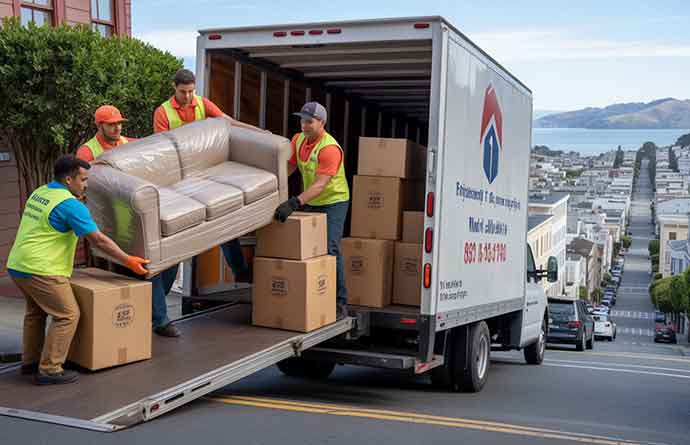
Local moves within the city or the immediate Bay Area are billed on an hourly basis. The standard hourly rates for a professional two-person crew range from $110 to $150 per hour.
Because of SF’s notorious traffic and difficult parking, most companies have a 3-hour minimum. Here’s a breakdown of what you might expect to pay based on home size:
Home Size
Estimated Hours
Average Cost Range
Studio / 1-Bedroom
3 – 5 Hours
$850 – $1,400
2-Bedroom Home
5 – 8 Hours
$1,500 – $2,300
3-Bedroom Home
8 – 12 Hours
$2,800 – $4,500
4+ Bedroom Home
12+ Hours
$4,800 – $7,500+
You may also like to read: The Complete Guide to Hiring Local Movers. In this guide, we take you through the process of picking a good local mover and highlight the red flags to watch out for.
How Much do Movers Cost?
Save up to 40% on your upcoming move and get a quote from reputable moving experts.
If you’re crossing state lines, your move cost is based on weight and distance. The average cost for an interstate move of about 1,000 miles (e.g., San Francisco to Denver) ranges from $3,600 to $18,500+.
Distance: Every mile costs, especially with current fuel surcharges.
Weight: Movers will weigh the truck before and after loading. Expect to pay roughly $0.70 to $0.95 per pound.
Estimated 2026 Interstate Moving Costs from San Francisco
Home Size
250 Miles
500 Miles
1,000 Miles
2,000+ Miles
Studio / 1BR
$1,800 – $3,200
$2,400 – $4,100
$3,600 – $5,800
$4,800 – $7,500
2 Bedroom
$3,500 – $5,800
$4,800 – $7,200
$6,500 – $9,500
$8,200 – $12,500
3 Bedroom
$5,500 – $8,200
$7,500 – $10,500
$9,800 – $13,500
$12,500 – $17,800
4+ Bedroom
$8,000 – $11,500
$10,200 – $14,800
$13,500 – $18,500
$17,500 – $25,000+
You may also like to read: Tips for Moving across Country. In this guide, we offer 20 tips to make your interstate move easier, cheaper, and safer.
Regulations and Licensing
Spending time doing your due diligence is time very well spent
Don’t let a rogue mover turn your moving day into a nightmare. Especially in California, oversight is stricter than ever to protect consumers. However, you still need to do your due diligence and ensure that any mover you are considering hiring is properly licensed and insured and complies with regulations.
Local and Intrastate (Within California)
All movers operating within California must be licensed by the Bureau of Household Goods and Services (BHGS).
The “Not to Exceed” Price: California law requires movers to provide a written estimate after a visual inspection. Movers must give you a “Not to Exceed” price, which is the maximum you can be charged unless you specifically request extra services later.
Check the Permit: Always verify a mover’s permit number on the BHGS website.
USDOT Number: Ensure the company has a valid USDOT number and an active operating authority.
Rights & Responsibilities: By law, interstate movers must provide you with the booklet “Your Rights and Responsibilities When You Move” before the contract is signed.
You may also like to read: How to Avoid Moving Scams. In this guide, we show you the red flags to watch out for so that you do not become a victim of a moving scam.
San Francisco’s Unique Challenges
Moving in SF isn’t like moving in the suburbs. You need to account for:
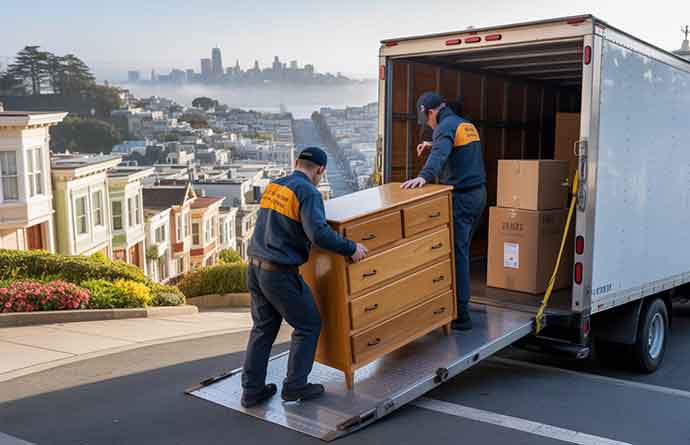
Parking Permits: Don’t expect to just double park. You often need to apply for a Temporary Sign (TOA) permit through the SFMTA at least 5 business days in advance to reserve curb space for the moving truck.
The “Hill” Surcharge: Some movers may charge a small premium or access fee if they have to navigate extreme inclines or carry items up multiple flights of narrow Victorian stairs.
Fog & Weather: While we don’t have snow, ensure your movers use high-quality waterproofing for your furniture.
You may also like to read: Moving Quotes Explained. The type of moving quote you accept could have a big impact on your final relocation costs. In this guide, we explain all you need to know about the various types of moving quotes.
Frequently Asked Questions
Q: Do I really need to tip my movers in San Francisco?
While not mandatory, it is standard practice. The standard is roughly $5–$10 per hour per mover, or a flat 15-20% of the total bill for exceptional service.
Q: Is moving insurance included?
Basic Released Value Protection is included for free, but it only covers about $0.60 per pound. For a 50-inch TV that weighs 30 lbs, you’d only get $18 if it breaks. In a high-cost city like SF, Full Value Protection is essential.
Q: When is the cheapest time to move in SF?
Avoid the peak moving season (May through September) and the end of the month. Scheduling your move for a Tuesday or Wednesday in February or November can often save you 10-15% on hourly rates.
Q: Can I get an estimate over the phone?
In California, a verbal or internet-only estimate for a local move is actually illegal and unenforceable. A reputable mover must perform a visual inspection (either in-person or via a detailed video call) to give you a binding quote.
You may also like to read: What is a Bill of Lading? The Bill of Lading is the contract between you and the mover. You must read and understand this document. In this guide, we explain why not reading this contract can end up costing you a fortune and causing a world of stress.
How to Reduce Your Moving Bill
The more things you move, the more expensive your move will be
Declutter: Before you pay $0.90/lb to move that old treadmill, sell it on a local marketplace. The less you move, the less you pay.
Reserve the Elevator: If you’re in a high-rise (like those in SoMa or Mission Bay), booking the service elevator is a must. If the movers have to wait, you’re paying for that idle time.
DIY Small Items: Use your own car to move soft goods like pillows and clothes. Let the movers handle the heavy lifting to keep the hourly total down.
You may also like to read: How to Declutter for a Home Move. Decluttering is the one way to ensure you save money on your move. In this guide, we explain how to declutter each room of your home.
Good luck with your SF move, and be sure to check out our home moving blog for guides to make every aspect of your home move easier, cheaper, and safer.
*At MoveAdvisor we will connect you with a professional moving company. Please note that we may not be affiliated with
and you may be speaking with another licensed provider.
We use cookies to optimise your experience.Accept and close or Learn more









Share your thoughts by leaving a comment