Atlanta is a fast-growing Southern metro with a relatively affordable cost of living compared with many large U.S. cities, a strong job market, vibrant neighborhoods, excellent hospitals, and plenty of cultural attractions and leisure activities on offer.
But, and there’s always a but or two. It’s also very car-centric, meaning commuting can be a nightmare. We should also mention that crime and quality of life can vary widely by neighborhood.
In this week’s home moving blog, you will find all the information and resources you need to help you decide if moving to Atlanta is the right choice for you.
Pros and Cons of Moving to Atlanta
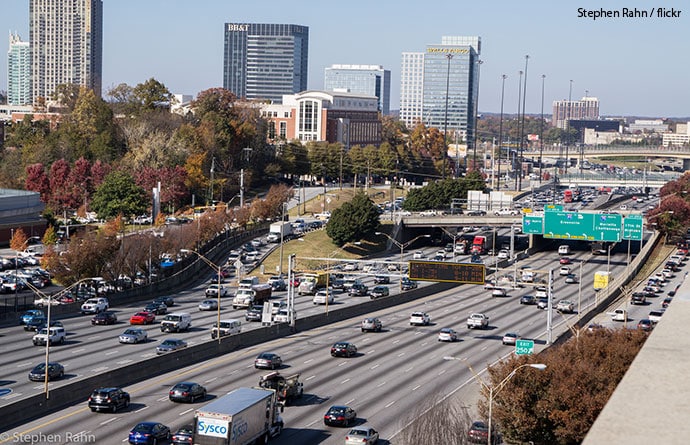
Traffic congestion is an often-cited downside to living in Atlanta
First off, let’s look at the pros and cons of moving to Atlanta.
Pros
Job diversity and corporate HQs: Logistics, fintech, healthtech, and entertainment offer a number of career opportunities.
Relatively affordable living (for a major metro): The cost of living is around the national average overall, with the suburbs usually being cheaper.
Mild winters & lots of green space: Outdoor-friendly most of the year; BeltLine, Piedmont Park, Chattahoochee River trails offer superb leisure activity opportunities.
Cultural life: Restaurants, sports (NFL, NBA), museums, a growing film/TV industry, and festivals.
Strong healthcare & research institutions: Emory, Piedmont, Children’s Healthcare of Atlanta, and more are the top regional hospitals with growing research investment.
Cons
Traffic and sprawl: Atlanta is famously spread out; commute times are often long unless you live and work close together. Public transit (MARTA) is limited compared to other metros.
Neighborhoods vary in safety and services: Crime rates and quality of life differ substantially block by block; research neighborhood data carefully.
Summer heat & humidity: Hot, humid summers — plan for A/C and heat-tolerant outdoor plans.
Competitive (and sometimes pricey) desirable neighborhoods: Midtown, Inman Park, Buckhead, and others can have high rents and home prices.
You may also like to read: The Benefits of Moving Home. In this guide, we look at the life-changing benefits of moving to a new city.
How Much do Movers Cost?
Save up to 40% on your upcoming move and get a quote from reputable moving experts.
Overall: Atlanta’s cost of living hovers around or a few percent below the national average in 2025. But the neighborhood and type of home you have will influence this hugely.
Rent (city averages): Average rent for a 1-bed in 2025 is roughly $1,500–$1,800, depending on the neighborhood; studios and luxury units in Midtown/Buckhead will be higher. Average apartment rent trackers put a mid-2025 average near $1,700–$1,800.
Buying a home: Median home prices vary widely. Check recent local MLS numbers when you’re ready, as Atlanta’s housing market trends can shift quickly.
Other costs: Utilities, groceries, and services are around or slightly below the national average; auto ownership (gas, insurance) is a common expense because of the driving culture here.
You may also like to read: How to Move Cheaply. If your budget is tight, then knowing how to save some money on your move is crucial. In this guide, we share where to save money moving without compromising safety and good service.
Career Opportunities & Industries
Atlanta’s economy is diverse, but these are the big ones:
Logistics & transportation: UPS, Delta Air Lines, major freight/logistics operations, and Hartsfield–Jackson Atlanta International Airport offer logistics jobs.
Corporate & finance: The Home Depot, Coca-Cola, large regional banks, and many HQ operations provide corporate roles.
Healthcare & biotech: Emory, Piedmont, Children’s Healthcare of Atlanta, and growing research facilities are creating clinical, research, admin, and biotech opportunities.
Tech & startups: Growing fintech and adtech scenes. Remote-friendly work roles are common, and many startups are clustered in Midtown/Atlantic Station/West Midtown.
Film & TV production: Georgia’s tax incentives make Atlanta a top production center, so it is good for production crews, post-production, and creative jobs.
Job-hunting tips: network through local Meetups, check Atlanta Chamber job data, leverage Georgia Tech/Emory alumni channels, and be prepared to negotiate relocation packages for senior roles.
You may also like to read: Moving for Work. In this guide, we look at the pros and cons of moving to a new city for a job.
Best Neighborhoods
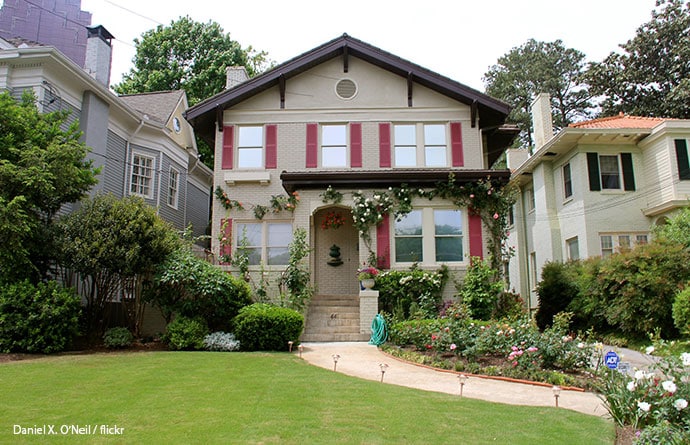
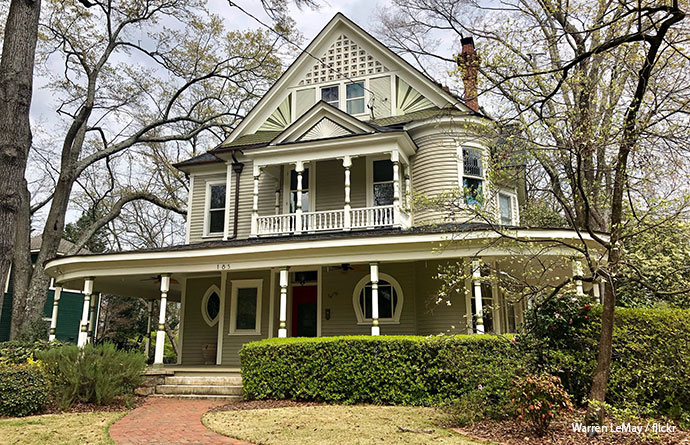
Inman Park, Atlanta
Here is our pick of the best neighborhoods by lifestyle:
Midtown: Central, walkable, near Piedmont Park, cultural institutions, good for young professionals. Expect higher rents but urban conveniences.
Buckhead: Upscale, malls, nightlife, expensive single-family homes and condos — good if you want luxury and big-city shopping.
Inman Park & Virginia-Highland: Historic charm, tree-lined streets, great restaurants, and boutiques. Pricey but very walkable.
Old Fourth Ward / Poncey-Highland: Trendy, BeltLine access, mixed housing (Great for young renters and creatives).
West Midtown / Atlantic Station: Newer developments, growing restaurants, and offices with a good balance of price and access to creative/tech jobs.
Decatur & East Atlanta Village: Decatur — a small-town feel with an independent school system (popular with families). Whilst East Atlanta is more eclectic, artsy, and with more affordable options.
Suburbs to consider: Alpharetta, Sandy Springs, Roswell, Marietta — family-friendly, good schools, longer commutes for city jobs unless near MARTA or major highways.
You may also like to read: How to Choose a Good Neighborhood. In this guide, we suggest things to take into consideration when choosing a new neighborhood to move to.
Schools — K12 & Higher Education
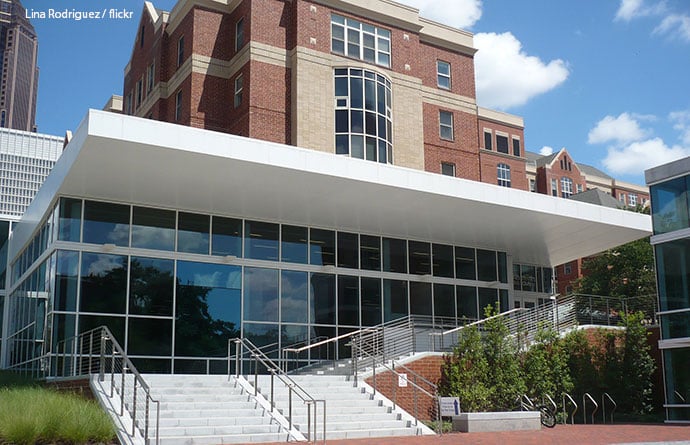
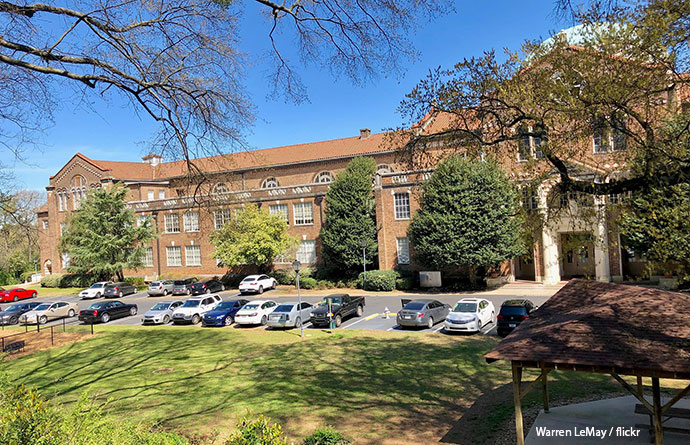
Georgia Tech University
Public school districts: Atlanta Public Schools, Fulton County Schools, DeKalb County Schools, although quality varies by zone.
Top public & magnet high schools: Many rankings list multiple Atlanta-area schools among Georgia’s top high schools; charters and specialty schools (STEM, arts) are options. Always check the most recent state report cards and local PTA comments before committing.
Private schools: Numerous options, from church-affiliated to elite independent schools, but they are often competitive and have waiting lists.
Colleges/universities: Georgia Tech (tech/engineering), Emory (medicine, research), Georgia State (urban research university), and many smaller colleges.
You may also like to read: How to Choose a New School. In this guide, we suggest things to take into consideration when choosing a new school in a new city.
Healthcare & Hospitals
Atlanta is a healthcare hub:
Emory Healthcare, Piedmont, Children’s Healthcare of Atlanta, and several academic research centers provide excellent specialized care and strong employment for clinicians and researchers.
New research facilities and investments continue to expand capacity. If healthcare access is a priority, living near Midtown, Buckhead, or the Emory/Decatur corridor is convenient.
You may also like to read: Moving in Retirement. In this guide, we look at the pros and cons of moving home after retirement.
Crime and Safety
Roosevelt High School Apartments
Citywide trends: Recent reports indicate violent crime has fallen from peak pandemic-era highs in 2023–2024, with recent data highlighting declines and improved response times. However, rates vary widely by neighborhood, and property crime (particularly car break-ins and theft) is a frequent complaint. Use Atlanta PD maps and neighborhood-level data when deciding where to move.
Practical safety tips: research block-level crime maps, visit in daylight and evening, ask neighbors about parking and street lighting, and consider gated communities or buildings with security in higher-risk areas.
You may also like to read: Moving Home Alone. In this guide, we look at the challenges and solutions when moving to a new city alone.
Getting Around
Car-centric city: Most Atlantans drive; highways (I-75/I-85/I-285) can be congested, especially during peak hours. Parking fees apply in downtown/Midtown.
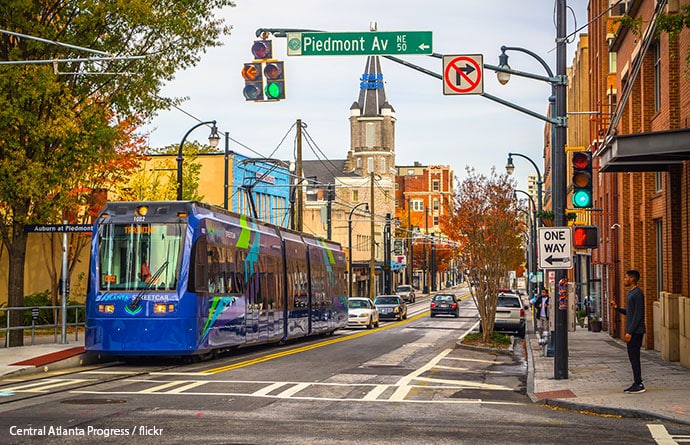
MARTA: Rail + bus system exists but is limited, although it is useful for specific areas (Airport–Downtown–Midtown–Buckhead). Expect to rely on a car for many commutes.
Alternatives: There are biking lanes in some neighborhoods, scooters, and ride-hail (Uber/Lyft) are common. But you will need to plan commutes carefully to estimate real travel time.
Leisure, Food, and Culture
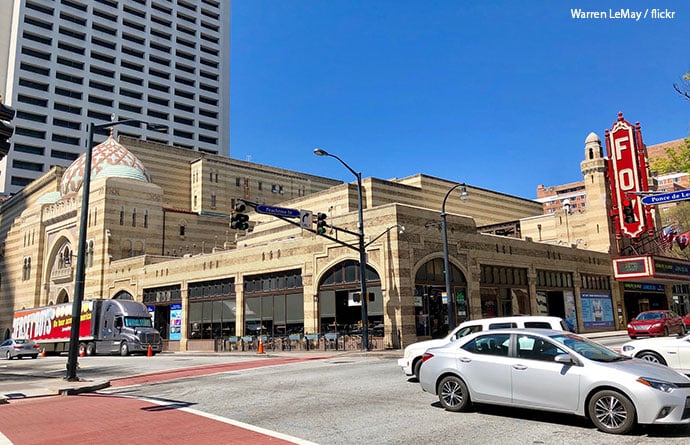
The Fox Theater Atlanta
Parks & trails: BeltLine, Piedmont Park, Chattahoochee River are great for running, dog walking, and festivals.
Dining & nightlife: From Southern comfort food to award-winning international restaurants, Atlanta’s culinary scene is large and varied.
Arts & sports: High Museum, Fox Theatre, film shoots, Falcons (NFL), Hawks (NBA), Braves (MLB) provide plenty of entertainment year-round.
Practical Moving Tips
Decide on a neighborhood based on priorities: commute, schools, nightlife, and walkability. Use crime maps and school boundary lookups.
Budget for moving costs + deposit: plan 1–2 months’ rent as a deposit if renting; factor in first-month rent, movers, and insurance.
If buying: get pre-approved, work with a local agent, and confirm flood zones (some Atlanta areas have localized drainage issues).
Transportation plan: if you need to be near MARTA or want a short commute, prioritize Midtown/Buckhead/Decatur; otherwise, expect driving.
Healthcare & schools: register with a primary care provider and confirm school enrollment paperwork early.
Q: Is Atlanta expensive to live in? A: Not compared with NYC/SF, but housing can be expensive in popular neighborhoods; overall cost of living is near or a bit below the national average in 2025, but check local rent/house listings for your target area.
Q: Is Atlanta safe? A: Safety varies by neighborhood. Citywide violent crime has declined recently, but property crime and hot-spot neighborhoods exist, so check Atlanta PD maps and local reports.
Q: Do I need a car? A: For most people: yes. If you live and work in dense corridors (Midtown, Downtown, Buckhead), you can use transit and walking more, but the region is generally car-dependent.
Q: Best neighborhoods for families? A: Decatur, Sandy Springs, Alpharetta, parts of Buckhead, and East Cobb are popular for schools and family amenities. Verify school zones.
www.niche.com gives a more in-depth analysis of local neighborhoods in Atlanta.
Compare the cost of living in your current hometown with Atlanta at www.numbeo.com
Find local and interstate movers for your relocation to Atlanta at www.moveadvisor.com
Should I Move to Atlanta?
Georgia State Capitol
Atlanta offers a lot: job variety, major hospitals, a lively cultural scene, and relatively affordable living.
On the flipside are traffic, neighborhood variability, and summer heat.
If you want career growth in industries such as tech, film, healthcare, or logistics, and want an energetic, outdoorsy, Southern city, then Atlanta could be your perfect move.
But do your neighborhood homework, as a block can make a big difference in your daily life here.
Good luck with your move to Atlanta, and be sure to check out our home moving blog, which is packed with guides to make every aspect of your home move easier, cheaper, and safer.
*At MoveAdvisor we will connect you with a professional moving company. Please note that we may not be affiliated with
and you may be speaking with another licensed provider.
We use cookies to optimise your experience.Accept and close or Learn more











Share your thoughts by leaving a comment